
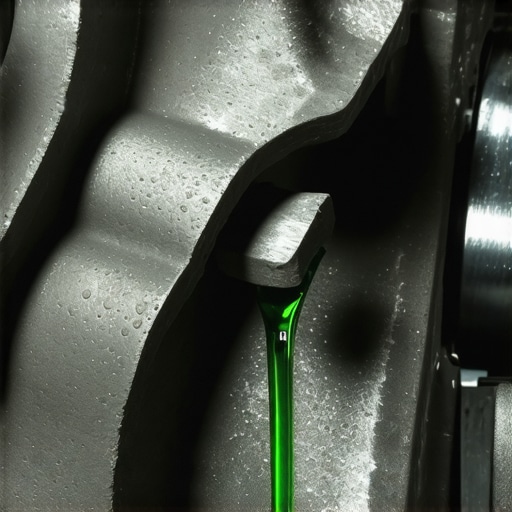
I remember standing on the shoulder of I-77 last July, watching a pathetic wisp of white steam curl out from under my hood while my kids asked for the tenth time if we were almost there. The worst part? I’d heard the warning sign three days earlier. I just chose to believe it was a summer noise or maybe just the air conditioning working overtime. It wasn’t. It was my water pump giving up the ghost, and my stubbornness turned a simple part replacement into a weekend-ruining disaster. If you have ever felt that sinking pit in your stomach when the temperature needle starts climbing toward the red, you know exactly why I am writing this. I want to help you catch the problem while it is still a minor annoyance rather than a catastrophic engine failure. Today, we are going to look past the obvious puddles and talk about the one hidden sign that most drivers completely ignore until it is too late.
Listen for the Whine Before the Engine Starts to Grumble
I’ll admit it: years ago, I made the classic rookie mistake of ignoring a faint, high-pitched sound coming from the front of my engine. I figured it was just an old belt acting up in the humidity. In reality, the bearings inside my water pump were grinding themselves into dust. When those bearings start to go, they produce a distinct sound. It is not quite a screech, but more of a cyclic humming or wheezing. If you notice that your car whines like a jet engine when you press the gas, do not just turn up the radio. That is the sound of a component reaching its breaking point. Have you ever noticed a strange new hum under your hood that seems to change pitch when you accelerate? Let me know in the comments, because catching that sound early is the difference between a quick fix and a towed vehicle.
Is a tiny drip actually worth the stress?
You might see a small damp spot on the driveway and think you can just top off the reservoir and keep going. I used to think the same thing until I learned that a small leak is often just the precursor to a total seal blowout. According to data from the Car Care Council, cooling system failure is a leading cause of mechanical breakdowns, and neglecting a minor leak can lead to warped cylinder heads costing thousands. It is much better to follow a proper car service checklist than to gamble with your engine’s life. Sometimes, you might not even see a puddle; instead, you might notice that your car smells like burning maple syrup. That sweet scent is the tell-tale sign of atomized coolant hitting a hot engine block. Before you get stranded, it is vital to learn how to spot a coolant leak before your dashboard starts glowing like a Christmas tree. Proactive maintenance is the only way to stay ahead of the curve. Checking your belts and hoses as part of the ultimate car service guide routine will save you more than just money—it will save your sanity.
Pressure Test the System to Stop the Guessing Game
If you’re tired of playing detective with a flashlight, it’s time to use the one tool that doesn’t lie: a cooling system pressure tester. Think of your cooling system like a giant balloon. If there is a microscopic hole, you might not see it when the balloon is limp, but as soon as you pump it full of air, that hole starts screaming. You can rent these testers at most auto parts stores. You attach it to the radiator neck or the expansion tank and pump it up to the PSI level listed on your radiator cap. I remember one Saturday morning I was convinced my radiator was shot. I pumped the system up, and instead of a radiator leak, I saw a tiny, needle-thin stream of coolant shooting out from a heater hose I’d replaced just months prior. It wasn’t the radiator; it was just a loose clamp. Learning how to troubleshoot common auto repair issues before visiting the shop saves you from the parts cannon approach where you just keep throwing money at the problem until it goes away.
Look for the White Crust of Death
Coolant doesn’t always leave a bright green or orange puddle. When a small amount of coolant leaks onto a hot engine component, it evaporates instantly, leaving behind a chalky, white, or colored crust. This is the ghost of a leak past. Check around the water pump housing and the thermostat housing. If you see what looks like dried sea salt, you have found your culprit. This is exactly why learning how to spot a coolant leak before the gauge spikes is so vital. It gives you a window of opportunity to fix it on your own terms. 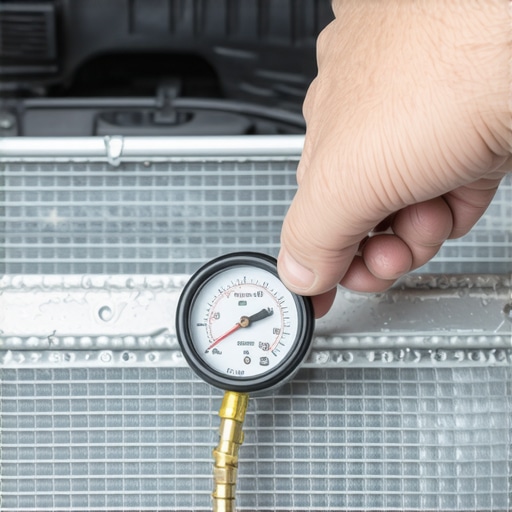
Inspect the Weep Hole Before It Becomes a Flood
Most water pumps have a tiny hole called a weep hole designed to let you know when the internal seals are failing. If you see even a single drop of moisture hanging from that hole, the pump is on its deathbed. It’s the engine’s way of saying I’m tired. I once ignored a damp weep hole on an old truck because it wasn’t technically leaking yet. Three days later, the seal gave out entirely while I was merging onto a highway, and I had to learn why your car hesitates when you try to merge the hard way because my belt slipped off from the coolant spray.
Don’t Ignore the Belt Tension During Your Routine
Your water pump is often driven by the serpentine belt. If that belt is too tight or too loose, it puts massive lateral stress on the pump bearings. While you are under there, check your belt for cracks or glazing. Following a solid car service checklist helps you see the bigger picture. A pump failure is often just a symptom of a neglected belt or a faulty tensioner.
Turn a Quick Check into a Performance Boost
If you are already opening the hood to check the cooling system, it’s the perfect time to evaluate if your car needs a simple tune-up or a major repair. Checking your spark plugs and air filter while you wait for the engine to cool down is just efficient. You can significantly maximize your car’s lifespan with expert tune-up strategies by simply grouping these tasks together. It prevents that snowball effect where one small failure leads to three others down the road.Let’s dig deeper into where most DIYers—and even some shops—drop the ball. Everyone tells you to buy the most expensive ceramic pads you can find, but in my experience, the pad material is almost secondary to the condition of your hydraulic system. If you spend a fortune on top-tier pads but ignore the fact that your brake fluid looks like coffee creamer, you’re just putting a band-aid on a gunshot wound. Brake fluid is hygroscopic, meaning it pulls moisture from the air. According to research cited by the American Automobile Association (AAA), moisture-contaminated fluid is a primary culprit behind internal corrosion and dangerous brake fade during heavy stopping. Have you ever fallen into this trap where you replaced the hardware but forgot the liquid? Let me know in the comments.
Stop Chasing the High-End Brake Pad Myth
The ‘Oops’ factor often happens during the reassembly phase. People slap on new rotors and think they are done, but they frequently forget the proper way to break in new brake pads and rotors. Without a correct ‘bedding’ process, you’ll end up with uneven pad transfer, which causes that annoying steering wheel shake. Worse yet, if you don’t clean the hub surface or the rotor properly, you might find the real reason your new brake pads are smoking isn’t just normal ‘break-in’—it is often grease or packing oil burning off the surface that should have been wiped down with brake parts cleaner. Small oversights like forgetting to grease your caliper slide pins can cause your new pads to wear out in less than 5,000 miles.
Why does your brake pedal go to the floor in traffic?
This is the advanced question that separates the oil-changers from the true technicians. If your pedal sinks while you are stopped at a light, but you aren’t seeing a puddle of fluid on the ground, your master cylinder is likely bypassing internally. This is why checking for external leaks isn’t enough; you have to understand brake service myths and what you need to know before you start throwing parts at the problem. It’s also worth noting that the reason your brake pedal goes all the way to the floor in traffic is frequently a combination of micro-bubbles in the lines and heat-soaked, degraded fluid that can no longer maintain pressure.
The Truth About Modern Tune-Ups and Sensors
The days of adjusting carburetors and distributor caps are long gone, but many drivers still think a tune-up is just about new spark plugs. In reality, a modern tune-up is about data. You can replace your plugs and still have a rough idle because you overlooked how a dirty mass airflow sensor can trigger a lean code error, tricking your computer into dumping too much or too little fuel. Furthermore, ignoring your crankcase ventilation is a recipe for disaster; how a clogged PCV valve leads to expensive oil leaks is one of the most overlooked mechanical failures in high-mileage vehicles. Even the truth about budget spark plugs and engine performance is more complex than brand loyalty. If the heat range is wrong for your specific engine, you are inviting pre-ignition damage that no amount of premium fuel can fix. If you are serious about your car’s longevity, you have to look at the sensors and the systems, not just the consumables. 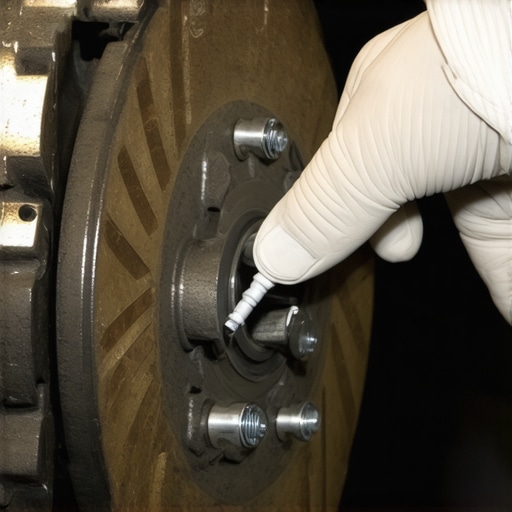
Ditch the Guesswork with a Quality OBD2 Scanner
If there is one thing I’ve learned from years of skinned knuckles, it is that your ears can lie to you, but the engine control unit rarely does. Most people think a scanner is just for clearing a check engine light, but the real power lies in viewing live data. When I’m performing a comprehensive car service, I’m looking at short-term and long-term fuel trims. If those numbers are double-digit positives, your car is starving for fuel, regardless of how new your spark plugs look. I personally use a mid-range bidirectional scanner because it allows me to command the fuel pump or radiator fans to turn on, which is the fastest way to verify a repair. It is a level of precision you just can’t get by staring at the engine bay.
Stop Overtightening Your Bolts
I used to be the guy who tightened every bolt until it felt ‘good and snug.’ Then I snapped a water pump bolt off in the block on a Sunday afternoon, and my life changed. Now, I don’t touch a brake caliper or a spark plug without a digital torque wrench. Accuracy is everything, especially with aluminum components that expand and contract with heat. Whether you are learning the proper way to torque wheel bolts without a manual or securing a valve cover, that ‘click’ or ‘beep’ is your only insurance against a future vacuum leak. Over-torquing is just as dangerous as leaving a bolt loose because it stretches the threads, eventually leading to a failure that requires a much more expensive 100,000-mile major service to fix. 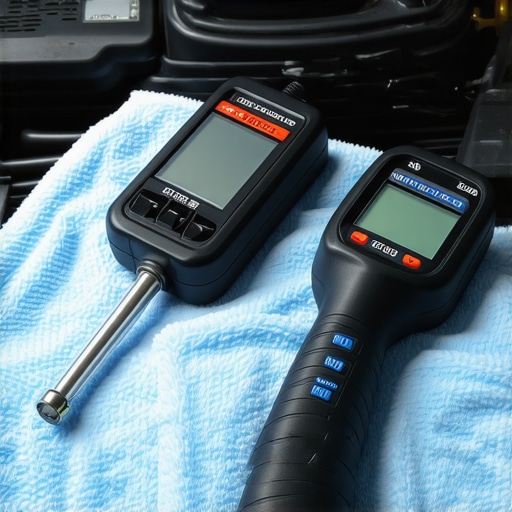
How do I maintain my engine’s health as the miles pile up?
The secret isn’t a magic additive you pour into the gas tank; it is the consistency of your testing. Every six months, I grab my multimeter and check the resistance of my ground wires. According to Robert Bosch GmbH’s Automotive Handbook, even a 0.5-volt drop in a ground circuit can cause sensors to send erratic data, leading to phantom misfires and poor fuel economy. Learning how to test your alternator with a simple multimeter at home is the first step in mastering your car’s electrical health. If you want to maximize your car’s lifespan with expert tune-up strategies, you have to treat the electrical system with the same respect as the oil and filters.
What Your Mechanic Won’t Tell You About 2025
As we move forward, the traditional ‘wrench-only’ repair is becoming a relic of the past. Looking at auto repair trends to watch in 2025, it’s clear that software and sensor calibration are the new frontiers. Even a simple windshield replacement now requires you to ask if your local mechanic actually has the tools for a proper ADAS calibration. If those cameras are off by even a millimeter, your emergency braking system could fail when you need it most. I predict that within five years, DIYers will need to be as comfortable with a tablet as they are with a socket set. My advice? Grab a multimeter today and start by checking your battery’s resting voltage—it is the simplest way to see if your car’s ‘heart’ is still beating strong.
The Hardest Lesson I Learned About Cutting Corners
I used to think that skipping a few months on a tune up wouldn’t hurt, but the engine doesn’t forget. The most important lesson I’ve learned is that ‘good enough’ is usually the precursor to a breakdown. If you ignore how regular tune-ups improve fuel efficiency and safety, you’re just paying more at the pump and at the shop later. It is about respecting the machine. I’ve also realized that high-mileage oil filters are worth the extra couple of dollars because they catch the microscopic debris that shorter filters miss. Don’t let a ten-dollar part ruin a five-thousand-dollar engine.
My Personal Survival Kit for Garage Saturdays
I don’t recommend tools lightly, but a high-quality bidirectional scanner and a reliable multimeter are non-negotiable. Knowing how to test your alternator with a simple tool can prevent you from buying a battery you don’t need. Also, keep a copy of a solid essential maintenance guide nearby; it’s the best way to keep your head clear when things get complicated. These items turn a guessing game into a precise science, ensuring your car service is done right the first time.
#IMAGE_PLACEHOLDER_E#
Reclaim Control Over Your Car’s Future
Don’t be intimidated by the sensors or the complex brake service procedures. Every pro was once a beginner with a single wrench. When you take the time to learn the fundamentals of brake system repairs, you aren’t just fixing a car; you’re building a skill that provides peace of mind. Your vehicle is an investment, and with the right approach to auto repair, you can keep it on the road for decades. Have you ever caught a major mechanical issue just by paying attention to a weird noise? Let me know in the comments below!