
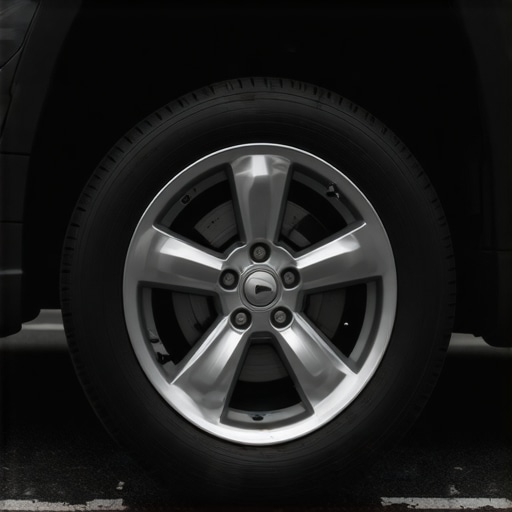
I was pulling into my driveway on a Tuesday evening when it happened: a sound like a coffee grinder full of gravel coming from my front left wheel. It only happened when I turned the wheel sharp to the left to avoid the neighbor’s trash cans. I’ll be honest, my heart sank. I’ve been around cars long enough to know that metal-on-metal noises usually mean a hefty bill at the local shop. But as I sat there, I realized that many of you are probably sitting in your driveways right now, gripping the steering wheel and wondering if your car is about to fall apart. Today, I’m going to help you breathe a sigh of relief. We are going to pinpoint exactly what that noise is and how you can figure it out without being taken for a ride.
That Cringe-Inducing Crunch in Your Steering Wheel
I remember one of my biggest mistakes when I first started working on my own vehicles. I heard a similar grinding noise and immediately went out and bought a brand new power steering pump. I spent all Saturday installing it, only to realize the noise was still there. It turned out to be a simple piece of road debris stuck in the brake dust shield. It was a $0 fix that I turned into a $200 headache. That’s why we start with the basics first. Most of the time, a grind during a turn points to three main suspects: the CV joints, your wheel bearings, or a thirsty power steering system. If the noise is more of a rhythmic click, you’re likely looking at a failing CV axle. If it’s a constant low growl that gets louder the faster you turn, you should probably learn the secret to diagnosing a bad wheel bearing fast before it gets dangerous.
Is this going to cost me a fortune to fix?
The fear of a massive repair bill is what keeps most people from even looking under the hood. However, catch it early and you might just need a simple tune up of your suspension components. According to the Car Care Council, proactive maintenance can save drivers an average of $1,200 a year in emergency repairs. Whether it is a dry ball joint or just low fluid, knowing the signs is half the battle. Have you ever felt that terrifying vibration in the steering wheel alongside the noise, or is it just the sound that’s bothering you?
Pinpointing the Culprit Behind the Noise
Before you go out and start throwing parts at the problem, we need to narrow it down. First, check your levels. You’d be surprised how many ‘grinding’ noises are actually just a pump struggling because you need to check your power steering fluid the right way. If the fluid is full and clean, it’s time to look deeper. If you notice the car feels loose or wanders, you might need to check your tie rod ends with minimal tools. A worn-out tie rod can cause strange geometry during a turn, leading to all sorts of odd sounds. If the noise happens even when the car is stationary and you’re just turning the wheel back and forth, the issue is likely in the steering column or the upper strut mounts. We want to avoid a situation where your struts are finally bottoming out and causing structural damage to your vehicle’s frame. Let’s get into the step-by-step process of elimination to find your specific ghost in the machine.
Look at the Reservoir Before the Rack
Pop the hood before you reach for your wallet. If your power steering pump sounds like a blender full of frozen margaritas, it is likely starving for fluid. Take a second to check your power steering fluid the right way. I remember helping a buddy with his old SUV; he was convinced the rack was shot and was ready to scrap the car. We looked at the fluid, and it was as bubbly as a freshly poured soda. That air in the lines was the whole problem. Air is compressible; hydraulic fluid is not. When they mix under pressure, you get that nasty, vibrating grind. If you see bubbles, you have got a leak somewhere letting air into the system. Use your eyes to trace the hoses for any wet spots or grime buildup that suggests a slow leak before you assume the pump is dead.
Push Back That Pesky Dust Shield
Sometimes the grind isn’t the steering at all—it is the brakes. Think of the brake dust shield as a thin piece of tin foil sitting right behind your wheel. If it gets bent even a fraction of an inch, it will rub against the rotor. This usually happens after a car service where someone was a bit too aggressive with a lug wrench or a jack. Reach behind the wheel when the metal is cool and gently push that shield back. If the noise vanishes, you just saved yourself a hundred-dollar diagnostic fee. It is also worth checking if your brake rotors keep warping every few months, as a warped rotor can create a rhythmic scrape that mimics a steering grind during a sharp turn. 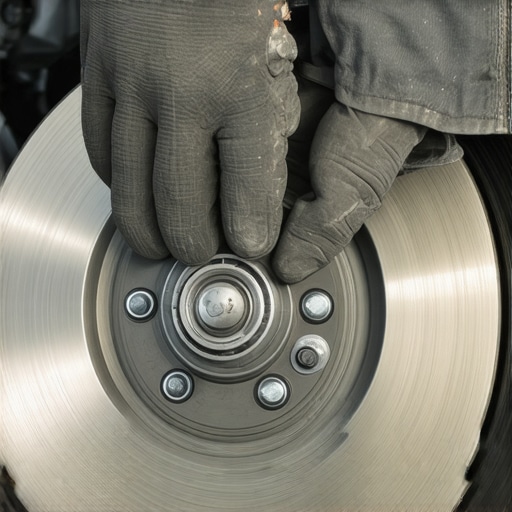
The Parking Lot Circle Test
If the noise is a repetitive click-click-click while you are moving, you are likely dealing with a CV axle. Think of the CV joint like your own elbow; if the rubber boot tears, the joint loses its grease and gets filled with road grit. Once that happens, the joint starts to bind and scream for help. To confirm this, find an empty parking lot and drive in tight circles. If the clicking gets louder or faster as you increase your speed in the turn, you need to look into troubleshooting common auto repair issues before visiting the shop. Replacing an axle is a standard part of understanding brake system repairs and general drivetrain health.
How to Feel for a Failing Bearing
If the noise is a deep, low-frequency hum—like a plane taking off in your wheel well—it is likely a wheel bearing. These are the unsung heroes that let your wheels spin at 70 mph with minimal friction. A quick way to check is to safely jack up the car and perform the simple test for worn-out shocks but apply it to the wheel itself. Grab the tire at the 12 and 6 o’clock positions and wiggle it. Any play or clicking means that bearing is toast. Ignoring this is a recipe for disaster, and it is why you should prioritize a car service checklist to catch these issues early. Don’t overlook the weird stuff, either. If your dash lights flicker when you turn, you might need to learn how to spot a bad ground wire causing electrical issues. A loose wire rubbing against the steering shaft can sound remarkably like mechanical grinding.Here is the thing about modern auto repair: we have been conditioned to think that replacing the biggest, most expensive part solves the problem. But I have seen it a hundred times where someone performs a full brake service only to have the noise return a week later. The ‘oops’ factor usually boils down to the hardware. Most people slap on new pads but ignore the caliper slide pins. If those pins are seized or lack high-temp grease, your caliper cannot float correctly, leading to uneven pressure and that same grinding noise you thought you fixed. It is a classic case of missing the forest for the trees. To avoid this, you need to look past the surface and learn brake service myths that even some pros fall for.
Why do so many new brake rotors warp within months?
I used to think rotors were just ‘bad’ from the factory if they pulsed. The truth is much more nuanced. In my experience, ‘warped’ rotors are actually just victims of uneven pad deposition. If you do not follow the simple way to bed in new brake pads, you end up with high spots of friction material that feel like a physical warp. Furthermore, technical data from the National Institute for Automotive Service Excellence (ASE) suggests that a significant percentage of brake-related returns are due to technicians failing to clean the hub surface. Even a microscopic piece of rust between the hub and the rotor creates ‘runout’ that turns into a vibration. If you are seeing issues, check why your brake rotors keep warping every few months before buying another set.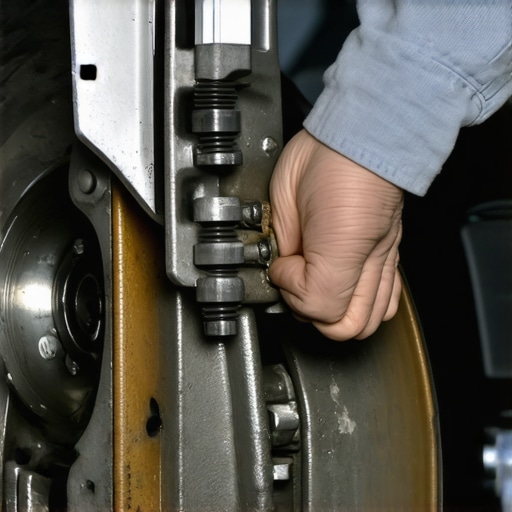
Moving beyond the basic spark plug swap
When most drivers talk about a tune up, they think about spark plugs and wires. On a modern car, that is barely scratching the surface. Real expertise means looking at the fuel trim and checking the health of the PCV system. A clogged PCV valve can cause oil leaks that look like major engine failures, or it can even mess with your idle enough to cause a strange vibration in the steering rack. To truly maximize your cars lifespan with expert tune-up strategies, you have to treat the vehicle as a complete ecosystem. I have seen people spend $500 on a new power steering pump when the real issue was a $20 serpentine belt that was slipping just enough to cause a ‘grind’ under load. Have you ever fallen into the trap of replacing a major component only to realize it was a tiny, cheap part all along? Let me know in the comments below.
The Tools That Saved My Sanity and My Wallet
Over the years, I have learned that the difference between a successful repair and a weekend spent screaming at a rusted bolt is the equipment in your hands. I used to rely on a cheap $20 code reader from a big-box store, but it constantly led me down rabbit holes. Now, I never start a job without a high-quality bi-directional scan tool. This isn’t just about reading codes; it allows me to command the car to perform specific tasks, like cycling the ABS pump or testing an electronic steering rack. This is the only way to effectively learn how to tell if your computer is giving you a false error code before you spend hundreds on a sensor that isn’t actually broken. I also keep a set of flare nut wrenches specifically for brake lines—using a standard open-ended wrench on a soft metal fitting is a one-way ticket to a rounded-off disaster.
Beyond the wrenches, I’ve found that data is my most valuable asset. Using a thermal imaging camera has become my secret weapon for finding seized calipers or blocked radiators in seconds. If one brake rotor is glowing white-hot on the screen while the other is cool, you know exactly where the friction is. This kind of how professional diagnostics found my ghost electrical leak approach is what separates the driveway warriors from the experts. It turns guesswork into a precise science, ensuring your understanding of brake system repairs is backed by visual proof rather than just a hunch.
How can I keep my steering system silent for years?
Long-term results come down to the chemistry inside your car, not just the metal. Most people ignore their fluids until a pump starts screaming. I follow a strict regimen based on the Society of Automotive Engineers (SAE) Standard J1703, which highlights how brake fluid absorbs moisture over time, leading to internal corrosion that ruins seals. I flush my power steering and brake systems every two years, regardless of mileage. It is a core part of my car service checklist that has kept my high-mileage daily driver feeling like it just rolled off the lot. Additionally, never underestimate the hidden benefit of rotating tires every 5,000 miles; it prevents the uneven wear patterns that eventually cause that low-frequency hum people mistake for a bad bearing.
Software is the next major shift in auto repair
Looking ahead, the era of ‘grease monkey’ mechanics is evolving into ‘data surgeons.’ As we move toward 2025 and beyond, your car’s Advanced Driver Assistance Systems (ADAS) will require recalibration after even minor suspension work. We are seeing auto repair trends to watch in 2025 move toward over-the-air updates and software-locked components. This means maintenance will soon involve as much laptop time as it does wrench time. Even a simple scheduled coolant flush might eventually require a software handshake to purge the air from electric water pumps. To stay ahead of this, I recommend everyone try the water spray test on your serpentine belt today; it’s a simple, low-tech way to build your diagnostic confidence before the machines take over entirely.
Hard Lessons from My Most Expensive $0 Repair
Looking back at years of greasy knuckles, I’ve realized that the most expensive repairs are often the ones you didn’t actually need. One lightbulb moment for me was realizing that sound is a master of disguise; a grinding in the front left can actually be a resonance from the center bearing. I learned that cleanliness is literally next to godliness in auto repair. If you don’t clean the hub before mounting a rotor, you’re basically inviting a vibration. Most importantly, I realized that how a simple tune-up fixed my mystery hesitation taught me that small, regular adjustments prevent the massive, heart-stopping failures later on.
Tools That Saved My Wallet More Than Once
I don’t believe in buying every gadget in the catalog, but three things changed my life. First, a quality bi-directional scan tool. It’s the difference between guessing and knowing. Second, a simple infrared thermometer—if you suspect a dragging brake, just point it at the wheel after a drive. If one wheel is 400 degrees and the other is 150, you’ve just learned how to spot a leaking brake caliper before it fails without taking a single bolt off. Finally, never underestimate a good set of flare nut wrenches; they are the only way to avoid stripping lines during a delicate brake service.
#IMAGE_PLACEHOLDER_E#
Your Car is Speaking to You—Start Listening
The sounds your car makes aren’t just annoyances; they are early warning signals. By taking the time to investigate that grind or click today, you aren’t just saving money—you’re taking ownership of your safety. Whether you decide to tackle the job yourself or just want to be informed when you walk into the shop, remember that you have the power to maximize your cars lifespan with expert tune-up strategies. Don’t let the complexity of modern machines intimidate you. Every expert was once a beginner sitting in their driveway wondering what that coffee-grinder sound was. If you suspect your steering geometry is part of the problem, check how to tell if your wheel alignment is actually off before the next long trip.
Have you ever spent hours replacing a major component only to find out the real culprit was a tiny, five-dollar part? Let me know your story in the comments below!