
I’ll never forget the first time I felt that punch in the gut—not from a person, but from the vents of my old sedan. I was trying to merge onto the freeway, and as I pushed the engine to get up to speed, a wave of sulfur hit me so hard I thought I’d accidentally parked in a swamp. My first instinct? I blamed the local landfill. My second instinct, which was a huge mistake, was to just roll down the windows and hope it went away. Spoiler alert: it didn’t. In fact, ignoring it led to one of the most expensive auto repair lessons of my life. Today, I’m going to help you skip that expensive tuition and figure out exactly why your ride is pulling this stinky stunt. We’re going to look at everything from fuel pressure regulators to the possibility that you just need a routine tune-up to get things back on track.
Your Catalytic Converter is Screaming for Help
When you put your foot down, your engine dumps more fuel into the system to meet the demand. Normally, your catalytic converter handles the leftovers. But when things go south, that sulfur smell is actually hydrogen sulfide that hasn’t been properly processed. I once spent three weeks convinced I had a dead squirrel in my bumper, only to realize I was literally melting my exhaust system because of a fuel system hiccup I chose to ignore. According to research cited by Car and Driver, a healthy converter should transform these stinky gases into odorless ones, and failing to do so is a major red flag for your car’s emissions health. If you notice your car smells like rotten eggs when you accelerate, you aren’t just dealing with a cosmetic issue; you’re dealing with a chemical one.
Is this repair going to break the bank?
It’s the question that keeps every car owner up at night. The fear is that a rotten egg smell equals a $2,000 repair bill immediately. While a dead converter is a common culprit, it isn’t the only one. Sometimes, the problem is as simple as an old battery leaking acid or a fuel pressure regulator gone rogue. Have you ever been stuck in traffic and felt like you were sitting behind a literal volcano? If so, tell me—did you ignore it like I did, or did you head straight to the shop? Before you panic and start looking for professional car service, let’s break down the diagnostic steps to see if we can save your wallet and your nose.
Start With the Easiest Fix Under the Hood
Before you commit to a major exhaust overhaul, you need to check the most basic components first. Sulfur isn’t always an exhaust problem. Sometimes, it’s an electrical one. If your alternator is malfunctioning and sending too much voltage to the battery, it can actually boil the electrolyte solution inside the casing. When this happens, the lead-acid battery releases hydrogen sulfide gas—the exact same rotten egg smell you’re worried about. It’s worth checking the casing of your battery for any signs of bloating or leakage. Understanding the real reason your car battery dies every two years often starts with identifying these overcharging symptoms. If the battery feels hot to the touch or looks swollen, you’ve likely found your culprit without touching the exhaust at all.
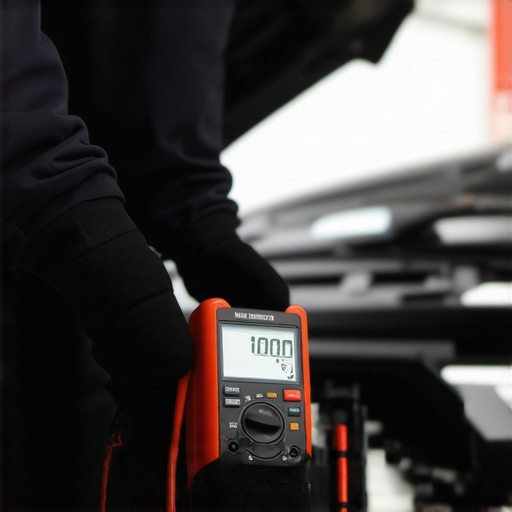
Check Your Battery Before You Buy a Converter
I learned this the hard way back in my early twenties. I spent a whole weekend swapping out a muffler on a compact car, only to realize the smell was coming from under the hood. My alternator was shot, and it was frying a brand-new battery. If I had known how to tell if your alternator is dying before your battery does, I would have saved about twelve hours of labor and a lot of grease under my fingernails. Use a multimeter to check the voltage while the engine is running; if it’s reading significantly above 14.7 volts, your alternator is the villain, not your catalytic converter.
Why Your Fuel System Might Be Overwhelming the Exhaust
If the battery checks out, the next step is looking at how much fuel is entering the engine. Think of your catalytic converter like a digestive system. If you overfeed it with raw gasoline, it can’t process it fast enough, and things get smelly. This is often caused by a failing fuel pressure regulator or a leaky fuel injector. When extra gas hits the hot ceramic honeycomb inside the converter, it triggers that chemical reaction that produces the sulfur stench. You should also keep an eye out for other signs, such as how to spot a failing fuel pump before your car dies, as fuel delivery issues often go hand-in-hand with exhaust odors. A fuel system that is running rich is the number one killer of converters.
Use a Simple Heat Test to Confirm the Culprit
One of the most effective ways to see if your converter is actually the source of the problem is by using an infrared thermometer. A healthy converter should be hotter at the rear than it is at the front. This temperature difference proves that the chemical reactions are happening inside. If the temperatures are nearly the same, or if the inlet is hotter, your converter is likely clogged or dead. Knowing how to tell if your car needs a simple tune-up or a major repair is about these small diagnostic wins. By spending ten minutes with a thermometer, you can confirm whether you need a new part or if you’re just dealing with troubleshooting common auto repair issues before visiting the shop. Don’t let a mechanic talk you into a high-priced replacement until you’ve seen the temperature data for yourself.
The Tune-Up Myth That Costs You Thousands
Most drivers think a tune-up is a simple checklist of spark plugs and filters. In my experience, this is where the biggest expensive mistakes happen. Everyone says a fresh set of plugs will solve a rough-running, stinky engine, but if you’re smelling sulfur, simply throwing new parts at the ignition system is often like putting a band-aid on a broken leg. The nuanced reality is that modern fuel systems are governed by a feedback loop that can be ‘slightly’ off without ever triggering a warning light. If you want to understand how regular tune-ups improve fuel efficiency and safety, you have to look past the hardware and into the sensor data. According to the National Institute for Automotive Service Excellence (ASE), oxygen sensors can lose their precision over tens of thousands of miles, leading to a ‘lazy’ response that results in an over-rich fuel mixture long before the onboard computer detects a hard failure. This slow degradation is the silent killer of your exhaust system.
Why does my car smell like eggs if the ‘Check Engine’ light is off?
This is the question that separates the DIYers from the experts. Your car’s computer has a threshold; it won’t scream for help until a component is significantly outside of its operating parameters. A ‘lazy’ sensor might still be functioning, but it’s reacting too slowly to changes in throttle. This causes the engine to dump excess fuel, which then hits the catalytic converter and produces that signature rotten egg scent. To truly fix this, you need to look at fuel trim data using a high-end scanner rather than just troubleshooting common auto repair issues before visiting the shop with basic tools. If your long-term fuel trims are creeping above 10%, your car is compensating for a hidden air or fuel issue that is slowly melting your expensive converter from the inside out.

Avoid the Most Common Sensor Cleaning Trap
When people realize a dirty sensor might be the cause, they often fall into the ‘Oops’ trap of using the wrong chemicals. I’ve seen dozens of DIYers try to clean their Mass Airflow Sensor (MAF) with brake cleaner or carb cleaner. This is a fatal error. The residue left behind by those harsh chemicals can coat the delicate wire, leading to even worse readings. Understanding how a dirty mass airflow sensor can trigger a lean code error is vital, but using the wrong solvent will fry the sensor entirely. Always use a dedicated MAF cleaner to avoid a $300 replacement bill. Similarly, don’t overlook the PCV system. A clogged valve can spike crankcase pressure and force oil vapors into the intake, fouling your new plugs and sensors in weeks. Learning how a clogged PCV valve leads to expensive oil leaks and exhaust odors is a hallmark of an owner who understands their vehicle’s true needs.
Distinguish Between Exhaust and Brake Smells
While we are on the topic of ghost smells, let’s address one of the most common brake service myths: that every bad smell during acceleration is engine-related. Occasionally, a dragging brake caliper can create a pungent, acrid scent that is easily confused with sulfur by a panicked driver. However, the ‘rotten egg’ smell is chemically distinct and almost always points back to the fuel-to-exhaust pathway or an overcharging battery. If you’ve checked the battery and the sensors but the smell persists, it might be time to contact us for a professional diagnostic. Have you ever fallen into the trap of replacing a major part only to find out it was a tiny sensor or a dirty valve? Let me know in the comments. Let’s dig deeper into your data before you spend another dime on tune-up your car for peak performance strategies that might not be addressing the root cause.
Stop Guessing and Start Reading the Data
If you’re tired of the ‘parts cannon’ approach—where you just keep buying new sensors until the smell goes away—you need to invest in a decent OBD2 scanner that supports live data. I personally use a mid-range Autel because it allows me to watch short-term and long-term fuel trims in real-time while I’m driving. Seeing those numbers shift tells me exactly when the engine is struggling, long before a light pops up. Mastering troubleshooting common auto repair issues before visiting the shop isn’t about being a master mechanic; it’s about having the right eyes on the problem. When you can see the computer trying to compensate for a vacuum leak by adding 15% more fuel, you know exactly why that sulfur smell is creeping into the cabin. This is how you maximize your cars lifespan with expert tune-up strategies that actually work.
The Multimeter is Your Best Friend
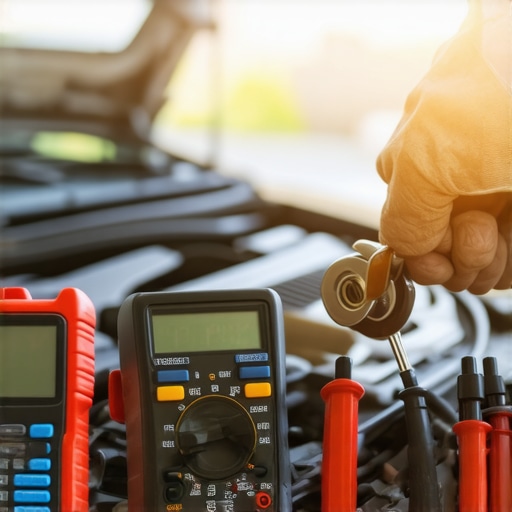
Beyond the scanner, a high-quality multimeter is non-negotiable. I’ve seen people replace entire catalytic converters when the real issue was a $40 ground wire that was causing the O2 sensor to provide a false reading. By testing the resistance and voltage yourself, you can rule out electrical ghosts. For instance, knowing how to test your alternator with a simple multimeter at home can prevent you from cooking your battery and creating that hydrogen sulfide stench. Even if you aren’t an expert, just checking for a steady 14 volts can save you a week of headaches. If you’re feeling adventurous, you can even use how to test your cars thermostat in a pot of boiling water to ensure your cooling system isn’t contributing to engine overheating, which can also stress the exhaust components.
How do I keep my exhaust and fuel system healthy for years?
Maintenance isn’t a one-and-done event; it’s a rhythm. To prevent the rotten egg smell from returning, you should be following a strict car service checklist that includes a fuel system cleaner every 5,000 miles and a physical inspection of the exhaust hangers. If an exhaust pipe vibrates too much because of a broken hanger, it can create micro-cracks in the manifold, leading to air leaks that throw off your sensors. According to SAE International (Standard J1979), the standardized diagnostic protocols for OBDII are designed to catch these deviations, but they rely on a sealed system to be accurate. Stick to the ultimate car service guide to ensure you’re hitting every milestone, from spark plugs to fluid flushes, before they become emergency repairs.
What the Future Holds for Your Garage
Looking ahead, we are seeing a massive shift toward predictive diagnostics. We’re moving into an era of auto repair trends to watch in 2025 where your car might actually send a notification to your phone that your catalytic converter is operating at 70% efficiency before you ever smell a hint of sulfur. This AI-integrated maintenance will make the ‘rotten egg’ surprise a thing of the past. Until then, you have to be your car’s best advocate. If you’re dealing with a complex issue or a heavy pedal, don’t forget that understanding brake system repairs and engine health go hand-in-hand for overall safety. I challenge you to plug in a scanner this weekend and look at your ‘Long Term Fuel Trim’—if it’s higher than 5%, you’ve got some hunting to do! If you get stuck, you can always contact us for a deeper dive into your vehicle’s data.
The Hardest Lesson My Wallet Learned About Exhaust Odors
Looking back at that swampy sedan, I realized that the smell was just the car’s way of talking to me. My biggest ‘lightbulb moment’ happened when I discovered that a simple $20 sensor was causing my $800 catalytic converter to overheat. If I had caught the rich fuel mixture early, I would have saved enough for a vacation. I also learned that you should never trust a ‘miracle’ fuel additive to fix a physical mechanical failure; it’s like trying to cure a broken bone with a vitamin. Most importantly, always check your battery first—you’d be surprised how often the real reason your car battery dies every two years is actually the same culprit making your vents smell like a volcano. Understanding the source is half the battle won.
My Personal Arsenal for Sniffing Out Mechanical Gremlins
I don’t go under any hood without my ‘trifecta’ of diagnostic gear. First is a reliable OBD2 scanner to watch those fuel trims in real-time. Second is a high-quality multimeter—it’s the only way to be sure about your electrical health and how to tell if your electrical problem is a blown fuse or a bad ground wire. Finally, I always keep a bottle of soapy water handy; it is surprisingly effective for how to identify a vacuum leak using a simple spray bottle, which often hides behind a sulfur odor. I also highly recommend keeping a printed copy of a car service checklist in your glovebox to stay ahead of these issues before they turn into stinky surprises.
#IMAGE_PLACEHOLDER_E#
Stop Holding Your Breath and Start Your Diagnostic Journey
Don’t let the fear of a massive repair bill keep you from looking under the hood. Most of the time, when your car smells like rotten eggs when you accelerate, it’s a cry for help that can be solved with a little patience and the right data. By taking control of your maintenance today, you’re not just saving your nose; you’re protecting your investment and ensuring your ride stays on the road for years to come. Whether you need a tune-up for peak performance or a deeper exhaust check, moving quickly is the key to low-cost repairs. Have you ever been shocked by what was actually causing a weird smell in your car? Tell me your craziest diagnostic story in the comments below!