

It was 6:45 AM, the kind of morning where the frost sticks to your windshield like it has been glued on. I hopped into the driver’s seat, cranked the engine, and that little yellow ‘horseshoe’ icon started winking at me. Blink. Blink. Blink. For about sixty seconds, it flickered with an rhythmic annoyance, then it just sat there, solid and yellow, staring me down. I figured it was just the cold air making the pressure drop, so I ignored it. That was my first big mistake. By the time I reached the highway, the handling felt like I was driving a boat through oatmeal. I had completely misinterpreted the signal my car was sending, and it almost cost me a rim. Today, I am going to help you avoid that exact panic by explaining exactly why that light behaves so strangely and how you can fix it without losing your mind.
Don’t Mistake a System Failure for Low Air
Most of us are used to the Tire Pressure Monitoring System (TPMS) light just popping on and staying there when we hit a pothole or a cold snap. But when it blinks first? That is your car’s way of telling you the system itself is having a mid-life crisis. When the light flashes for 60 to 90 seconds and then remains illuminated, it almost always points to a sensor malfunction rather than an actual air pressure issue. In my early days of DIY maintenance, I once spent twenty minutes at a gas station pump trying to ‘fix’ a tire that was already at 35 PSI, not realizing the sensor battery had simply died. Before you start overinflating your rubber, I highly recommend troubleshooting common auto repair issues yourself to see if the sensors are even communicating with your car’s computer. According to the National Highway Traffic Safety Administration (NHTSA), TPMS systems have been mandatory on all light vehicles since 2007 to improve safety, but the sensors themselves usually only have a lifespan of 5 to 10 years. If your car is getting up there in age, like the hero of my garage that taught me the truth about why my car finally hit 200,000 miles, those sensor batteries are likely on their last legs. [IMAGE_PLACEHOLDER]
Can I Safely Ignore the Light if My Tires Look Fine?
It is the question everyone asks because, let’s face it, those sensors are not exactly cheap to replace. You might look at your tires, give them a quick kick, and decide they look ’round enough’ to drive on. But a blinking light means the car is no longer watching your back. If you actually pick up a nail or a slow leak while the system is glitched out, you won’t get a warning until your tire is shredded. I have learned the hard way that regular tune-ups improve safety far more than just crossing your fingers and hoping for the best. Have you ever had your dashboard start flashing at you in the middle of a commute, or are you currently staring at that yellow light right now wondering if you can make it home?
Grab Your Gauge Before You Call the Shop
Even though a blinking light usually indicates a system error, you have to rule out the physical basics first. I have seen cases where a sensor gets confused by a borderline low reading, resulting in a strange strobe-light effect before it finally gives up and stays solid. Start by using a high-quality digital gauge to check all four tires against the PSI listed on your driver-side door jamb sticker. If you find one tire is significantly lower than the others, you should use the simple trick to finding a nail in your tire tread before assuming the sensor is toast. Keeping the pressure consistent across all four corners is also the easiest way to how to get more life out of your current tires, as uneven wear is the silent killer of a good set of rubber. Often, a simple top-off is all the system needs to ‘wake up’ and reset its logic. 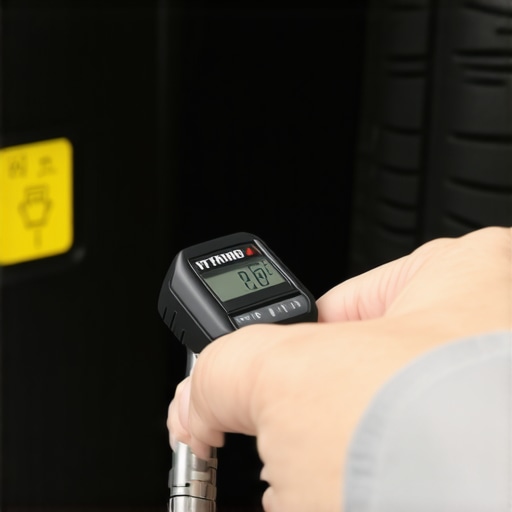
How to Tell if Your Car is Lying to You
If your pressures are perfect but that light still blinks for 60 to 90 seconds every time you turn the key, you are likely dealing with a dead sensor battery or a communication break. These sensors are essentially tiny radio stations living inside your wheels, and like any radio, they need power. When the internal lithium battery dies—usually after about seven to ten years—the signal simply drops. You can often learn how to tell if your computer is giving you a false error code by using a basic OBD-II scanner, which will tell you exactly which wheel has stopped talking to the receiver. I remember trying to fix a ‘ghost’ light on my old SUV for weeks, only to realize that how professional diagnostics found my ghost electrical leak was actually just a sensor that had been physically snapped off by a heavy-handed technician during a previous tire change.
Check the Secret Tire Hiding in Your Trunk
This is the one that trips up almost every DIYer. Many modern vehicles, especially SUVs and trucks, have a TPMS sensor inside the spare tire. If your spare is tucked away under the floorboards and hasn’t been touched in three years, it has probably leaked enough air to trigger the dashboard warning. Before you start ripping your dashboard apart or buying expensive replacement parts, you need to determine how to tell if your spare tire is actually safe to use and check its pressure. I once helped a neighbor who was ready to trade in his car over a persistent TPMS light; we pumped up his ‘donut’ spare to the required 60 PSI, and the light vanished instantly. If your car electronics seem sluggish while you’re doing this, it might be worth investigating the simple way to test battery strength at home, as low system voltage can cause sensors to report errors that don’t actually exist.
The Parking Lot Circle Fiasco
I once spent a Saturday morning in a grease-stained t-shirt, convinced I could ‘relearn’ my sensors by driving in tight circles in an empty parking lot—a trick I had read on an old car forum. I must have looked like a maniac to the local security guard as I did figure-eights for twenty minutes. The light didn’t budge. It wasn’t until I actually crawled under the car that I saw the corroded wiring harness near the rear axle. It was a messy, frustrating realization that sometimes the high-tech fix is actually a low-tech hardware problem caused by road salt and neglect.
Stop Blaming Your Rotors for That Shudder
Most drivers assume that when the steering wheel shakes during a stop, their brake rotors have ‘warped’ from heat. I used to believe this too, until I realized that metal doesn’t just bend like a record in the sun under normal driving conditions. In reality, what you are feeling is usually an uneven transfer of brake pad material onto the rotor surface. When this occurs, it creates high spots of a hard compound called cementite. According to research by the late racing engineer Carroll Smith in his seminal work on brake systems, true rotor warping is incredibly rare; it is almost always ‘disc thickness variation’ caused by improper installation or failing to follow the simple way to bed in new brake pads. If you just slap on new parts without ‘bedding’ them—a process of controlled heating and cooling—you are essentially setting yourself up for another vibration in six months. This is exactly why your brake rotors keep warping every few months despite your best efforts. 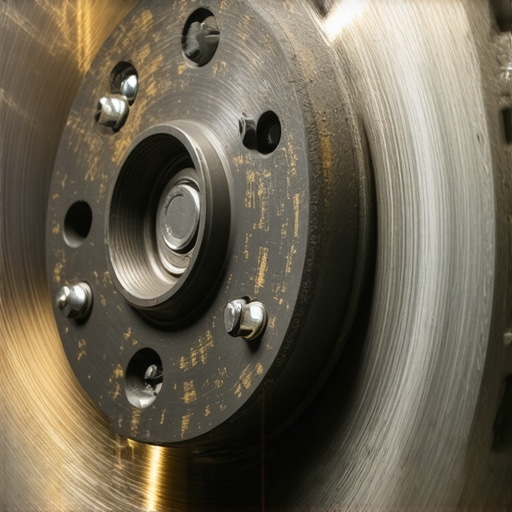
The Trap of the ‘Incomplete’ Tune-Up
We often treat a tune-up like a grocery list: plugs, filters, and maybe a prayer. But the ‘oops’ factor I see most often is neglecting the data side of the engine. You can throw $200 worth of parts at a car and still have it run like a lawnmower if you ignore the fuel trim levels. I once spent an entire weekend replacing coils on a sedan, only to find out how a simple tune-up fixed my mystery hesitation by actually addressing a tiny vacuum leak I had overlooked. People think ‘tune-up’ means ‘new parts,’ but in the modern era, it really means ‘restoring efficiency.’ If you aren’t looking at how the computer is compensating for air-fuel ratios, you are just guessing. Check out maximize your cars lifespan with expert tune-up strategies to see what a real deep-dive service should actually entail.
Why Does the Pedal Feel Soft After a Full Service?
This is the ultimate frustration for any DIYer or even a pro. You have bled the lines, replaced the fluid, and checked the pads, but the pedal still sinks toward the floorboards. Most people immediately blame air in the lines, but the sophisticated culprit is often the ABS hydraulic control unit. If you have ever experienced a ‘spongy’ stop, you might be dealing with the hidden culprit behind a spongy brake pedal, which is frequently an internal leak within the master cylinder or the ABS module itself. It is a nuanced failure that a standard ‘gravity bleed’ won’t fix. You often need a bidirectional scan tool to cycle those ABS valves and get every last bubble out. Before you spend more money on fluid, make sure you know how to tell if your brake booster is losing pressure versus a hydraulic failure. Have you ever fallen into this trap where a simple fix turned into a week-long mystery? Let me know in the comments below, because sharing these ‘garage ghosts’ is the only way we all get better at keeping our rigs on the road. For more on staying ahead of the curve, keep an eye on auto repair trends to watch in 2025.
Stop Guessing with a Cheap Code Reader
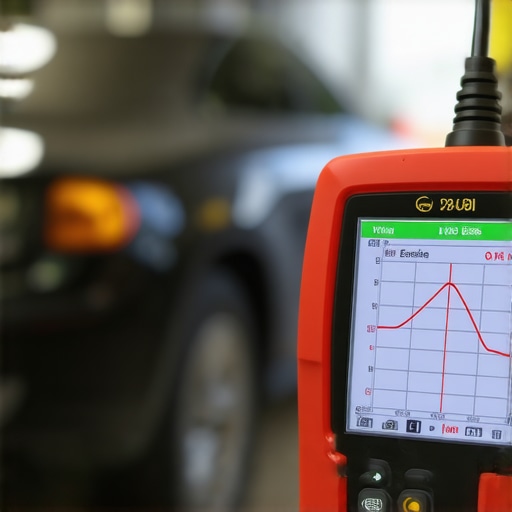
For a long time, I thought a toolbox was just a collection of metal wrenches. But as cars evolved into rolling computers, my ‘essential’ list had to change. If you are serious about skipping the dealership, you need a bidirectional scan tool. Unlike the cheap readers that just scream ‘Error!’ at you, a bidirectional tool lets you talk back. You can command the ABS pump to cycle or tell the car to relearn its TPMS positions without the parking lot figure-eights I mentioned earlier. I personally use a pro-sumer level unit because it handles the heavy lifting of the Society of Automotive Engineers (SAE) J1979 standard, which is the technical backbone for how your car’s on-board diagnostics actually communicate data. Without this kind of ‘handshake,’ you are just throwing parts at a problem. This is how you move beyond basic troubleshooting and into the realm of professional-grade work, especially when debunking common brake service myths that usually lead people to buy parts they don’t need.
How do I keep my car running for decades?
Consistency is the boring secret to a 300,000-mile car. I don’t wait for a light to blink; I follow a strict car service checklist that treats my vehicle like an airplane. Pilots don’t wait for the engine to cough to check the oil, and neither should you. By consulting the ultimate car service guide, I’ve learned that the ‘severe’ schedule in your owner’s manual is probably what you should actually be following, given the stop-and-go traffic most of us endure. For those aiming for long-term reliability, I highly recommend using tune-up your car for peak performance strategies that prioritize preventative fluid changes over reactive repairs. I’ve found that maximizing your cars lifespan with expert tune-up strategies isn’t about expensive additives; it’s about clean filters and fresh fluids at the right intervals.
Software is the New Set of Wrenches
Looking ahead to 2025 and beyond, auto repair is moving away from purely mechanical fixes. We are seeing a surge in ADAS (Advanced Driver Assistance Systems) calibration needs. Even a simple windshield replacement or a suspension lift now requires a software reset of the cameras and sensors. If you want to stay relevant, you have to embrace the digital side of understanding brake system repairs because the computer now decides how much pressure to apply long before your foot even touches the pedal. My prediction? The most valuable tool in your garage won’t be a hammer; it will be your laptop or tablet. If you want to get ahead of the curve, try this tonight: grab your scanner and look at your ‘Long Term Fuel Trim.’ If it’s more than 10% in either direction, you have a hidden vacuum leak or a fuel delivery issue waiting to happen. Catch it now before it becomes a $500 repair bill.
Lessons Bought with Grease and Scraped Knuckles
Over the years, I have learned that the loudest part of a car is often the driver’s panic. When that TPMS light starts its rhythmic dance, the instinct is to throw money at it. However, I have found that stop-and-go fixes are rarely the answer. Before you fire the ‘parts cannon,’ remember that troubleshooting common auto repair issues before visiting the shop is usually a matter of checking connections rather than replacing hardware. Another hard-earned truth: rust is the silent thief of a smooth ride. Even with a perfect understanding brake system repairs, if you fail to clean the mounting surface of your wheel hub, your new rotors will feel ‘warped’ within weeks. Finally, never underestimate the power of a proper break-in period. If you do not follow the simple way to bed in new brake pads, you are essentially setting your investment on fire. Precision matters more than speed every single time.
Tools I Actually Use Every Weekend
You do not need a shop full of lifts to maintain your own vehicle, but you do need data. I rely on a high-quality bidirectional scanner to keep up with auto repair trends to watch in 2025, as it allows me to reset systems that used to require a dealership visit. I also highly recommend keeping a printed copy of your specific vehicle’s factory service manual; YouTube is great for visuals, but torque specs are the law. For tires, a digital pressure gauge is my best friend. Analog stick gauges are often off by 2 to 3 PSI, which is just enough to keep a sensitive TPMS light illuminated even when you think you have finished the job.
Stop Letting Your Dashboard Boss You Around
Taking charge of your own maintenance is about more than just saving a few dollars; it is about the peace of mind that comes from knowing your machine. By sticking to a consistent car service checklist and refusing to fall for common brake service myths, you transform from a passive driver into an informed owner. Your car is a collection of systems that communicate through lights and vibrations—once you learn the language, the fear disappears. Have you ever replaced a part only to have the exact same warning light pop back on ten minutes later? Tell me your ‘ghost in the machine’ story in the comments below!