
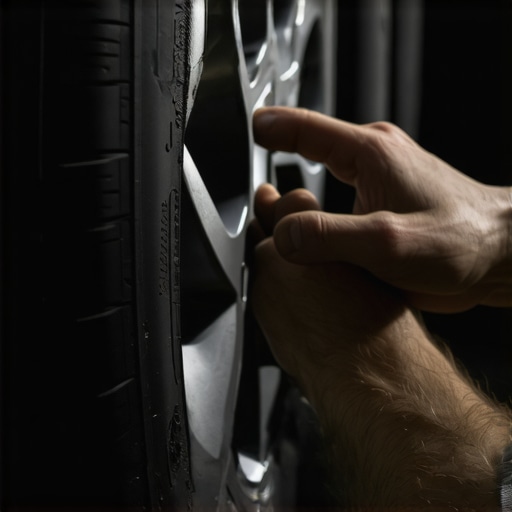
I remember standing on the shoulder of the I-85, soaked to the bone, staring at a spare tire that looked like a piece of parched leather. I’d spent all morning obsessing over expert tune-up strategies, but I’d ignored the very thing I needed right then. That “brand new” spare had been sitting in the dark for twelve years. When I finally went to put it on, the rubber felt brittle, and it wouldn’t hold a single PSI of air. It was a wake-up call. We spend so much time troubleshooting common auto repair issues before visiting the shop, but we often forget the silent guardian sitting in our trunk. Today, I’m going to help you avoid that same midnight disaster by showing you exactly how to tell if your spare is a lifesaver or a liability. Have you ever actually checked the air pressure in your spare, or are you just hoping for the best? [IMAGE_PLACEHOLDER]
Stop Trusting That Old Rubber in Your Trunk
Most of us treat the spare tire like a “set it and forget it” tool. I used to think that as long as it wasn’t used, it stayed fresh forever. I was dead wrong. Rubber is a biological product, in a sense—it degrades. According to the National Highway Traffic Safety Administration (NHTSA), tires can lose their structural integrity over time due to oxidation, even if they have zero miles on them. This is why getting more life out of your current tires doesn’t apply to a spare that’s a decade old. I once tried to help a neighbor swap a flat, only to find their spare was 14 years old; the sidewall practically turned to dust when we hit the first bump. It reminded me of the importance of keeping a solid car service checklist handy.
Is a tire really dangerous if it still looks new?
Many people are skeptical because the tread looks pristine. “It’s never touched the road,” they say. But the real danger isn’t tread wear; it’s the “dry rot” that happens from the inside out. If your spare has been sitting in a hot trunk for years, the chemicals that keep the rubber flexible have likely evaporated. This is why the hidden benefit of rotating tires every 5000 miles also involves checking your spare’s health. Have you ever checked the manufacture date on your spare, or is it a mystery waiting to happen? We’re going to dive into the physical red flags and age markers that mean it’s time for a change.
Find the Birthdate Hiding in Plain Sight
To know if your spare tire is a ticking clock, you have to find the DOT code. It’s a series of characters on the sidewall, and the last four digits are your tire’s ‘birth certificate.’ For example, ‘2412’ means the tire was made in the 24th week of 2012. If those last numbers are more than six to eight years old, you’re essentially carrying a round piece of plastic that could shatter under the weight of your car. Just like the ultimate car service guide suggests for other fluids and belts, age is often a more aggressive enemy than mileage. I once helped a guy who had a spare from 2004; it looked beautiful, but as soon as we put the car’s weight on it, the beads unseated immediately.
Identify the Signs of Internal Decay
Since you aren’t driving on the spare, you won’t feel the vibration that usually warns you of a failing tire. You have to use your eyes and hands. Run your fingers along the sidewall and between the tread blocks. You are looking for ‘checking,’ which looks like tiny spiderwebs or dry cracks. If the rubber feels hard like a hockey puck instead of slightly tacky, the oils have dried out. This is a massive red flag. Think of it like how to inspect your own cv boots for small cracks; once the integrity is compromised, a blowout isn’t a matter of if, but when. 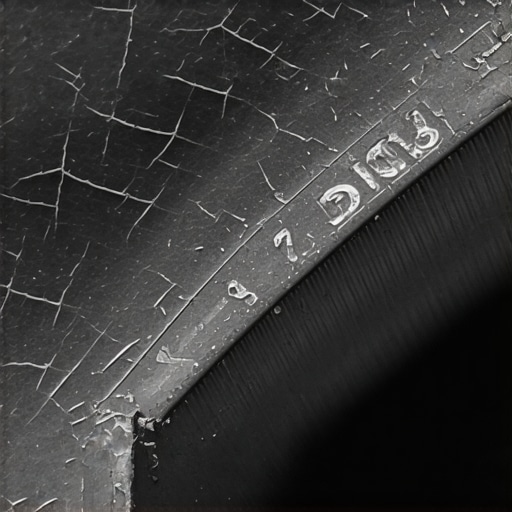
Don’t Let 60 PSI Become a Suggestion
Most temporary spares, or ‘donuts,’ require much higher pressure than your standard tires—usually around 60 PSI. Because they are small and tucked away, they lose air faster than your main set. If you pull it out and it’s sitting at 20 PSI, it’s useless. It will overheat and disintegrate within miles. I make it a habit to check mine every time I’m doing expert tune-up strategies on the engine. I remember one rainy night in Charlotte where I found my spare was flat simply because I hadn’t checked it in three years. It turned a twenty-minute fix into a three-hour tow truck wait.
Test the Hardware Before You Need It
A good tire is worthless if your jack is rusted shut. Pull the jack out of the compartment and actually wind it up and down. If it’s gritty or stuck, a little lithium grease can save your knuckles later. Also, ensure your lug wrench actually fits. If you’ve bought aftermarket wheels, the factory wrench might not fit the new nuts. This is a critical part of troubleshooting common auto repair issues before visiting the shop. I once worked on a car where the owner had a spare tire but no handle for the jack—it was like having a locked safe with no key.
The Five Minute Pressure Ritual
Every six months, drop the spare out of its carrier or lift it from the trunk well. This isn’t just about air; it’s about making sure the tire hasn’t bonded to the metal from heat and moisture. Use a dedicated pressure gauge, not just a visual check. If you notice a slow leak, it might be a failing valve stem, which is a cheap fix that prevents a total failure. This simple step is as vital as knowing the 5-minute check to prevent transmission failure. Keeping that rubber pressurized keeps the internal structure from collapsing under its own weight over years of storage.
Everyone tells you that modern cars are ‘maintenance-free’ for the first six figures on the odometer. It’s a marketing lie that fills scrap bins with perfectly good engines. While the parts might technically be rated for 100k miles, the environment they live in—road salt, extreme heat, and humidity—is not. This is one of the biggest brake service myths and tune-up fallacies out there. In my shop, I see ‘long-life’ spark plugs that have chemically welded themselves to the cylinder head because they weren’t touched for eight years. Always use the trick to replacing a spark plug without stripping threads by pulling them at 50,000 miles just to inspect them and apply a tiny bit of anti-seize. According to the Car Care Council, neglected maintenance is a leading cause of roadside breakdowns, even on vehicles with ‘long-life’ factory schedules.
Lubricate the Pins or Pay the Price Later
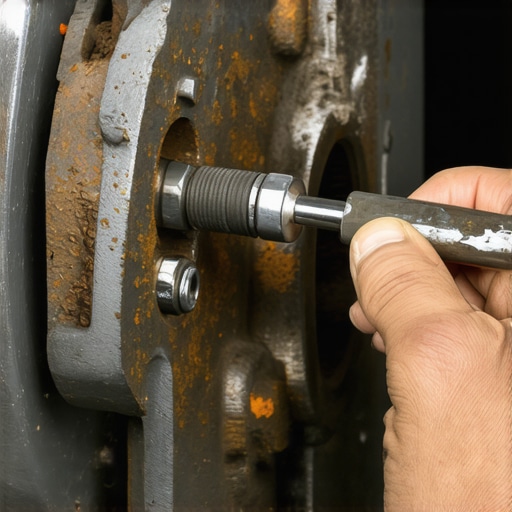
The ‘trap’ most DIYers and even some chain shops fall into is focusing solely on the ‘hard’ parts while ignoring the ‘soft’ components. You can buy the most expensive ceramic pads, but if you don’t clean and lubricate the caliper slide pins, your brakes will seize within a year. It’s a nuance that separates a professional job from a rushed one. This neglect is a common reason why your brake pedal squeaks every morning. I’ve seen brand-new rotors ruined in a week because a technician didn’t check for a collapsed brake hose that was acting like a one-way valve, keeping the pads clamped down while the driver was cruising at 70 mph.
Why do my rotors warp every few months even with high-end pads?
It’s rarely the rotor’s fault. Most ‘warping’ is actually uneven pad material transfer caused by not following the simple way to bed in new brake pads or, more frequently, a sticking caliper pin. If that pin doesn’t slide, the pad stays pressed against the rotor, creating a ‘hot spot’ that changes the metal’s molecular structure. This is the real secret behind why your brake rotors keep warping every few months. You aren’t just looking for wear; you’re looking for mechanical harmony. If you’re feeling a hard pedal or poor response, stop guessing and start how to tell if your brake booster is losing pressure. Have you ever fallen into this trap of trusting the factory ‘lifetime’ schedule only to have it backfire? Let me know in the comments.
Stop Guessing and Buy a Real Scan Tool
If you’re still relying on a $20 code reader from the bargain bin, you’re only getting half the story. To truly master the ultimate car service guide, you need a bidirectional scan tool. Why? Because sometimes your car lies to you. I’ve seen cases where a check engine light for a lean condition was actually a ghost in the machine. Learning how to tell if your computer is giving you a false error code can save you hundreds in unnecessary sensors. I personally use a mid-range Autel or Launch unit because it lets me manually trigger the ABS pump to purge air—a trick that is impossible with a basic reader and essential for understanding brake system repairs on modern vehicles with complex electronic stability control.
How Can I Keep My Car Running Smoothly for Decades?
Maintenance isn’t a one-time event; it’s a rhythm that requires both digital and physical inspection. According to technical documentation from Akebono Brake Corporation, the microscopic transfer layer of friction material is what actually stops your car, not just the mechanical pressure of pads. This is why you must master the simple way to bed in new brake pads every single time you swap them to ensure that transfer layer is even. Beyond the big parts, I recommend mastering the ‘Cigar Test.’ It sounds like an old-timer’s myth, but knowing how to detect a small vacuum leak using a simple cigar is a skill that has helped me find more cracked hoses than any expensive smoke machine. When you can see the smoke drifting out of a tiny hairline fracture in a vacuum line, you’ve found the real reason behind a rough idle. This proactive approach is the truth about why my car finally hit 200000 miles while others end up in the scrap heap before they hit six figures.

The Coming Era of Predictive Repairs
Looking ahead, we are moving away from “scheduled” maintenance toward predictive diagnostics. We are already seeing auto repair trends to watch in 2025 that involve AI-driven sensors that can predict a failing fuel pump weeks before it actually dies by monitoring current draw. Until your car can talk to you that clearly, you have to be the interpreter. Don’t just look at the dashboard; listen for the whispers. If your engine is stumbling during acceleration, it might be time to learn how to clean your throttle body to restore throttle response. It’s a ten-minute job that often feels like a $500 tune-up. My challenge to you: this weekend, don’t just wash the car. Pop the hood and find one specific component—a belt, a coolant hose, or a ground wire—that you’ve never looked at before and inspect it for signs of heat stress or corrosion. You might just catch the very problem that would have left you stranded next month.
Hard Truths from a Decade in the Garage
After years of turning wrenches, I’ve realized that the most expensive repairs are almost always the ones that were avoidable. First, age kills rubber faster than miles do; if your spare is a decade old, it is a decoration, not a backup. Second, ‘lifetime’ parts are a marketing gimmick designed to get you past the warranty period. Third, your senses are better than any cheap scanner—smell, sound, and feel are your best diagnostic tools. I’ve learned why I’ll never skip a transmission fluid change again after seeing how heat destroys internal clutches. Finally, the environment—humidity and salt—is a silent killer that requires a stricter car service checklist than the manual suggests.
Gear That Actually Belongs in Your Trunk
I don’t leave home without a few specific items that go beyond the basic roadside kit. First, a high-quality digital pressure gauge; the pencil-style ones are notoriously inaccurate for the 60 PSI needed in a donut. Second, a small can of silicone spray to keep door seals from sticking and learn how to stop your door hinges from creaking forever. Third, a portable jump starter—it’s safer and faster than cables. If you’re serious about maintenance, I also suggest looking into the best way to store your tires over the summer to prevent the very dry rot we discussed. For those tricky engine noises, I always keep a length of hose nearby; it is the secret to finding an exhaust leak with a shop vac or just pinpointing a vacuum hiss.
[IMAGE_PLACEHOLDER_E]
Your First Step Toward a Bulletproof Daily Driver
Building a reliable vehicle isn’t about one massive overhaul; it is about the small, consistent wins. When you take the time to inspect your spare or learn how to fix a squealing belt using the water spray test, you are taking control of your safety. Modern auto repair doesn’t have to be a mystery. It starts with popping the hood and trusting your gut when something feels off. Your car takes care of you every day; today is the day you return the favor. Have you ever checked the manufacture date on your spare tire, or are you driving on a mystery?