

I’ll never forget the time I almost gave up on my old ’98 Silverado. The idle was jumping around like a nervous squirrel, and I’d already spent three Saturday mornings replacing parts I didn’t need. I was convinced I was headed for an expensive shop visit until my neighbor, Joe, walked over with a cheap gas station cigar and a look of pure confidence. I thought he was joking, but that five-minute trick found a hairline crack in a vacuum line that I had missed four times. If you have been wondering how to tell if your car needs a simple tune-up or a major repair, sometimes the answer is much simpler (and smokier) than you think. Today, I am going to show you how to save yourself a hundred bucks and a lot of gray hairs by using a little low-tech ingenuity to find those hidden air leaks.
Why the Old-School Smoke Test Still Rules
A vacuum leak is basically an uninvited guest at your engine’s party. It lets in air that the computer hasn’t accounted for, which messes up the delicate air-fuel ratio. This often leads to a lean condition, much like how a dirty mass airflow sensor can trigger a lean code error. In my early days, I made the classic mistake of spraying carburetor cleaner all over a hot engine. Not only is that a fire hazard, but it is also incredibly imprecise. Professional shops use smoke machines that cost upwards of a thousand dollars to find these leaks. However, your engine doesn’t care if the smoke comes from a high-tech machine or a two-dollar cigar; it just needs a visible medium to show you where the suction is pulling. By troubleshooting common auto repair issues before visiting the shop, you take back control of your maintenance budget. According to the experts at Car and Driver, unmetered air is one of the most common causes of modern engine stumbling, yet it is often the hardest to visualize without a smoke source.
Does Blowing Smoke into Your Engine Actually Work?
I know what you are thinking. It sounds like something out of a cartoon. You might be worried about getting soot in your intake or looking ridiculous in front of your neighbors. Trust me, I had the same skepticism. But here is the reality: a vacuum system is a sealed environment. When the engine is off, any opening becomes an exit for smoke if you apply just a tiny bit of pressure. It is the most reliable way to find those ‘ghost’ leaks that only happen when the rubber gets warm or shifts under load. Have you ever spent hours chasing a ‘hissing’ sound that seemed to disappear the moment you reached for it? Let me know in the comments if you have ever tried a DIY trick that felt crazy until it actually worked! We are about to dive into the step-by-step process of setting this up safely and effectively.First things first: your engine needs to be stone-cold before you start poking around. You are going to be touching rubber hoses and plastic components that become brittle when hot, and there is no faster way to ruin your Saturday than burning your knuckles on a hot exhaust manifold. I learned this the hard way back in ’09 while working on a friend’s Corolla. I was so eager to find a ‘whistling’ leak that I reached right over the block and left a nice strip of skin on the heat shield. Safety is the difference between a successful DIY project and an accidental trip to the emergency room.
Find a Gateway into the System
You need a direct line into the intake manifold to make this work. Think of the intake manifold as the lungs of your car. If there is a hole in those lungs, the engine cannot breathe correctly. The easiest way to get smoke inside is through the brake booster vacuum hose. It is usually a thick, sturdy black hose that connects the large circular brake booster—located behind your master cylinder—to the engine. Unplug it from the booster side, not the engine side. This becomes your dedicated ‘input’ port for the smoke. If you cannot locate that specific hose, look for any small vacuum port on the manifold itself. This is a critical part of your tune-up for peak performance because it allows you to test the integrity of every single gasket from the inside out without disassembling the top end of the motor. 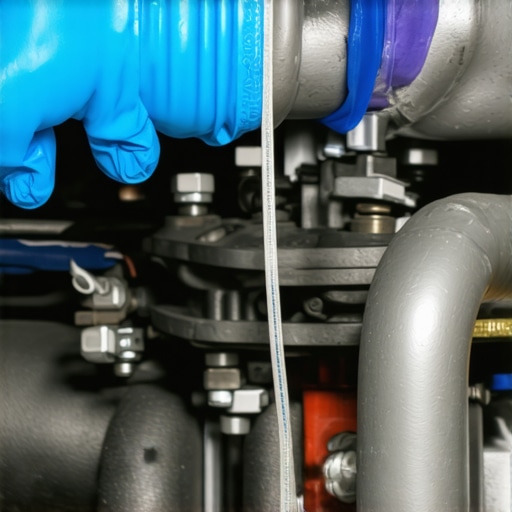
Block the Front Door or You Will Waste Your Time
Here is where most DIYers fail. If you just blow smoke into a hose, it is going to take the path of least resistance, which is right out through your air filter and into the driveway. You have to seal the ‘front door’—specifically the throttle body or the air intake snorkel. I use a simple trick: remove the air filter housing and stretch a thick latex glove or a piece of heavy-duty plastic wrap over the intake tube, then secure it tightly with a large rubber band or a zip tie. When I did this on my old Silverado, I did not seal it well enough at first. The smoke just lazily drifted out of the air box, making me think the whole manifold was cracked. Once I cinched that glove down tight, the pressure actually built up, and that is when the magic happened. You are essentially turning your engine into a giant balloon. If that balloon has even a pinprick hole, the smoke will find it.
The Moment of Truth with the Cigar
Now, light your cigar. You do not need to be a fan of tobacco to do this; you just need the volume of smoke. Take a deep drag (do not inhale!) and blow it steadily into the hose you disconnected earlier. You might need a small funnel or even a piece of vinyl tubing to bridge the gap between your mouth and the car’s vacuum line. As the manifold fills up, keep a high-powered flashlight handy. You are looking for a tiny, ghostly wisp of smoke escaping from somewhere it should not be. This is often why your car makes a whistling sound when you turn it off—the residual pressure is bleeding out of a hairline crack. Do not forget to wiggle the hoses while you do this. Sometimes a crack in a rubber line is ‘self-sealing’ until the engine vibrates or the hose shifts under load.
Don’t Forget the Crankcase Connections
While you are hunting, pay close attention to the PCV system. It is easy to focus on the big intake gaskets, but how a clogged PCV valve leads to expensive oil leaks is a reminder that the entire internal pressure system is connected. If you see smoke pouring out of the oil dipstick tube or the oil filler cap, it might indicate a failing PCV valve rather than a simple vacuum leak. This kind of troubleshooting common auto repair issues before visiting the shop saves you from the ‘parts cannon’—the expensive habit of replacing every sensor in sight when the problem is just a two-dollar piece of cracked rubber.While finding a vacuum leak with a cigar makes you feel like a genius, real automotive expertise comes from knowing when to stop and look at the chemistry of your vehicle. Let’s dig deeper into why simply replacing parts isn’t the same as truly servicing a machine. A common myth I see all the time is the over-maintenance trap, specifically regarding brake pads. Most drivers assume that buying the most expensive ceramic pads is the ultimate upgrade. In reality, ceramic pads can be quite ineffective for a light commuter car in a cold climate because they require significant heat to reach their optimal friction coefficient. Sometimes, a high-quality semi-metallic pad is actually the safer, more responsive choice for daily driving. It is one of those brake service myths what you need to know before your next stop to avoid wasting your budget on upgrades that do not fit your driving environment.
The Brake Fluid Trap Most DIYers Ignore
Here is the specific oops factor that kills more master cylinders than I can count: ignoring the fluid chemistry while focusing on the hardware. People swap pads and rotors all day but leave that dark, murky liquid in the lines. If your brake fluid looks like coffee creamer, it is heavily saturated with water. According to a study by the American Automobile Association (AAA), brake fluid is hygroscopic, meaning it actively absorbs moisture from the air. This moisture lowers the boiling point of the fluid and corrodes your ABS valves from the inside out. When you compress the caliper piston to fit new pads without opening the bleeder valve, you risk forcing that contaminated gunk backward into your expensive ABS module, leading to a much larger repair bill later. 
Why do your new brakes still squeal after a perfect install?
The answer usually lies in the bedding process rather than the parts themselves. You cannot simply slap on new rotors and head to the grocery store. You must follow the proper way to break in new brake pads and rotors by performing a series of controlled, aggressive stops to transfer a uniform layer of pad material onto the rotor face. If you skip this, you will develop uneven deposits that mimic the feeling of a warped rotor, even though the metal is perfectly straight. This attention to detail is the difference between a simple car service and a professional-grade restoration. Have you ever spent a fortune on high-end parts only to have the same annoying noise return a week later? Let me know in the comments, because I have certainly been there!
Think Beyond the Spark Plugs
Finally, we need to address the 100,000-mile hurdle. In the old days, a tune-up was just points and plugs; today, it is a data-driven deep dive. People often ignore the real cost of skipping your 100000-mile major service, which should include checking long-term fuel trims and cleaning the throttle body. When you maximize your cars lifespan with expert tune-up strategies, you are not just throwing parts at the engine; you are verifying that the sensors are communicating correctly. This level of care is what defines the ultimate car service guide when and why to schedule maintenance, ensuring your vehicle remains efficient for another decade. Have you ever fallen into the cheap parts trap? I would love to hear your story below!To truly move beyond basic part-swapping, you need to see what the computer sees. I spent years guessing which sensor was failing until I finally invested in a decent OBD-II scanner with live data graphing. A standard code reader tells you the ‘what,’ but live data tells you the ‘why.’ For example, watching your short-term fuel trims in real-time can tell you if that vacuum leak we found earlier is actually fixed or if the computer is still struggling to compensate. If you want to dive deep, understanding brake system repairs a guide for vehicle owners requires more than just a wrench; it requires knowing how to interpret the data your car provides. This is the foundation of a professional-grade car service checklist how to keep your vehicle in top shape.
Stop Guessing and Start Measuring with a Torque Wrench
The biggest mistake I see in home garages is the ‘good enough’ mentality when tightening bolts. I used to think my elbow was a calibrated instrument until I snapped a water pump bolt on a Sunday afternoon. Now, I use a click-type torque wrench for everything from spark plugs to lug nuts. Precision is the secret to getting 200000 miles out of your original engine because it prevents warped heads and uneven brake rotor wear. When you follow the proper way to torque wheel bolts without a manual, you are ensuring the mechanical longevity of the entire hub assembly. #IMAGE_PLACE_HOLDER_D#
How do I keep my car running like new for decades?
Consistency beats intensity every single time. It is not about one massive overhaul every five years; it is about the small, data-driven checks every six months. According to Bosch technical bulletins, an oxygen sensor’s response time can degrade significantly after 100,000 miles without ever triggering a Check Engine Light, quietly robbing you of up to 15% of your fuel economy. By staying ahead of these invisible wear items, how regular tune-ups improve fuel efficiency and safety becomes a reality rather than a marketing slogan. You should also be looking at auto repair trends to watch in 2025 staying ahead of the curve, as vehicles become more software-dependent. I predict we will see a shift where ‘mechanical’ repairs are increasingly solved by software calibrations, making your diagnostic tools even more valuable than your socket set. If you really want to maximize your cars lifespan with expert tune-up strategies, start keeping a digital log of every fluid change and sensor reading. My advanced tip for you today: grab a simple multimeter and check your battery’s resting voltage and your alternator’s output tonight. It takes two minutes and can prevent a ‘no-start’ headache next week!
Hard-Won Truths from My Garage Floor
After decades of turning wrenches, I have realized that the most expensive tool you own is your own patience. I used to rush through every car service, thinking speed was a sign of skill, but I quickly learned that skipping the small stuff leads to catastrophic failures. For instance, I once ignored a slight whistle because I was too tired to check the vacuum lines again, and a week later, I was dealing with a melted catalytic converter from a lean misfire. Another lightbulb moment was realizing that brake service is as much about chemistry as it is about mechanics; if you don’t respect the fluid, the hardware won’t respect you. Finally, always trust your gut—if something feels ‘off’ after a repair, like why your gas mileage dropped suddenly after a spark plug change, go back and re-check your work immediately.
The Toolkit That Never Let Me Down
If you are serious about moving past simple oil changes, there are three things I recommend keeping in your trunk. First, a reliable digital multimeter is non-negotiable; you can even learn how to test your alternator with a simple multimeter at home in under five minutes. Second, get a dedicated brake bleeder kit to ensure you never trap air in the lines. Third, I highly recommend a vehicle-specific repair manual. These specialized guides offer deeper insights than generic videos and show the secret to making your brake pads last twice as long through proper lubrication points that most people miss. #IMAGE_PLACEHOLDER_E#
Take Ownership of Your Engine’s Future
There is a profound sense of empowerment that comes from hearing your engine purr after you have personally solved a complex mystery. You don’t need a professional lift or a degree in engineering to excel at auto repair; you just need curiosity and a willingness to get your hands dirty. Every time you perform a tune up or hunt down a weird noise, like why your car whines like a jet engine when you accelerate, you are building a relationship with your vehicle that saves you thousands of dollars over its lifespan. Don’t be afraid of the complexity of modern cars—they are still just machines that need air, fuel, and spark. Have you ever discovered a car problem using a ‘crazy’ DIY method like the cigar smoke test? Let me know in the comments below!