

I remember it like it was yesterday—a freezing Tuesday morning, coffee in hand, and a meeting I couldn’t afford to miss. I turned the key, expecting that familiar roar, but all I got was a pathetic, rhythmic clicking. My heart sank. I’d spent years tinkering with scheduled maintenance, yet there I was, stranded in my own driveway. It’s a vulnerable feeling, isn’t it? You’re at the mercy of a lead-acid box that you haven’t thought about in three years. Earlier in my DIY journey, I made the expensive mistake of rushing to the parts store and buying a brand-new $150 battery, only to realize later that my old one just needed a deep charge. I felt like a total amateur. But that failure taught me something valuable: you don’t need a professional shop to tell you if your battery is toast.
That Heart-Sinking Sound When Your Engine Won’t Turn Over
The frustration of a non-starting car usually leads to a frantic Google search or an expensive tow. We’ve all been there, wondering if it’s the starter, the alternator, or just a simple discharged battery vs. a truly dead one. Most people assume that if the lights are dim, the battery is gone. But it’s rarely that black and white. According to AAA, extreme heat actually does more damage to battery internal chemistry than the winter cold, even if the failure only shows up when the temperature drops. Today, I’m going to show you how to cut through the guesswork. We are going to look at the reasons your car struggles to start and how a 30-second test can save you a massive headache during your next auto repair troubleshooting session.
Is a Fancy Multimeter Really Necessary for This?
You might be thinking, “I’m not an electrician, and I don’t own a lab’s worth of tools.” That’s the exact skepticism I had before I learned the simple tricks for checking electrical health at home. You don’t need a PhD in electrical engineering to get a clear picture of your vehicle’s health. Have you ever felt that surge of annoyance when you realize you’ve paid for a service you could have done in your pajamas? Tell me, have you ever been stranded by a battery you thought was fine just a week ago? We’re going to fix that lack of confidence right now.
Before you go dropping cash on a new battery, we need to do a little detective work. Think of your car’s electrical system like a plumbing circuit: the battery is a water tower, and the alternator is the pump that keeps it filled. If the tower is empty, is it because the tower is leaking (a dead battery) or the pump stopped working (a bad alternator)? To find out, we start with the simplest tool you have: your eyes.
Look for the White Crusty Stuff First
Pop the hood and look at those metal terminals. If they are covered in a fuzzy white, green, or blue powder, you’ve found a major culprit. This corrosion acts like an insulator, blocking the flow of electricity. I remember a humid July when my old truck wouldn’t start for three days straight. I was convinced I needed a full auto repair overhaul. In reality, a five-minute cleaning with a wire brush and some baking soda water brought it back to life. It was a humbling lesson in checking the basics first. If your terminals look clean but the car still struggles, it is time to move beyond the visual and consult your car service checklist to ensure you aren’t missing other vital connection points.
Get Real Numbers With a Multimeter
This is where we move from guessing to knowing. Set your digital multimeter to 20V DC. With the engine off, touch the red probe to the positive terminal and the black probe to the negative. A fully charged battery should read 12.6 volts. If you’re seeing 12.2V, your battery is only about 50% charged. If it’s below 12V, it’s effectively flat. 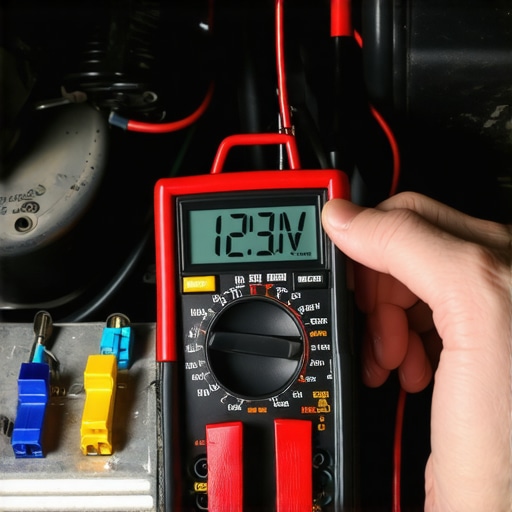 This is the moment of truth where you determine how to tell if a battery is just discharged or truly dead. When I first started doing this, I found a battery reading 10.5V. That specific number usually means a cell has shorted out internally—no amount of charging will save it. However, if the battery reads a healthy 12.6V but the car still won’t crank, you might be dealing with a bad ground wire or a failing starter motor.
The Crank Test Tells the Full Story
Numbers at rest are great, but the real test happens under load. Have a friend crank the engine while you watch the multimeter. A healthy battery shouldn’t drop below 9.6 to 10 volts during the start. If it plunges into the 5V or 6V range, the battery lacks the “muscle” (cold cranking amps) to turn the engine over. This is often the precursor to a more extensive car tune up because a weak battery puts immense strain on your starter and alternator, potentially leading to more expensive repairs down the road.
Is Your Alternator Actually the Problem?
Once the car is running, the multimeter should now read between 13.5 and 14.7 volts. If the voltage stays at 12.6 or starts dropping while the engine is running, your alternator isn’t charging the battery. You could buy ten new batteries and the car will still die because the “pump” is broken. Learning how to replace your own alternator can save you hundreds in labor costs. Don’t forget that electrical gremlins sometimes hide in plain sight; if your lights are flickering or your dash is acting weird, professional diagnostics might be necessary to find a parasitic draw that is draining your battery overnight while you sleep.
A common myth in the modern era is that the “tune-up” is a relic of the past, like carburetors or cassette decks. Dealers often tell you your car is maintenance-free for 100,000 miles, but I call nonsense on that. In my years of working on high-mileage engines, waiting that long is a recipe for disaster. While we don’t adjust points anymore, you absolutely need to focus on expert tune-up strategies that involve cleaning the fuel system and checking sensor responsiveness. Failing to do so is why so many people experience a mystery hesitation that traditional shops can’t seem to find. I’ve seen firsthand how regular tune-ups improve fuel efficiency by simply addressing carbon buildup before it triggers a Check Engine Light. According to a report by the Car Care Council, nearly 80% of vehicles on the road have at least one unperformed maintenance task that could lead to a major breakdown. Don’t be part of that statistic by skipping the small stuff. One of the most heartbreaking mistakes I see is the “Part Cannon” approach. This is where you see a code, buy the part, swap it, and nothing changes because you ignored the nuance. For instance, the trick to replacing a spark plug without stripping threads isn’t just about being careful; it’s about understanding thermal expansion in aluminum heads.
The Brake Service Trap That Warps Your Rotors
Most people think a brake job is just “slapping on pads.” If you do that, you’re falling for one of the most persistent brake service myths out there. Have you ever wondered why your brake rotors keep warping every few months? It’s rarely a bad part from the factory. It’s almost always because the technician—or you—skipped the simple way to bed in new brake pads. Without that heat-cycling process, the pad material transfers unevenly, creating those annoying pulses. It’s a nuance that separates a driveway hack from a seasoned pro.
Why is the Computer Throwing Codes for Parts That Aren’t Broken?
This is the peak of frustration. You get a code for an O2 sensor, but the sensor itself is perfectly fine. This is when you need to know how to tell if your computer is giving you a false error code. Often, a “ghost” electrical leak or a pin-sized vacuum leak elsewhere is confusing the computer’s logic.  I once spent three days chasing a lean code only to realize a $5 hose was cracked on the underside where I couldn’t see it. It’s easy to feel defeated when the technology seems to be working against you. Have you ever fallen into this “part-cannon” trap? Let me know in the comments. I’d love to hear how you finally solved your mystery issue.
Stop Guessing and Start Reading the Real Data
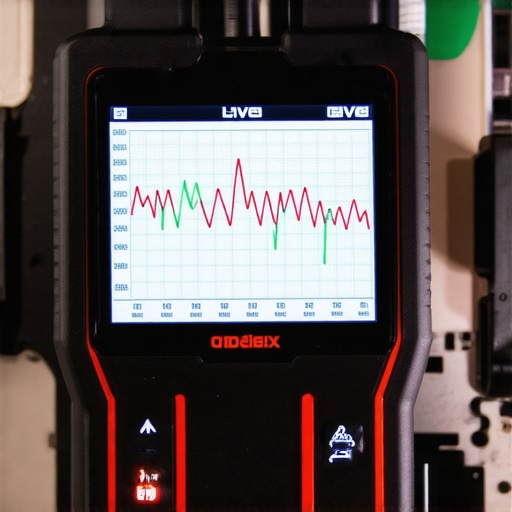
If you really want to stop being a victim of the ‘part-cannon’ approach I mentioned earlier, you have to upgrade your toolkit. I’m not talking about buying a bigger set of wrenches; I’m talking about data. For years, I relied on a cheap $20 OBDII scanner that just spat out codes. It was like trying to diagnose a fever with only a ‘yes/no’ thermometer. These days, I don’t touch a vehicle without a bidirectional scan tool. Why? Because it allows me to command the car’s computer to perform tasks, like cycling the ABS pump or testing an individual fuel injector. This is exactly how professional diagnostics pinpointed my last electrical ghost. Instead of tearing the dash apart because of a clicking sound under your dash, you can use the tool to toggle specific actuators and find the failure in seconds.
How do I keep my car running like new for a decade?
The secret to vehicle longevity isn’t just following the manufacturer’s manual—it’s about being proactive before the sensors even trigger a light. I’ve found that a car service checklist is only as good as your willingness to look for ‘pre-failures.’ For instance, most people wait for a puddle to form before checking their transmission. I prefer the 5-minute check; I look at the fluid color and smell. If it’s dark or if the transmission fluid smells like fish, I know a flush is overdue before the gears start slipping. This level of attention is what defines expert tune-up strategies. It’s the difference between a car that makes it to 300,000 miles and one that ends up in a scrap yard at 120,000.
The Future of Your Garage Isn’t Just Wrenches
We are entering an era of ‘Software Defined Vehicles.’ As we look at auto repair trends to watch in 2025, the shift toward over-the-air updates and encrypted gateways is changing the game for DIYers. According to the Equipment and Tool Institute (ETI), technicians now spend nearly 50% of their time on software-related diagnostics rather than mechanical turning. This means you need to stay educated on J2534 reprogramming if you plan on doing your own car tune up for peak performance on a modern vehicle. If you don’t keep up with the digital side, you might find yourself unable to even bleed your own brakes without a software handshake.
Don’t Ignore the Subtle Warnings
Your car is constantly talking to you through vibrations and sounds. I remember a case where a simple tune-up fixed my mystery hesitation that three other shops couldn’t find. They were looking for broken parts; I was looking for a ‘lazy’ oxygen sensor that was still within its operating range but reacting too slowly. This is the nuance that keeps you out of the brake service trap or prevents you from wasting money on parts you don’t need. My advice? This weekend, don’t just wash your car. Plug in a scanner, look at your live data stream (specifically your Short Term Fuel Trims), and see if your engine is working harder than it should. Taking that one advanced step today will save you thousands in scheduled maintenance costs later. If you’re feeling stuck on a specific code, reach out through our contact us page and let’s figure it out together.
The Most Expensive Lesson I Ever Learned Under a Hood
After decades of turning wrenches, I’ve realized that the ‘part-cannon’ approach is the fastest way to drain your bank account. One of the biggest myths is that the car’s computer is always right; in reality, you have to know how to tell if your computer is giving you a false error code. Most ‘failed’ parts are actually victims of poor connections or upstream issues. My lightbulb moment happened when I stopped looking for what was broken and started looking for what was interfering with the signal. Whether it is carbon buildup or a tiny vacuum leak, the nuance is where the real fix lives.
- Grounds are everything: 80% of mystery electrical issues are just loose or corroded wires touching the frame.
- Heat is the silent killer: From batteries to transmissions, keeping things cool is the secret to expert tune-up strategies.
- Listen to the rhythm: A car that hesitates is trying to tell you about its air-fuel ratio long before a light pops up.
My Personal Toolkit for Success
I don’t go anywhere without a few specific items that have saved me thousands. First, a high-quality bidirectional scan tool is non-negotiable for modern vehicles. Second, I always keep a copy of my personal car service checklist in the glovebox to track small changes over time. I also trust specialized technical data over generic forum advice when performing a deep brake system repair. If you are tackling your own maintenance, having the right information is just as important as having the right socket set.
You Are More Capable Than the Dealership Wants You to Think
It is easy to feel intimidated by modern sensors and complex wiring, but at the end of the day, an engine still needs air, fuel, and a spark. By staying curious and watching auto repair trends to watch in 2025, you are already ahead of most drivers. Don’t be afraid to get your hands dirty and start troubleshooting common auto repair issues on your own. You have got the tools and the knowledge—now it is just time to turn the key. Have you ever discovered a ‘ghost’ issue that turned out to be something incredibly simple? Let me know in the comments below!