
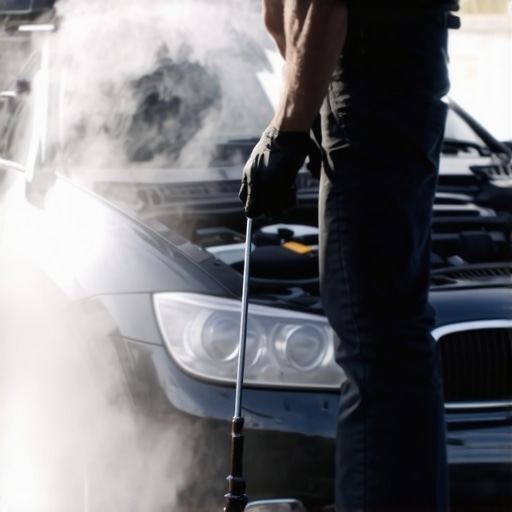
I was halfway up a steep grade in the Blue Ridge Mountains when I first smelled it—that sickly sweet, scorched scent that every car owner eventually learns to fear. I didn’t have a temperature gauge, just a gut feeling that something was wrong. Like a fool, I kept the pedal down, thinking I could make the crest. I couldn’t. By the time I pulled over, the fluid was boiling, and I’d effectively toasted my gearset. It was an expensive lesson in listening to my vehicle, and it’s why I’m so passionate about helping you avoid the same fate. Today, we’re going to look at the subtle (and not-so-subtle) signs that your transmission is running too hot, even if your dashboard is keeping secrets from you. Catching this early is just as vital as knowing why you should never wait for your oil light to come on. [image_placeholder]
Stop Your Car Before the Transmission Toasts Itself
I used to think that without a fancy digital monitor, I was flying blind. I was wrong. Your car actually screams for help; you just have to know the language. High heat is the number one killer of automatic transmissions, often caused by heavy towing, steep grades, or old fluid that has lost its cooling properties. This is why I always tell my neighbors that regular fluid changes are non-negotiable. If you’ve ever felt a strange hesitation while driving, it might not just be an engine issue; it could be the heat thinning your fluid to the point where it can’t hold pressure. It is a terrifying feeling when your car starts acting up in the middle of traffic, but usually, the signs were there long before the breakdown.
Can you really trust your gut over a digital readout?
Absolutely. Most people think they need a lab to tell if their car is stressed, but your nose and your ears are your best tools. According to the experts at the Automatic Transmission Rebuilders Association (ATRA), even a 20-degree increase above the ideal operating temperature can cut the life of your transmission in half. Have you ever noticed a faint burning smell after a long drive and just ignored it? Drop a comment below if you’ve ever felt like your car was trying to tell you something but you weren’t sure what. That’s exactly how I started my most expensive repair journey. When your transmission overheats, the fluid oxidizes, losing its ability to lubricate. You might notice clunking when shifting into reverse or a strange ‘hunting’ sensation where the car can’t decide which gear it wants. These are red flags that shouldn’t be ignored, and they often mirror the urgency of a 5-minute check to prevent transmission failure. Understanding these cues is the first step toward saving your wallet from a total overhaul.
Pop the Hood and Read the Red Flags
Dealing with a hot transmission is a race against time. The first thing you need to do is pull over and check the fluid condition. If your car is newer, you might find yourself frustrated by a sealed system. I remember a humid Saturday afternoon trying to help a friend with a late-model sedan that was shuddering on the interstate. We spent twenty minutes just figuring out how to check transmission fluid levels without a dipstick using the fill-plug method. It was messy, and we both ended up covered in road grit, but that single check revealed fluid that looked more like chocolate milk than cherry juice. If the fluid is dark or smells like a burnt match, the internal components are likely already sustaining damage. 
What the color of your fluid says about its health
Healthy transmission fluid should be a translucent pink or bright red. When it overheats, the organic molecules break down, turning it a muddy brown or deep black. This isn’t just a cosmetic change; it means the fluid has lost its viscosity and can no longer provide the hydraulic pressure needed to shift gears properly. This breakdown is often why your transmission won’t shift into its top gear. If you see bubbles or foam on the dipstick or at the fill port, it means the fluid is aerated—essentially, it’s boiling—and it can’t lubricate the moving parts effectively.
The Heater Trick that Might Save Your Engine
If you’re stuck on a steep grade and see that dashboard warning or smell that sweet burn, you need to do something counterintuitive: turn your cabin heater to full blast. Your heater core acts as a secondary radiator, pulling heat away from the engine block and the integrated transmission cooler. I once used this desperate trick to limp a loaded truck through the Mojave desert. It was 105 degrees outside, and I was sweating buckets with the heat cranked to the max, but the needle stayed out of the red. It’s fascinating why your engine temp drops when you crank the heater, and in an emergency, that 10-degree difference can be the margin between reaching a mechanic and a total meltdown.
Identify the source of the heat before it’s too late
Overheating usually stems from three main culprits: low fluid levels, a clogged external cooler, or internal clutches that are already slipping. If you’ve been diligent about your car service checklist, you likely won’t hit these extremes unexpectedly. However, if the car feels like it’s struggling even on flat ground, you need to start troubleshooting common auto repair issues before visiting the shop. Sometimes, adding a simple secondary cooler can prevent a repeat performance of a mountain-climb disaster, especially if you tow frequently. Every time you push through a ‘minor’ slip or ignore a hot scent, you’re shaving thousands of miles off the vehicle’s life. Think of a hot transmission like a medical fever; you don’t just ignore it and hope the underlying infection goes away. You stop, diagnose, and treat the source of the heat.
The Tune-Up Myth That Is Draining Your Wallet
Most people treat a ‘tune-up’ like a spiritual reset for their car, expecting it to fix everything from a rough idle to poor gas mileage. Here is the contrarian truth: the traditional tune-up died in the 1990s. In the age of computerized engine management, swapping out spark plugs is rarely the silver bullet people think it is. If you have already looked over the ultimate car service guide, you know the basics, but the nuance is where the real money is saved. I have seen countless DIYers spend a fortune on high-end coils and platinum plugs when the actual culprit was a $10 vacuum hose or a dirty mass airflow sensor. To truly tune up your car for peak performance, you have to stop thinking about parts and start thinking about data. If you are just throwing parts at a problem, you are not maintaining a vehicle; you are gambling. Have you ever fallen into this trap where a ‘simple’ tune-up turned into a parts-cannon disaster? Let me know in the comments.
Why do your brand-new brakes start pulsing after only a few thousand miles?
This is one of the most frustrating experiences for any car owner. You just paid for a full understanding of brake system repairs, and yet, the steering wheel shakes every time you slow down. Most mechanics will tell you the rotors ‘warped’ from heat. In reality, it is rarely a physical bend in the metal. True warping requires temperatures that most street cars never reach. What you are actually feeling is ‘cementite’ or uneven pad transfer. According to researchers at the National Institute for Automotive Service Excellence (ASE), this happens when pads are not properly ‘bedded’ or when a driver holds the brake pedal down firmly after a high-speed stop, ‘printing’ the pad material onto the hot rotor. This creates high spots that feel exactly like a warped disc. It is one of those brake service myths that leads people to replace perfectly good parts prematurely. 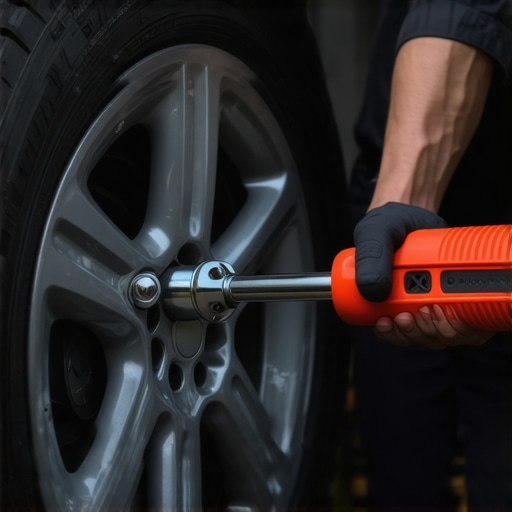
Stop Letting Shops Ruin Your Rotors With an Impact Wrench
The ‘Oops’ factor in auto repair is often found in the tools, not the parts. The most common mistake I see—even in professional shops—is the over-reliance on the pneumatic impact wrench. When a technician zips your lug nuts on without a care, they create uneven clamping force across the hub. This uneven pressure is the number one reason why your brake rotors keep warping every few months. It stresses the metal and leads to lateral runout. Always insist on the correct way to torque lug nuts to prevent rotor warping, which involves a calibrated torque wrench and a star pattern. If you don’t see a torque wrench in the technician’s hand during a tire rotation, you are likely looking at a future brake vibration. Staying ahead of these nuances is the only way to maximize your cars lifespan with expert tune-up strategies. Don’t let a 30-second shortcut in the shop turn into a $400 repair bill next month. Effective troubleshooting common auto repair issues starts with knowing exactly how the work should be performed and is the truth about why my car finally hit 200,000 miles.I used to think a basic socket set and a dream were enough to keep a car on the road indefinitely. I was wrong. To really master the art of the long-term save, you have to move beyond the physical and into the digital. If you are serious about avoiding the scrap yard, you need to own a bidirectional OBD2 scanner. Unlike the cheap code readers that just spit out a generic ‘Check Engine’ light, a bidirectional tool allows you to command the car’s computer to test individual components, like a fuel pump or an cooling fan. I’ve personally used this to see how professional diagnostics found my ghost electrical leak that three different shops missed. It is about having a conversation with the vehicle’s ECU rather than just guessing which sensor is failing.
Stop Guessing and Start Reading Your Car’s Mind
One of the most underutilized pieces of gear in a home garage is the smoke machine. When I first struggled with a rough idle, I spent weeks swapping gaskets. Then, I learned how to find an EVAP leak using a simple smoke machine, and I found a pinhole leak in a plastic vacuum line in thirty seconds. This level of precision is exactly how you maximize your cars lifespan with expert tune-up strategies. If you aren’t looking at ‘Fuel Trims’—which is the computer’s way of compensating for air leaks—you are essentially flying a plane without a dashboard. According to technical standards from SAE International (Society of Automotive Engineers), monitoring these short-term and long-term fuel trims can alert you to a failing fuel injector or a vacuum leak months before a light ever appears on your dash. [image_placeholder]
How do I maintain my vehicle’s health for the next 100,000 miles?
The secret isn’t just buying expensive parts; it is consistency and the right chemicals. I am a firm believer in the 5,000-mile oil change, regardless of what the manufacturer’s ‘life monitor’ says. As engines age, the internal seals become brittle, and the blow-by gases increase. This is where you have to learn the truth about synthetic oil in high-mileage engines. Using a high-zinc or high-seal-swell oil can actually stop minor leaks before they turn into puddles on your driveway. Beyond the oil, you have to realize how regular tune-ups improve fuel efficiency and safety by keeping the ignition system at peak performance. If your spark plugs are fouled, your catalytic converter is working double time to burn off that extra fuel, which leads to a $1,000 repair bill you could have avoided with a $40 set of plugs.
The Future of the Driveway Mechanic
As we look toward auto repair trends to watch in 2025, the landscape is shifting toward telematics and encrypted gateways. Manufacturers are making it harder for the average person to access their own data. This means that ‘right to repair’ isn’t just a slogan; it’s a necessity for anyone who wants to keep an older car running. I predict we will see a massive rise in cloud-based DIY diagnostics where you can rent professional software by the hour. My advice? Get comfortable with data now. Next time your car acts up, don’t just clear the code. Look at the ‘Freeze Frame’ data to see exactly what the engine was doing the moment the error occurred. This one habit will save you more money than any coupon or discount shop ever could. Try using a scanner to check your live coolant temperature tonight; you might be surprised how close you are to the ‘danger zone’ without even knowing it.
The Expensive Lessons I Had to Learn Twice
Looking back at my mountain-side disaster, I realize it wasn’t just about a hot transmission; it was about a lack of curiosity. First, the ‘lifetime fluid’ promise is the biggest lie in the automotive industry—fluids are chemicals, and chemicals break down under pressure. Second, your dashboard is a filter, not a direct feed; by the time a warning light appears, the damage is often underway. Third, I realized that understanding the ultimate car service guide is a better safety net than any extended warranty. These lightbulb moments changed how I drive every single day and taught me to prioritize systems over simple parts.
Gear That Actually Earns Its Spot in My Toolbox
If you want to move beyond basic repairs, you need tools that provide data rather than just leverage. I personally swear by a bidirectional OBD2 scanner; it is the only way to truly maximize your cars lifespan with expert tune-up strategies by seeing exactly what the ECU sees. I also recommend keeping a digital infrared thermometer in your glovebox—it is how I check for sticking calipers or clogged radiators without getting burned. For those who want to master the diagnostic mindset required for troubleshooting common auto repair issues before visiting the shop, I highly recommend reading ‘Zen and the Art of Motorcycle Maintenance’ by Robert Pirsig. It is less about mechanics and more about the quality of attention we give our machines.
Take the Keys Back from the Dealership Mentality
The biggest hurdle to a 200,000-mile car is the fear that modern vehicles are too complex to touch. But as we have seen with auto repair trends to watch in 2025, the basics of heat, friction, and proper lubrication remain the same regardless of software. Whether you are performing your own brake system repairs or monitoring fuel trims, you are the ultimate advocate for your vehicle’s health. Don’t wait for a breakdown to start listening to what your car is telling you. Have you ever tried the heater-on-full-blast trick during a summer traffic jam to save an engine? Let me know your best ‘side-of-the-road’ survival stories in the comments below.