
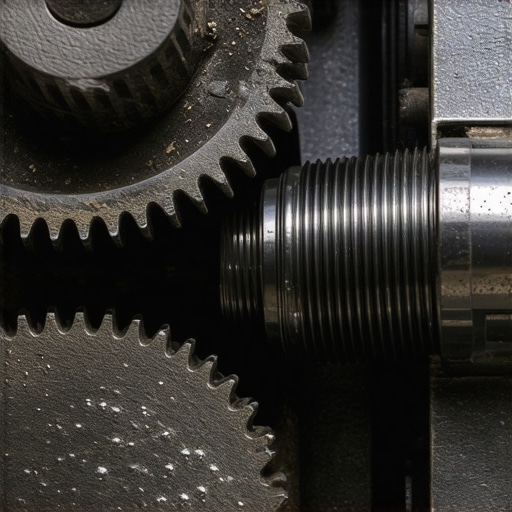
The coffee was still steaming in my cup holder when I pulled the lever back to ‘R’. Then, it happened. A heavy, metallic clunk echoed through the cabin, shaking my seat and my confidence. I spent the next twenty minutes frantically googling repair costs, convinced my transmission was about to drop out onto the pavement. If you’ve felt that same heart-stopping jolt, you aren’t alone. It’s one of those visceral car problems that makes you want to sell the vehicle and buy a bicycle. But before you panic and start looking for a fair scrap valuation, let’s talk about what’s actually happening when your car protests a simple gear change.
Stop Assuming Your Transmission is Dead
It’s easy to jump to the worst-case scenario. I used to do it all the time. Early in my DIY days, I misdiagnosed a simple loose bolt as a blown head gasket—don’t ask, it was embarrassing. The truth is, that shifting clunk is often a cry for help from parts that aren’t even inside the transmission case. We are going to pinpoint exactly where that noise is coming from, whether it’s a worn-out mount or something as simple as fluid that has lost its chemical integrity. My goal today is to help you breathe a sigh of relief or, at the very least, give you the right vocabulary so a shop doesn’t overcharge you for a standard car service.
Will this noise leave me stranded on the side of the road?
That’s the big fear, isn’t it? While a clunk is rarely an “engine explodes today” situation, ignoring it is how you end up with a massive bill. According to the Car Care Council, nearly 80% of major transmission failures could have been prevented with early diagnosis and routine fluid checks. I learned this the hard way when I ignored a similar noise in my first truck. I thought I was being “frugal,” but I was actually just being stubborn. Eventually, a $50 part turned into a $1,200 headache because I didn’t know how to use my ears to find a clunk. Have you ever felt that specific “thud” and just hoped it would go away if you turned the radio up? Trust me, it doesn’t work. We need to look at everything from preventing transmission heat damage to those sneaky engine mounts that perish over time. By checking the 5-minute health indicators, we can determine if this is a DIY fix or a job for the pros.
Look Under the Hood While Someone Shifts
To find a clunk, you need to see the physics in action. Your engine and transmission are heavy chunks of cast iron and aluminum held in place by rubber-and-metal mounts. Think of these mounts like the motor’s ligaments. When they tear, the engine can lurch several inches every time you shift. I once worked on an old SUV where the owner was positive the transmission was shredded. Every time he shifted into reverse, it felt like a wrecking ball hit the floorpan. I had him stay in the driver’s seat with his foot firmly on the brake, then shift from Park to Drive and tap the gas slightly while I watched from the side. The engine literally tried to jump out of the engine bay because the front mount had snapped in half. This is one of the most common troubleshooting common auto repair issues before visiting the shop. If the engine moves more than an inch or two, your transmission isn’t broken—your mounts are.
Shake the Driveline to Find Hidden Slop
If your mounts look solid but you still hear that metallic ‘ping’ or ‘thud,’ the problem is likely further down the line. In rear-wheel-drive cars, the U-joints on your driveshaft are the prime suspects. These small, cross-shaped bearings allow the shaft to flex, but when the internal needles dry out, they develop ‘play.’ You can test this yourself by getting under the car (with jack stands, please) and twisting the driveshaft by hand. If you hear a click or feel any wiggle, you need to learn how to spot a failing u-joint before your driveshaft drops on the highway. For front-wheel-drive vehicles, the same concept applies to the CV axles. If the rubber boot is torn and grease is spraying out, the joint is wearing down and will eventually clunk every time you accelerate or shift. It is much cheaper to learn how to spot a bad cv axle before it snaps than it is to pay for a tow truck and a last-minute repair bill.
Stop Trusting Clear Red Fluid
We are taught that if the transmission fluid is red, it’s good. That is a dangerous oversimplification. Fluid can look clean but have lost its friction modifiers, causing the internal clutches to grab too late or too hard. This ‘shift shock’ feels exactly like a mechanical clunk. If you haven’t serviced the system in years, you need to know the real difference between a transmission flush and a drain and fill. A high-pressure flush on an old, neglected transmission can actually dislodge debris and make the clunking worse. Instead, a simple drain and fill can often soften those harsh shifts. I remember a neighbor’s Jeep that clunked only when cold; we did a simple fluid swap and the noise vanished within ten miles.
Check the Solenoids and Sensors First
Sometimes the clunk isn’t mechanical at all—it’s electrical. Modern transmissions use solenoids (electromagnetic valves) to move fluid. If a solenoid is sticking or a sensor is sending the wrong data, the car might ‘slam’ into gear because it thinks you are driving much faster than you actually are. Before you let a shop talk you into a $3,000 rebuild, try the diy way to test a transmission solenoid at home with a basic multimeter. Similarly, a dirty intake can cause a low idle, making the car lurch. Learning how to clean your throttle body to restore throttle response can stabilize your RPMs and smooth out your shifts. You might even find that a vacuum leak is the culprit, which you can find by learning how to identify a vacuum leak using a simple cigar. These small steps are part of how you maximize your cars lifespan with expert tune up strategies without spending a fortune.
The Spark Plug Myth That Actually Hurts Your MPG
In my experience, the word “tune-up” has become a catch-all term that often obscures more than it explains. Most drivers—and even some rookie mechanics—think they’re doing their car a favor by grabbing the cheapest parts at the big-box store, but that’s a classic trap. For instance, the truth about budget spark plugs and engine performance is that modern high-compression engines are incredibly picky about electrode materials. If you swap out factory-spec iridium for cheap copper, you aren’t saving twenty dollars; you’re inviting a low-level misfire that your car will try to mask by dumping more fuel into the cylinders. This is how you maximize your cars lifespan with expert tune up strategies: you match the engineering, you don’t fight it.
Why Your New Brakes Still Feel Like Mush
The same logic applies to your stopping power. I see people replace their own pads and rotors every weekend, yet they still complain about a “spongy” feel or a persistent squeal. This is usually because they skip the most critical part of understanding brake system repairs: the bedding-in process. Finding the simple way to bed in new brake pads is the difference between a professional-grade job and a dangerous one. Without that specific heat cycle, the transfer layer of friction material never bonds to the rotor surface correctly. This is one of the biggest brake service myths—the idea that “new” automatically means “ready.” If you don’t season the brakes, you’ll end up looking for the fix for a soft brake pedal that mechanics keep missing later down the road.
What happens when the computer refuses to acknowledge your fix?
Modern vehicles are essentially rolling data centers. A study by the Automotive Service Association (ASA) highlights that a staggering 30% of repair “comebacks” occur because the technician failed to reset the adaptive learning memory. Your car’s computer isn’t just a passive observer; it “learns” how to compensate for worn parts over thousands of miles. If you replace a faulty oxygen sensor but don’t clear the old fuel trim data, the car will continue to run inefficiently based on the old sensor’s failure profile. Learning how to tell if your computer is giving you a false error code is vital for anyone working on their own vehicle. If you ignore the digital side of the repair, you’re only doing half the job. This “Oops” factor—assuming mechanical replacement equals a total fix—is what keeps people coming back to the shop with the same warning light. The real secret to a long-lasting vehicle is precision. Whether it’s resetting the electronics or simply knowing the proper way to torque wheel bolts without a manual, the details are where the health of your car is won or lost. Have you ever fallen into this trap where you replaced a part only for the problem to persist? Let me know in the comments.
Invest in a Scanner That Actually Talks Back
For years, I carried a basic $20 code reader in my glovebox, thinking I was a tech wizard every time I cleared a check engine light. I was wrong. A basic reader is just a listener; what you really need is a tool that talks back. Professional-grade OBD-II scanners with bidirectional control are the single greatest investment you can make for your garage. Instead of guessing if a cooling fan works, you can literally tap a button on the screen and force the car to turn it on. This level of precision is exactly how you start troubleshooting common auto repair issues before visiting the shop. I recently used my Autel tablet to command a fuel pump to prime, instantly proving the pump was dead without me having to crawl under the gas tank with a probe. This is the difference between a weekend spent guessing and a ten-minute diagnosis.
Why the Digital Future of Repairs is Already Under Your Dash
As we move deeper into the decade, cars are becoming software-defined machines rather than just mechanical assemblies. Looking at auto repair trends to watch in 2025, it is clear that data is the new oil. The Society of Automotive Engineers (SAE) has long defined the J1979 standard for diagnostic communication, but we are moving toward cloud-based diagnostics where your car might flag a failing sensor before you even feel a shudder. To stay ahead, you need to be comfortable with more than just a wrench. You need to understand how to interpret live data streams. If you see your long-term fuel trims hitting +15%, your computer is screaming that it has a vacuum leak, long before a light ever pops up on the dash. This is the proactive way to maximize your cars lifespan with expert tune up strategies.
How do I maintain my car’s performance over the next 100,000 miles?
The answer isn’t a magic chemical in a can; it is a rigid adherence to a car service checklist that accounts for fluid oxidation, not just mileage. Most manufacturers claim certain fluids are “lifetime,” but in my shop, lifetime means “until the warranty expires.” To get to 200,000 miles, you have to be the one to decide when and why to schedule maintenance outside of the dealer’s suggestions. This means checking your own work and ensuring every bolt is seated correctly. I cannot stress enough that the proper way to torque wheel bolts without a manual often involves using a calibrated torque wrench rather than just “feeling” it with an impact gun. Precision at the 100k mark is what prevents a mechanical retirement at the 150k mark.
The Non-Negotiable Precision of a Digital Torque Wrench
If you are still tightening head bolts or suspension components by “feel,” you are playing a dangerous game with metal fatigue. Modern aluminum engines are incredibly sensitive to uneven clamping force. I personally switched to a digital torque wrench that beeps and vibrates because it eliminates the human error of missing the “click” on a traditional mechanical version. When you are deep into a tune-up for peak performance, knowing that every spark plug and valve cover bolt is perfectly spec’d ensures you won’t be dealing with stripped threads or oil leaks a month later. Before your next big project, I challenge you to find how to spot a bad ground wire using a simple multimeter—it is the best way to practice the kind of electrical precision that keeps modern cars on the road for decades.
What the Textbooks Miss About That Shifting Clunk
It took me years to realize that a car is a symphony, and one bad instrument can ruin the whole show. I used to think a transmission flush was a fix-all, but I eventually learned that the 5-minute check to prevent transmission failure is worth more than any expensive chemical. Also, don’t fall for the hype of every shelf-stable fix; the truth about using high-mileage oil additives is that they are often just a band-aid for a mechanical wound. My biggest ‘lightbulb moment’ was realizing that cleaning a simple sensor can often fix a ‘clunk’ better than replacing an entire gear set. It is always about precision, not just parts. I once spent three days chasing a transmission phantom only to find a loose ground wire—don’t let the complexity of the machine distract you from the basics.
My Secret Weapons for a Smarter Garage
If you are serious about DIY, stop guessing and start measuring. I swear by my bidirectional OBD-II scanner—it is like having a real-time conversation with the engine. I also recommend keeping a physical copy of the ultimate car service guide in your glovebox so you never miss a critical fluid milestone. For those deeper weekend projects, following maximize your cars lifespan with expert tune up strategies will save you more money than any service coupon ever could. I personally trust high-quality digital torque wrenches because they remove the ‘guesswork’ from aluminum head bolts, ensuring your repair lasts another decade. These aren’t just gadgets; they are the foundation of a vehicle that stays on the road instead of the lift.
#IMAGE_PLACEHOLDER_E#
Reclaim Your Confidence on the Open Road
You do not need a degree in mechanical engineering to keep your ride smooth; you just need the patience to observe and the courage to get your hands dirty. Every time you perform a tune up or investigate a strange vibration, you are building a bond with your machine. By staying consistent with your car service checklist, you ensure your car remains a reliable partner in your daily adventures. Don’t let a metallic clunk or a dashboard light intimidate you—you now have the vocabulary and the strategy to handle it like a professional. Have you ever spent a whole weekend chasing a noise only to find it was a loose $2 bolt? Let me know your most frustrating (and rewarding) repair story in the comments below!