

I’ll never forget the Tuesday morning I hopped into my SUV, ready for a big day, only to find it had decided to retire right there in my driveway. I shifted into Drive, and… nothing. The engine revved with that familiar, eager hum, but the wheels might as well have been welded to the concrete. It was a visceral, gut-punch moment. I’ve spent years helping folks with their vehicles, but even I felt that flicker of panic. [image_placeholder]
The Sinking Feeling of a Car That Stays Put
I remember thinking my transmission was completely shot. In my early days, I actually made the mistake of almost selling a perfectly good car for parts because I didn’t realize a simple shift linkage had popped loose. It’s a rookie move I still laugh about over a beer, but at the time, it felt like the end of the world. If you are sitting in your driveway right now, frustrated and wondering if you should just call the scrapyard, hold on a second. We’re going to walk through the most likely culprits together. Whether you are troubleshooting common auto repair issues before visiting the shop or just trying to get to work on time, we’ll find a way out of this. I promise to show you that the solution is often much simpler than a full engine swap.
Is a Dead Transmission Really the Only Answer?
This is the big fear, isn’t it? The thought of a $3,000 repair bill. But let me tell you, it’s rarely that catastrophic right out of the gate. According to the Car Care Council, roughly 80% of vehicles are overdue for critical maintenance, and often, a car that won’t budge is just a car crying out for a simple fix like a fluid top-off or a sensor reset. For instance, knowing how to check transmission fluid levels without a dipstick can save you a world of hurt. I’ve seen many cases where why your transmission clunks when shifting into reverse is just a precursor to it not moving at all. Have you ever felt that terrifying moment where the gear stick moves but the car doesn’t? Tell me your story below. Today, I’m promising you a clear path forward so you don’t repeat my expensive early mistakes.
Stop Guessing and Start With the Fluid Level
Why Low Fluid Paralyzes Your Gears
Think of your transmission fluid as the hydraulic muscle of your car. Without enough pressure, the internal clutches can’t engage, and you’re essentially rowing without an oar. If you notice the engine revving but no movement, you might just be low on fluid. Even if your car is a modern model, knowing how to check transmission fluid levels without a dipstick is the first real step in DIY triage. I once saw a neighbor about to tow his truck because it wouldn’t engage Drive, only to find a small leak had drained just enough fluid to lose pressure. A $15 bottle of ATF saved him a $2,000 transmission rebuild. If you can get it into a gear but notice why your transmission won’t shift into its top gear later on, that’s a tell-tale sign of ongoing pressure issues.
Dive Under the Dash to Check the Linkage
Sometimes the problem isn’t inside the transmission box at all; it’s the physical cable that connects your shifter to the gearbox. This is exactly what happened during that Tuesday morning I mentioned earlier. I crawled under my old SUV and found that a tiny, $5 plastic bushing had disintegrated, leaving the shift cable dangling in mid-air. I was moving the lever inside the cabin, but the transmission was still sitting happily in Park. #IMAGE_PLACE_HOLDER_B#
That One Time a Plastic Clip Almost Cost Me a Car
In my early twenties, I nearly sold a project car because I thought the gears were smeared. I spent three days sulking before I actually looked at the linkage. It was messy, covered in road grime, and I ended up with grease in my hair, but once I snapped that cable back into place, the car shifted perfectly. It taught me to always verify the mechanical connection before assuming the worst. You can often spot these issues by having a friend move the shifter (engine off!) while you safely observe the linkage movement under the hood or vehicle.
Look Beyond the Mechanical Parts
When Your Brake System Refuses to Let Go
If the engine strains and the car feels like it’s fighting an invisible anchor, your transmission might be fine, but your brakes might be seized. This is especially common if the car has been sitting in humid weather. Sometimes, why your brakes feel hard to press in the morning is a precursor to a caliper that has completely locked up. Understanding brake system repairs helps you realize that a stuck piston can exert enough force to keep a vehicle stationary even in Gear.
The Ghost in the Machine
In modern vehicles, your transmission is controlled by a computer. If a sensor fails, the computer might put the car into limp mode or refuse to engage a gear to protect itself. I’ve seen cases where how professional diagnostics found my ghost electrical leak turned out to be the reason a TCM (Transmission Control Module) wasn’t getting power. If you’ve checked the fluid and the linkage, and the car still won’t budge, it’s time to plug in an OBD-II scanner to see if the brain of the car is trying to tell you something.Let’s dig deeper because the ‘obvious’ fix isn’t always the right one. I see it all the time: owners throwing parts at a problem because a forum told them it was the ‘standard’ fix. One of the biggest myths I love to bust is the 3,000-mile oil change. While it was gospel in the 70s, it’s largely a waste of money today. A study by the AAA found that billions are spent on unnecessary maintenance because drivers ignore their Oil Life Monitoring systems. In fact, the truth about synthetic oil in high mileage engines is that it can often go 7,500 or even 10,000 miles without breaking down. Over-servicing isn’t just a waste of cash; it’s an unnecessary risk of a technician stripping a drain bolt or failing to seal a filter properly.
Stop Warping Your Rotors With a Power Tool
Speaking of unnecessary risks, let’s talk about the ‘oops’ factor that ruins a perfectly good brake job. Most DIYers and even some hurried pros use an impact wrench to zip lug nuts back on. If those nuts aren’t tightened in a star pattern to the exact foot-pounds, you are virtually guaranteed to warp your rotors. It’s not the heat from braking that usually does it; it’s the uneven clamping force. Learning the correct way to torque lug nuts to prevent rotor warping is the difference between a smooth stop and a steering wheel that vibrates out of your hands in three months. If you’ve wondered why your brake rotors keep warping every few months, look at your lug nuts before you blame the metal quality. 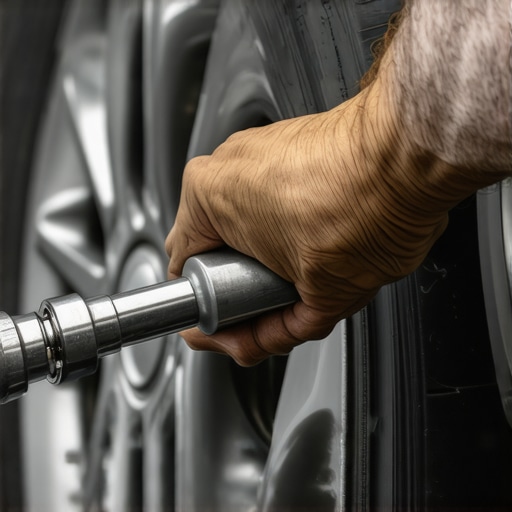
Why do high-end ceramic brake pads still squeal like a school bus?
This is the advanced question I get most often. People buy the most expensive pads, yet they still hear that high-pitched scream. Usually, it’s because they skipped the ‘bedding-in’ process or ignored the hardware. Ceramic pads require a transfer layer of friction material to be baked onto the rotor surface through a series of controlled stops. Without this, you’re just rubbing stone against cold steel. Also, many brake service myths suggest that old clips and shims are fine to reuse. They aren’t. They lose their tension, allowing the pad to vibrate at a frequency that sounds like a whistle.
The Myth of the Modern Tune Up
We need to stop calling it a ‘tune-up’ in the traditional sense. Modern engines are self-tuning via the ECU. When someone says they need to tune up your car for peak performance, they really mean a sensor cleaning or an ignition system refresh. The nuance here is that a ‘lazy’ oxygen sensor won’t always trigger a light, but it will kill your MPG. Real expertise is knowing when to stop replacing parts and start cleaning them. Have you ever fallen into the trap of over-maintaining or ignoring a simple torque spec? Let me know in the comments.
If you want to move from being a ‘parts replacer’ to a true diagnostician, you need to invest in a solid OBD-II interface. I don’t mean those cheap $10 dongles that lag when you’re looking at live data. I personally swear by a professional-grade scanner because it allows me to see deep into the ABS and SRS modules, which is crucial for the ultimate car service guide approach to ownership. Using a real-time data stream, I can watch my oxygen sensors sweep in a perfect sine wave, confirming the engine is healthy without ever turning a wrench. It’s this level of precision that helps me maximize your cars lifespan with expert tune-up strategies rather than just guessing which spark plug is fouled.
Stop Swapping Parts and Start Testing Circuits
One tool I will never go without is a high-quality Digital Multimeter (DMM). Most people see a ‘low voltage’ code and immediately buy a new battery or alternator. But here is a secret: the ASE (Automotive Service Excellence) L1 Advanced Engine Performance manuals teach us that over half of these ‘failures’ are actually just high resistance in a wire or a loose ground. I’ve saved hundreds of dollars by knowing how to spot a bad ground wire causing electrical issues using a simple voltage drop test. It’s about being smarter than the machine. 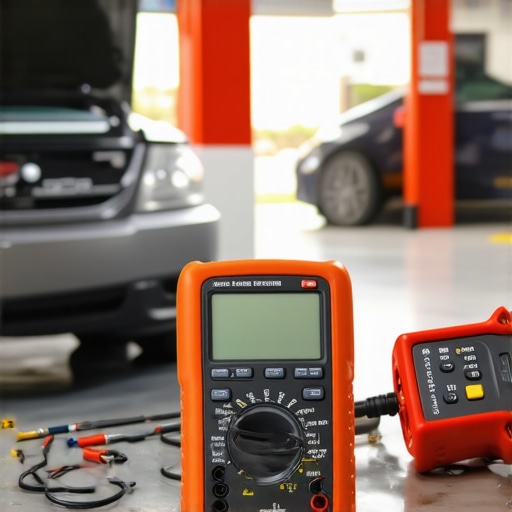
How do I maintain these results for the long haul?
The key to longevity isn’t just one big repair; it’s the cumulative effect of small, disciplined actions. I keep a dedicated logbook for every vehicle I own. This isn’t just for oil changes; I track tire rotations and brake inspections to avoid brake service myths that suggest you can wait until you hear metal-on-metal. Keeping a consistent car service checklist ensures that when I hit high mileage, I’m not fighting a mountain of deferred maintenance. That’s the truth about why my car finally hit 200000 miles while others are being towed to the yard.
The Future of DIY is More Connected Than Ever
Looking ahead, the industry is moving rapidly toward predictive telematics. By the time we fully settle into auto repair trends to watch in 2025, your car will likely be communicating directly with your phone about a failing fuel pump weeks before it actually dies. We are entering an era where ‘sensing’ a problem replaces ‘hearing’ a problem. I’m already using Wi-Fi-enabled modules that alert me to battery drain while the car is parked in the garage. If you want to get ahead of the game, I highly recommend trying a back-probe voltage test on your TPS (Throttle Position Sensor) next time you feel a stumble. It’s an advanced move, but it will teach you more about your engine’s ‘brain’ than any forum post ever could.
The Hardest Lessons I Learned Under the Chassis
Over the years, I have realized that the most expensive mistakes happen when we rush to judgment. I once spent an entire weekend pulling a transmission only to find a blown fuse that cost fifty cents. I learned that silence from your vehicle is often more telling than a loud bang; if you shift and hear nothing, it is usually a sign that the hydraulic signal or mechanical link is broken. This is why how an honest brake inspection saved me hundreds—it taught me to look for the simplest mechanical failure before assuming a total system collapse. Another hard-earned truth is that your car is a holistic system. A problem with the electrical ground can manifest as a gear that won’t engage, which is why how regular tune-ups improve fuel efficiency and safety remains the best insurance policy against mysterious driveway failures.
The Tools That Turned Me Into a Pro
If you are serious about avoiding the tow truck, you need more than just a set of wrenches. I personally rely on a few specific resources and gadgets to get the job done right. First, a quality OBD-II scanner with live data capabilities is non-negotiable for diagnosing sensor-related gear issues. Second, I always keep a dedicated vacuum gauge or even use the trick of how to detect a small vacuum leak using a simple cigar to find those tiny cracks in hoses that cause the engine to stumble and the transmission to act erratic. Finally, I trust the factory service manuals over generic forum advice every time because they provide the exact pressure specs for your specific model. These tools help you move from guessing to knowing, which is the hallmark of a true mechanic.
Building Confidence in Your Next Repair
Taking on an auto repair project when your car refuses to move is intimidating, but it is also the best way to truly bond with your machine. Every time you successfully diagnose a linkage issue or a low fluid condition, you are reclaiming control over your vehicle’s lifespan. Don’t be afraid to get your hands dirty and look into the small details that others overlook. Whether you are dealing with a stuck caliper or a loose shift cable, the process of solving it yourself is incredibly rewarding. You have the knowledge and the tools to get back on the road safely. Have you ever been stuck in gear or had a shifter cable snap at the worst possible moment? Let me know in the comments below.