

I remember the white-knuckle drive home from a weekend trip in my old crossover, hands cramping because I had to keep the steering wheel cocked at a weird eleven-o’clock angle just to stay in my lane. I kept telling myself it was just a heavy crosswind or maybe the road was just crowned a bit too aggressively. I was dead wrong. By the time I pulled into my driveway, I realized I’d spent nearly forty dollars more on fuel than I did on the trip up. It wasn’t the wind; my car was essentially dragging its feet across three states. That was the day I realized that ignoring [troubleshooting common auto repair issues before visiting the shop](https://glassfixauto.com/troubleshooting-common-auto-repair-issues-before-visiting-the-shop) isn’t just a matter of convenience—it is a direct tax on your bank account. Today, I want to help you stop that silent leak in your wallet by identifying the exact signs that your alignment is killing your efficiency.
Your Car is Dragging Its Feet and Charging You for It
Think about trying to walk forward while someone is pushing against your shoulder. You have to work twice as hard to maintain a straight line, right? That is exactly what happens when your wheels aren’t perfectly parallel. When your tires point even slightly away from each other—what we call ‘toe-out’—they are literally scrubbing against the asphalt. This creates massive rolling resistance. According to data from the tire industry, a vehicle with a misaligned suspension can see a fuel economy drop of up to 10%, which is like throwing away one out of every ten gallons you buy. I made the classic mistake of thinking a [tune-up for peak performance](https://glassfixauto.com/tune-up-your-car-for-peak-performance-essential-maintenance-tips) only involved spark plugs and filters. I completely ignored the chassis, and I paid for it at the pump for six months before I finally got it on a rack.
Does a tiny pull to the right really matter for gas mileage?
The short answer is a resounding yes. You might think that a subtle drift is just a quirk of an older car, but that drift represents a constant battle between your engine and the road. If you find [your car wanders across the lane at high speeds](https://glassfixauto.com/why-your-car-wanders-across-the-lane-at-high-speeds), your power is being diverted from forward motion into lateral friction. I used to think I was saving money by putting off the service, but the math just doesn’t work out. Between the wasted gas and seeing [why your new tires are wearing fast on the inside edge](https://glassfixauto.com/why-your-new-tires-are-wearing-fast-on-the-inside-edge), you end up spending triple what a simple alignment would have cost. Have you ever noticed your fuel light coming on way earlier than usual after hitting a particularly nasty pothole? I’d love to hear your stories in the comments—sometimes that one ‘thump’ is all it takes to ruin a perfectly good maintenance schedule. Understanding [how regular tune-ups improve fuel efficiency and safety](https://glassfixauto.com/how-regular-tune-ups-improve-fuel-efficiency-and-safety) means looking at the whole vehicle, not just what is under the hood.
Your Tires Tell a Story You Need to Hear
Think of your tires like the soles of your shoes. If you walk with a slight limp, one side of the heel wears down faster than the other. In the automotive world, this is usually caused by ‘camber’ or ‘toe’ issues. If you notice why your new tires are wearing fast on the inside edge, you aren’t just losing rubber; you are losing money every mile. I once ignored a slight vibration after clipping a curb during a rainy grocery run. It felt like a minor bump at the time, but three weeks later, my fuel mileage plummeted by 4 MPG. I didn’t realize the severity until I turned the wheels all the way to the lock and saw the inner shoulder was bald. I was basically driving on the corner of the tire, creating friction and heat instead of smooth motion. To prevent this, get down on your hands and knees once a month and feel the tread. If the rubber feels rough when you slide your hand inward but smooth when you pull it outward, your alignment is dragging you down. 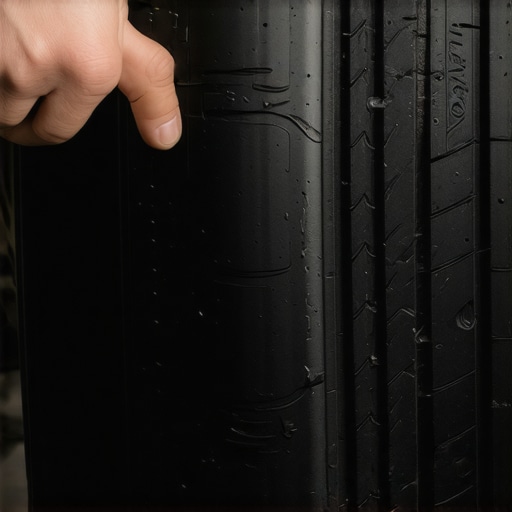
Master the Hands-Off Lane Check
You do not need a million-dollar laser rack to find the basics of a bad alignment. On a flat, empty, and level road, safely loosen your grip on the wheel for just a second. If the car immediately darts toward the ditch, you have a mechanical fight happening under your floorboards. However, do not confuse a simple alignment issue with a bent suspension part. You should also learn how to check your tie rod ends with minimal tools to ensure that ‘drift’ isn’t actually a loose component that could fail at highway speeds. If you feel a rhythmic thumping through the seat or the pedals, it might be more than just alignment; specifically, you need to know why your steering wheel shakes specifically at 60 mph. This is usually a wheel balance issue, which creates its own kind of turbulent drag against your engine’s power.
Look for These Hidden Efficiency Killers
Sometimes the drag does not come from the direction of the wheels, but from the wheels themselves failing to spin freely. Dragging brake calipers are a ‘secret’ reason for poor fuel economy that many owners overlook. While you are focused on the suspension, understanding brake system repairs can help you identify a sticking pad that acts like a permanent anchor on your forward momentum. Also, do not ignore your accessory drive. While it sounds unrelated to your tires, the hidden danger of a slipping serpentine belt is that it can cause the alternator and AC compressor to operate inefficiently, further draining your engine’s output. Every component that resists motion is a hand in your pocket. Perform a comprehensive car service checklist quarterly to catch these small frictions before they become major expenses.
Stop Blaming Warped Rotors for Your Shaking Steering Wheel
You’ve likely been told a dozen times that if your steering wheel shakes when you slow down, your ‘rotors are warped.’ In my twenty years of wrenching, I’ve found that true mechanical warping is surprisingly rare. What you’re usually feeling is uneven brake pad material transfer—a phenomenon where the pad literally sticks to the rotor in microscopic patches. This happens when you get your brakes smoking hot and then sit at a stoplight with your foot firmly on the pedal. This is one of those brake service myths what you need to know before your next stop that leads people to spend money on new parts when they really just needed a proper bedding-in procedure. According to technical documentation often cited by the Society of Automotive Engineers (SAE), what enthusiasts call ‘warp’ is almost always the formation of cementite—an ultra-hard iron carbide—caused by excessive heat and uneven cooling. Understanding why your car pulses every time you hit the brakes requires looking at your driving habits as much as your hardware. 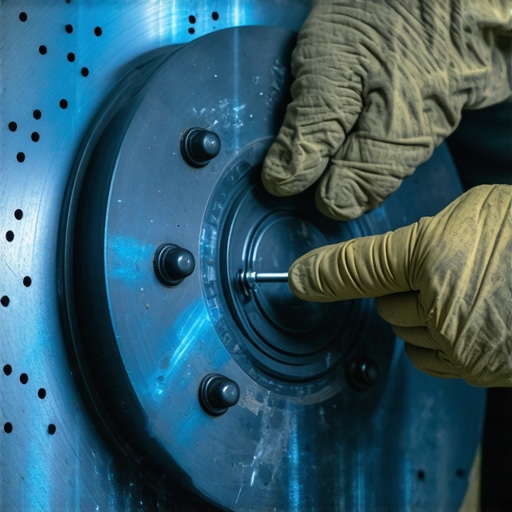
The One Mistake Even Pros Make with Lug Nuts
If you’ve ever had a shop use a high-powered impact wrench to ‘zip’ your wheels back on without a torque wrench, they might have just killed your fuel economy and your safety. Overtightening lug nuts, or tightening them in the wrong order, puts uneven stress on the hub and the rotor. This is the primary ‘trap’ that actually causes the physical distortion people mistake for heat warping. I always insist on the correct way to torque lug nuts to prevent rotor warping, which involves a star pattern and a calibrated torque wrench. While you are down there, you should also learn how to spot a leaking brake caliper before it fails, as a seized piston can cause a ‘ghost’ drag that ruins your MPG long before it starts to smoke. Have you ever been told you needed new rotors, only for the vibration to come back a month later? Let me know in the comments below—I suspect many of you have been victims of the ‘impact wrench’ mechanic.
Why do your rear brakes wear out faster than the fronts?
On older cars, the front brakes did 80% of the work. However, modern vehicles use Electronic Brake Force Distribution (EBD) to keep the car level during stops. This often means the rear pads engage first and more frequently to prevent the nose from diving. If you find the real reason your rear brakes wear faster than fronts is confusing, just know that your car’s computer is prioritizing your comfort and tire contact patch over pad longevity. To keep the whole system efficient, you need to look beyond basic oil changes and maximize your car’s lifespan with expert tune-up strategies that include a full scan of the ABS and traction control modules. Deep-diving into understanding brake system repairs isn’t just about safety; it is about ensuring that every ounce of energy your engine produces goes into moving the car forward, not fighting a partially applied electronic parking brake or a miscalibrated EBD system.I used to think my ‘butt-dyno’—that feeling you get in your seat when a car is running right—was enough. It was not. To truly maintain the gains from a solid tune up for peak performance, you need real data. I eventually invested in a high-end bidirectional scan tool because I got tired of chasing ghosts. I remember seeing a check engine light for a lean condition and learning how to tell if your computer is giving you a false error code became my new obsession. A cheap scanner just tells you the code, but a real tool shows you fuel trims in real-time. This is exactly how professional diagnostics found my ghost electrical leak in my own garage without paying a shop’s hourly rate. 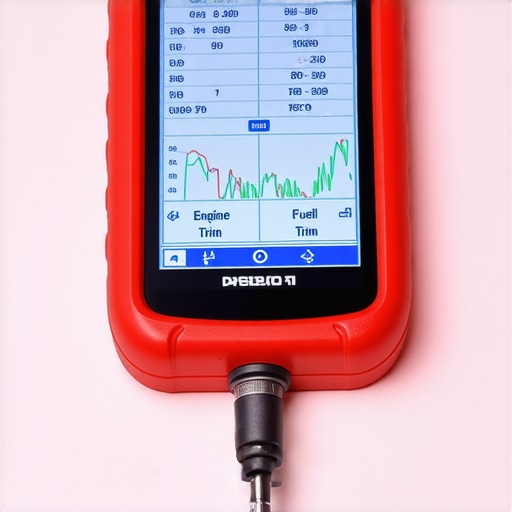
How do I keep this level of efficiency for the long haul?
Maintenance is not a one-time event; it is a rhythm. I follow a strict ultimate car service guide that dictates when to flush fluids and when to just inspect. The Car Care Council reports that roughly 80% of vehicles on the road have at least one unperformed maintenance item, which is a staggering statistic if you care about vehicle longevity. For me, that means a monthly check of my tire pressures and a quarterly deep dive into my car service checklist. I also suggest investing in a high-quality split-beam torque wrench. Unlike the old click-style ones, they do not need to be wound down to zero after every use, meaning they stay calibrated longer. This ensures every brake service I perform is actually professional-grade. Looking forward, the landscape is shifting toward complex software. We are already seeing auto repair trends to watch in 2025 that involve more integrated ADAS systems, meaning your car is becoming a computer on wheels that happens to have a chassis. If you want to maximize your car’s lifespan with expert tune-up strategies, start by buying a tool that can actually talk to your car’s sub-modules. My challenge to you: grab a dedicated digital tire pressure gauge and check your cold pressures tomorrow morning. You might be surprised at how much drag you have been carrying.
The Expensive Lessons I Learned on the Highway
For years, I treated my car like a simple appliance, but I eventually learned that ignoring a slight drift is an expensive mistake. I realized that the truth about why my car finally hit 200,000 miles was rooted in addressing those tiny mechanical drags before they became total failures. It wasn’t just about the engine; it was about how the chassis interacted with the pavement.
I also discovered that many common vibrations are self-inflicted. If you find yourself asking why your brake rotors keep warping every few months, the issue is often found in the hub surface preparation or improper lug nut torque rather than the metal itself. These small details are what separate a smooth ride from a constant headache.
Finally, I learned that a proactive walk-around is the most profitable ten minutes you can spend. Catching a dragging brake or a feathered tire early prevents a cascade of costs that no fuel-saving additive can ever overcome. It is about staying ahead of the physics that want to slow your car down.
Gear That Actually Makes a Difference
You do not need a professional-grade shop to keep your efficiency high, but you do need a few reliable items. I highly recommend a dedicated digital tire depth gauge; it is the most accurate way to know how to get more life out of your current tires by identifying wear patterns long before they become visible to the naked eye.
I also suggest keeping a basic OBDII reader in your glovebox. Knowing why your tire pressure light blinks then stays on can save you a stressful, unnecessary trip to the shop during a busy week. Additionally, a calibrated torque wrench is essential for anyone who rotates their own tires, ensuring that your rotors remain flat and your hubs remain stressed-free.
Reclaim Your Smooth Ride Today
Proper maintenance is more than just a checklist; it is the quiet satisfaction of a car that glides effortlessly down the road. Every time you prioritize a comprehensive car service or a necessary tune up, you are investing in your vehicle’s longevity and your own peace of mind. Don’t let a bad alignment dictate your monthly fuel budget. Take control of your maintenance, perform a simple check this weekend, and feel the difference in the steering wheel. Have you ever noticed your gas mileage significantly improve after a simple brake service or alignment? Let me know your stories in the comments below!