

I remember staring at a shimmering, rainbow-colored puddle on my driveway about three years ago. I convinced myself it was just condensation from my AC unit or maybe some runoff from the morning dew. “It’s fine,” I told myself, “the car is running great.” That tiny bit of denial eventually cost me a brand-new turbocharger. I made the classic rookie mistake of thinking that if the car wasn’t smoking or shaking, the engine was safe. I was dead wrong. Spotting these issues early isn’t just for gearheads; it is for anyone who wants to avoid the soul-crushing expense of a seized motor. Today, I want to share exactly how I shifted from being a ‘hope for the best’ driver to someone who knows exactly what’s happening under the hood.
Don’t Wait for the Red Warning Light to Save Your Engine
Most people think their dashboard will tell them everything they need to know. But honestly, why you should never wait for your oil light to come on is one of the hardest lessons I have ever learned. By the time that little red lamp flickers, your oil pressure has already plummeted, and metal is likely grinding against metal. I want to help you avoid that sick feeling in your stomach when the mechanic hands you an estimate that looks like a mortgage payment. Mastering a few basic troubleshooting common auto repair issues before visiting the shop can save you thousands over the life of your vehicle. It is about being proactive rather than reactive.
Is all this inspection stuff actually worth the hassle?
I get it. You are busy, and you probably do not want to spend your Saturday morning playing detective with a flashlight. But spotting a leak early is the difference between a five-dollar gasket and a total engine replacement. It is about keeping your vehicle in top shape so you stay in control of your budget. According to the Car Care Council, neglected maintenance is a primary factor in why motorists spend over $2 billion annually on unnecessary repairs. I’ll never forget the time I ignored a faint smell of burnt toast after a long drive. I figured I had just spilled some coffee, but it was actually oil seeping onto the hot exhaust manifold. If I had just looked, I could have fixed it for pennies. Have you ever noticed a mystery spot on your garage floor and just hoped it would go away? Let me know—I have definitely been there too.
The White Cardboard Test That Never Fails
This is my favorite piece of advice to give my neighbors. If you suspect a leak but cannot find the source, slide a clean piece of white cardboard under the engine overnight. In the morning, you will have a literal map of your engine’s health. Different fluids have different colors, and this simple trick helps you distinguish between an AC drip and a serious oil issue. This is a core part of the ultimate car service guide that every driver should follow. It is low-tech, high-reward, and keeps you from guessing. Once you identify the drip, we can figure out if it is a simple fix or if it is time to call in the pros.
What Those Mystery Drips Really Mean
If your cardboard looks like an abstract painting, do not panic. If the spot is thick and black or light brown, it is definitely oil. But if it is bright green, orange, or pink, you are looking at coolant. I once made the mistake of thinking a pink drip was just some spilled soda from my kids; it turned out to be a slow radiator leak that almost cooked my head gasket. You have to be careful because why you should never mix different colors of antifreeze is vital—mixing the wrong types can turn your coolant into a gel-like sludge. If the fluid is red and thin, that is usually transmission fluid or power steering fluid. Check the consistency; transmission fluid smells slightly sweet or burnt, whereas power steering fluid feels more like a light oil.
How to Check Transmission Fluid Without a Dipstick
Modern cars are getting trickier. Many manufacturers have removed the dipstick entirely, making you feel like you have to go to the dealership for everything. But learning how to check transmission fluid levels without a dipstick is a game changer. You will usually find a “check plug” on the side of the transmission housing. I remember crawling under my SUV with a level and a 14mm wrench, nervous as hell that I would mess it up. It turns out, if a tiny bit of fluid trickles out when you remove the plug (while the engine is running and warm), you are golden. If nothing comes out, you are running low. This is a crucial step in any tune-up for peak performance.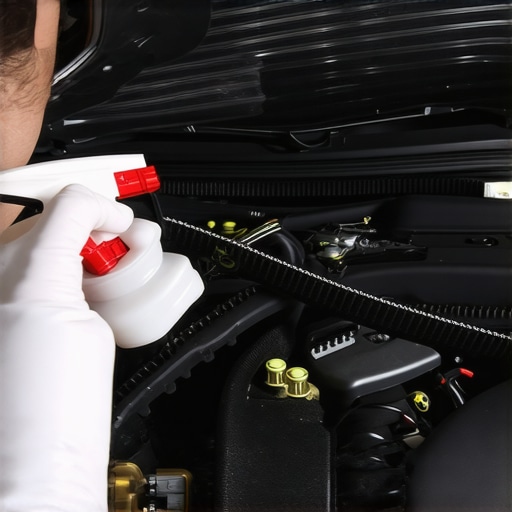
The Water Spray Test for Noisy Belts
That high-pitched squeal when you start your car in the morning is more than just an annoyance; it is a warning. Instead of throwing parts at the problem, use a spray bottle filled with plain water. This is the fastest way to fix a squealing belt using the water spray test. While the engine is running, lightly mist the ribbed side of the belt. If the noise disappears for a second, the belt is the culprit (likely worn or misaligned). If the noise gets louder or does not change, you probably have a bad bearing in an alternator or a pulley. I used this trick to find a “ghost” squeak that two different shops could not find, and it cost me exactly zero dollars to diagnose.
Identify a Bad Battery Before You Get Stranded
Batteries are like lightbulbs—they work perfectly until they do not. You can actually use the simple way to test battery strength at home by watching your headlights. Turn your headlights on against a garage door at night without the engine running, then crank the starter. If the lights dim significantly or flicker out, your battery is on its last legs. I ignored a slow “crank-crank-vroom” start for a week last winter, thinking it was just the cold. I ended up stuck at a gas station at 11 PM in a snowstorm. Don’t be like me. Keeping your electrical system healthy is just as important as understanding brake system repairs for overall safety.
Safe Cooling Fan Inspection
If your car is overheating at stoplights but cools down once you are moving, your cooling fan is likely the issue. You can learn how to check your cooling fan without burning your hands by using a rolled-up newspaper. With the engine warm and the AC on, the fan should be spinning. If you are not sure if it is moving fast enough, very gently poke the edge of the blades with the newspaper. A strong motor will chop right through the paper; a dying motor will stop easily. Just be extremely careful—treat those blades like a running blender. This kind of proactive check is what separates a long-lasting vehicle from a “clunker.”
Watch for These Silent Suspension Killers
Sometimes the signs are not under the hood; they are in the way your car sits. If one corner of your vehicle looks lower than the others, or if you notice oily residue on the body of your shocks, you are dealing with a leak. Knowing how to spot a leaking shock without using a lift involves the “bounce test.” Push down hard on each corner of your car. If it bounces more than once and a half, your suspension is shot. I once drove on blown struts for six months, and the resulting “cupping” on my tires meant I had to buy four new tires way earlier than planned. It is all part of maximizing your car’s lifespan with expert strategies.
Stop Blaming ‘Warped’ Rotors for Every Brake Shudder
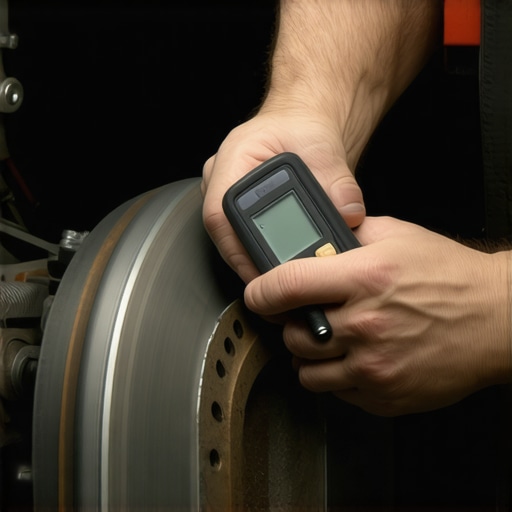
People often tell me, ‘I just got new brakes, why are they already shaking?’ The common belief is that the rotors warped from heat. But here is the contrarian truth: rotors almost never actually warp in a literal sense. What you are likely feeling is uneven pad transfer. According to research by the Society of Automotive Engineers (SAE), most warped rotors are actually victims of Brake Disc Thickness Variation (DTV) caused by the pads leaving microscopic deposits on the disc. This happens when you get your brakes smoking hot and then sit at a red light with your foot clamped down. That ‘Oops’ moment ruins the smooth surface. This is one of those brake service myths that leads people to buy parts they do not need. You can often prevent this simply by ensuring the correct way to torque lug nuts is followed to avoid lateral runout.
The Dangerous Trap of the ‘New Parts Only’ Mindset
Then there is the ‘Tune-Up’ trap. In the 70s, a tune-up meant points, a condenser, and a timing light. Today, it is a digital deep dive. If someone tries to sell you a standard tune-up without hooking up a scanner to check fuel trims and ignition dwell, they are stuck in the past. Real expert tune-up strategies involve checking for ‘ghost’ codes that have not even tripped the check engine light yet. This is how regular tune-ups improve fuel efficiency—by catching a lazy O2 sensor before it kills your gas mileage or clogs your catalytic converter. Don’t fall into the trap of thinking a car is ‘tuned’ just because it has new spark plugs.
Does your high-mileage car really need that expensive synthetic oil?
Many folks believe that putting synthetic oil in an old engine will cause it to start leaking like a sieve. That is a total myth left over from the 90s. While you should check the truth about synthetic oil in high-mileage engines, the reality is that synthetic molecules are just more uniform, providing better protection for worn internal components. The real ‘Oops’ factor here is switching back and forth between brands and weights too often; pick a high-quality oil and stay consistent. Mastering these nuances is the key to understanding brake system repairs and engine longevity like a pro. Have you ever been told you needed a major repair, only to find out it was something tiny? Let me know in the comments—I love hearing about those ‘close calls’ and how you handled them.
If you are tired of the ‘parts cannon’—you know, that habit of replacing every sensor in sight and hoping the light goes off—you need a real diagnostic tool. For me, it was a mid-range OBD-II scanner with live data capabilities. It is the difference between guessing why your car idles rough and seeing a real-time misfire count on cylinder three. I used mine to figure out how professional diagnostics found my ghost electrical leak that was killing my battery every third night while I slept. 
Why Data is More Important Than Wrenches in 2025
Looking at auto repair trends to watch in 2025, we are moving toward a world where your car predicts its own failures. But until the ‘Internet of Things’ fixes your radiator for you, you still need a solid paper-and-digital trail. I keep a physical logbook in the glovebox and a folder of PDFs on my phone for every receipt. Greg Montero, a lead technical specialist at Delphi Technologies, notes that as cars become ‘computers on wheels,’ the real skill isn’t just turning a wrench anymore—it’s interpreting the data the computer is giving you before the component actually fails. It’s about catching the trend, not just the fault.
How do I keep my car reliable as the odometer climbs?
It is not about doing one big ‘super-service’ every five years; it is about a constant rhythm of small wins. This is the truth about why my car finally hit 200000 miles without a single tow-truck visit. I focus heavily on the small stuff that others ignore, like checking if your wheel alignment is ruining your gas mileage or simply cleaning battery terminals for better starts. If you can save 500 on your next major service by catching these tiny degradations early, you have already won the game. If you really want to level up, I suggest you try to find an EVAP leak using a simple smoke machine—you can actually build one with a paint can and a soldering iron. It is the most satisfying way to clear those stubborn ‘Check Gas Cap’ lights that refuse to go away.
Lessons from the Greasy Hands and Empty Wallet Years
Looking back, my biggest ‘aha’ moment was realizing that mechanical sounds are just a car’s way of talking to you. If you learn the language, you never get caught off guard. I’ve learned that a quality scanner is more powerful than any mechanic’s ‘gut feeling.’ Also, never underestimate the power of a clean engine bay; it makes spotting leaks 100% easier. Finally, the most expensive repair is always the one you knew about three months ago but decided to ignore. I once found that an honest brake inspection saved me hundreds simply by identifying a pebble in the dust shield rather than a ‘warped’ rotor, and a proactive tune up is about much more than just spark plugs; it’s about inspecting the heart of your machine.
The Gear That Lives in My Trunk
I don’t go anywhere without my Bluetooth OBD-II scanner; it turns my phone into a diagnostic powerhouse that can read those ‘ghost codes’ before they become a headache. For mechanical work, a calibrated torque wrench is non-negotiable. Using it correctly is the only way to prevent issues like why your brake rotors keep warping every few months due to uneven lug nut pressure. #IMAGE_PLACEHOLDER_E# I also recommend keeping a physical logbook to track every car service; it adds significant resale value because it proves you actually cared for the vehicle. If you’re ever worried about a soft pedal, knowing why a brake pedal hits the floor can literally be a lifesaver.
Take the Wheel of Your Car’s Future
You don’t need to be a professional technician to significantly extend your vehicle’s life. Starting with basic tasks, such as how to test for a blown fuse the right way, builds the confidence needed for more complex auto repair projects. By staying proactive and listening to your car, you move from being a victim of mechanical failure to a master of your machine. If a problem ever feels too big to handle alone, you can always contact us for guidance. Your car takes care of you every day; it’s time to return the favor. Have you ever ignored a weird noise only for it to turn into a major repair later? Let me know in the comments below!