

I remember the exact moment my knuckles went white. I was merging onto the highway, trying to match traffic speed, when my trusty sedan decided it suddenly wanted to live in the right-hand ditch. Every time I pressed the gas pedal, the steering wheel jerked right. Every time I let off, it straightened back out. It was exhausting, frustrating, and frankly, a little scary. I spent weeks guessing. I thought maybe my tires were low or my alignment was shot. I even fell for some common brake service myths, thinking a sticking caliper was the culprit. It wasn’t.
Why Your Steering Wheel Only Fights You When You Hit the Gas
If your car behaves perfectly while coasting but tries to change lanes the second you accelerate, you aren’t dealing with a simple alignment issue. Most people assume the worst. They think the frame is bent or the transmission is dying. In reality, we are usually looking at torque steer or worn suspension components that only reveal their secrets under load. My big mistake early on? I rushed out and got a four-wheel alignment before checking anything else. I basically threw a hundred bucks out the window because the tech told me everything was straight as an arrow. I didn’t realize that checking your alignment by looking at your steering wheel is only the first step of a much longer journey. Today, I am going to help you pinpoint the exact cause—whether it’s a worn control arm bushing, a failing CV axle, or just uneven tire pressure—so you don’t waste money like I did. Have you ever felt that terrifying tug to the right while trying to overtake someone?
Is this torque steer or is my car actually broken?
Many drivers of front-wheel-drive cars experience a phenomenon called torque steer, where the engine’s power creates an uneven pull. According to the automotive experts at Car and Driver, torque steer is often a result of unequal driveshaft lengths or angles, which is a design quirk rather than a breakdown. However, if this pull is new or getting worse, it is likely a mechanical failure. Before you go troubleshooting common auto repair issues on your own, you need to know which parts are under the most stress during acceleration. Often, a bad CV axle will show its true colors only when you’re putting power to the wheels. We’re going to dive into the nitty-gritty of suspension shifts and power delivery so you can walk into a shop—or crawl under your car—with total confidence.
Check Your PSI Before You Check Your Wallet
Start by checking your tire pressure. Even a 5 PSI difference between your front tires can create a pull that feels like a mechanical failure. I once spent a whole afternoon prepping for a CV axle swap, only to realize my passenger tire was low because of a slow leak from a nail. I felt like an amateur, but it taught me a lesson: always follow a car service checklist starting with the simplest variable. If your dash is lit up, knowing why your low tire light blinks instead of staying solid can save you a lot of confusion, but a manual gauge never lies. If the pressure is even and the car still lunges, you need to look closer at the rubber and metal doing the heavy lifting.
Look for the Greasy Slingshot Under the Wheel Well
Next, slide under the front end with a flashlight and look at your CV axles. These shafts transfer power from the transmission to the wheels. If a protective rubber boot has torn, grease will spray out in a circular pattern around the wheel well. Without grease, the joint inside begins to bind and seize. This resistance creates an uneven pull because one wheel is literally fighting harder to turn than the other. Learning how to spot a bad CV axle before it snaps is the difference between a controlled pull and being stranded on the shoulder with a car that won’t move at all. 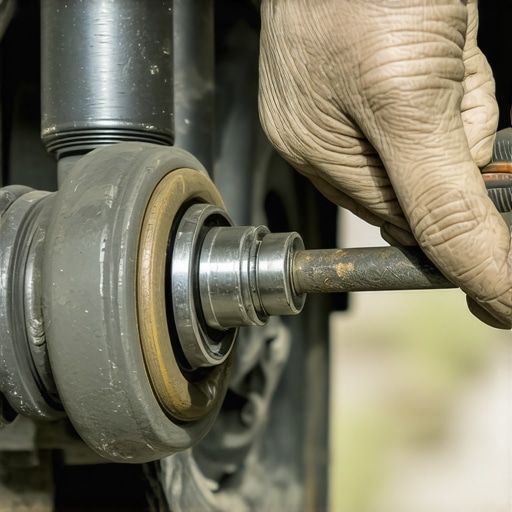
Hunt for Movement in Your Control Arm Bushings
When you hit the gas, your engine generates force that wants to push the wheels forward. The control arms are supposed to hold those wheels in place. If the rubber bushings inside those arms are cracked or rotted, the wheel will actually shift forward or backward an inch or two under load. This ‘walk’ changes your alignment dynamically. This is why your car might track straight while coasting but dive for the ditch under power. I remember a specific job on an old hatchback where I replaced the entire steering rack only to find out the real culprit was a $20 rubber bushing that had turned into the consistency of jelly.
Use the Pry Bar Method for Instant Answers
You don’t need a degree in physics to find these worn parts. Jack up the car, secure it on stands, and use a pry bar to gently nudge the control arm where it meets the frame. If you see the arm shifting easily within the bushing, that’s your problem. This is a common part of troubleshooting common auto repair issues that many DIYers skip. If things look tight there, it’s time to consider how to tell if your car needs an alignment or new tires based on the wear patterns you see on the tread.
Your Engine Mounts Might Be Steering the Car
It sounds strange, but your engine mounts can influence your steering. If a mount is broken, the engine and transmission will tilt significantly when you accelerate. This tilt changes the angle of the drive axles. If the angles become too steep or unequal, you get that classic torque steer sensation. If you’ve noticed that your engine vibrates while you are stopped at a red light, you likely have a mount that has already given up the ghost. Have a friend watch the engine (from a safe distance!) while you briefly load the engine in gear with your foot on the brake; if the motor jumps an inch or more, replace those mounts immediately.But what if your steering wheel isn’t just jerking, but vibrating too? I’ve seen it a thousand times: a driver gets a fresh brake job to fix a shake, drives away happy, and then returns two weeks later complaining that the car vibrates worse than before. The knee-jerk reaction is to blame “warped rotors,” but in my experience, that is almost always a myth. What actually happened is that the pads weren’t “bedded” into the rotor properly. If you don’t follow the proper way to break in new brake pads and rotors, you end up with uneven deposits of friction material. It’s not that the metal warped; it’s that the rotor surface is now as lumpy as a mountain range at a microscopic level. This is why your new brake pads are smoking during that first drive—it’s part of a necessary chemical curing process that many people panic over.
Stop Blaming Warped Rotors for Your Steering Shakes
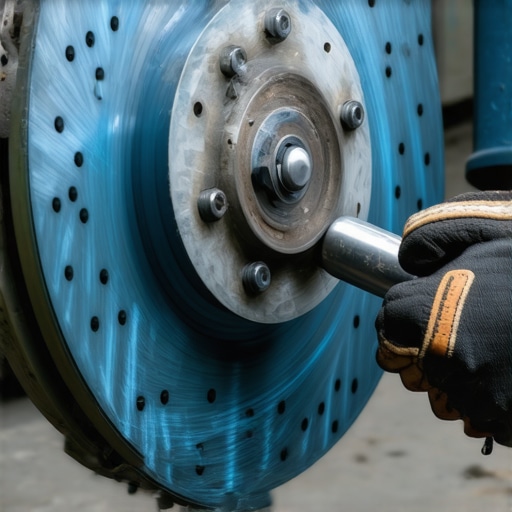 When you hit the brakes and feel a vibration, you’re feeling those uneven cementite deposits, not a bent piece of heavy steel. Rotors rarely warp under normal street conditions. To prevent this, you need a series of controlled stops to transfer a layer of pad material to the rotor face. Skipping this is the biggest “oops” in the DIY world. If you’ve already messed it up, you might find the only way to fix grinding brakes without replacing rotors is to start the bedding process over or have them lightly turned by a professional.
Why does my brake pedal still feel soft after a full bleed?
This is the question that separates the pros from the amateurs. If you’ve pushed all the air out and the pedal still sinks toward the floorboard, you might be dealing with an internal bypass in the master cylinder. According to research by SAE International, brake fluid is hygroscopic, meaning it greedily absorbs water from the atmosphere. Over time, this water content lowers the boiling point and causes internal corrosion on the master cylinder bore. You won’t see a puddle on your driveway, but the fluid is leaking *inside* the unit past the seals. This is why knowing if your master cylinder is failing internally is crucial before you waste money on another set of calipers. If you’ve noticed your brake fluid looks like coffee creamer, the internal damage is likely already done.
Avoid the common slide pin trap during your next service
Another major mistake is the “slap-and-go” brake job where you just swap pads and ignore the hardware. Mechanics often skip cleaning the caliper slide pins to save ten minutes. If these pins aren’t properly lubricated, the caliper won’t center itself, causing one pad to stay partially pressed against the rotor. This generates massive heat that eventually boils your fluid, leading directly to the fix for a soft brake pedal that mechanics keep missing. Also, using the wrong grease is a common “trap.” Petroleum-based grease will swell the rubber boots on your slide pins, locking the brakes up entirely within a month. Always use a high-temp silicone lubricant as part of your car service checklist to ensure longevity. Have you ever fallen into this trap and replaced a part that was actually fine? Let me know in the comments.I used to think that ‘feel’ was enough when tightening bolts, but a snapped caliper bolt on a rainy Tuesday taught me a painful lesson about mechanical hubris. If you’re serious about your car’s longevity, you need a high-quality 1/2-inch drive torque wrench. It’s not just about preventing a wheel from falling off; it’s about preventing the warping of expensive components. I personally rely on the precise ‘click’ of a calibrated wrench because over-tightening is just as dangerous as leaving things loose, often leading to stripped threads that require a total component replacement. This is especially true when you’re following the proper way to torque wheel bolts without a manual, though I’d always recommend having the factory specs for your specific VIN handy. Beyond the heavy metal, my most-used tool is a dedicated Bluetooth OBDII scanner. Instead of staring at a glowing Check Engine Light and feeling that pit in your stomach, you can see real-time data on fuel trims and oxygen sensor voltages. This is the first step in troubleshooting common auto repair issues before you ever step foot in a shop. By checking your Long Term Fuel Trims (LTFT), you can spot a vacuum leak before it even triggers a code.
How do I maintain my car’s performance over the long haul?
To truly maximize your car’s lifespan with expert tune-up strategies, you have to move past reactive repairs and embrace a predictive mindset. I keep a digital log of every fluid flush and sensor cleaning. For example, knowing how regular tune-ups improve fuel efficiency and safety helps you stay motivated during a hot afternoon in the driveway. I follow a strict car service checklist that includes inspecting the little things—like the condition of the vacuum lines and the clarity of the brake fluid. If you ignore these, you’ll eventually find that your brake pedal goes all the way to the floor in traffic, and by then, the repair bill will be triple what a simple flush would have cost. Consistent maintenance ensures that your vehicle remains a tool for freedom rather than a source of anxiety. 
Software is the New Sledgehammer
As we look toward the future, the way we fix cars is shifting from mechanical grit to digital precision. According to technical documentation from Bosch Mobility, modern vehicles now contain upwards of 100 million lines of code, making them rolling computers. This means the auto repair trends to watch in 2025 are almost entirely focused on software synchronization and sensor calibration. For instance, if you replace a windshield or even a side mirror, you might need to know how to tell if your local mechanic actually has the tools for a proper ADAS calibration. If those cameras are off by even a fraction of a degree, your lane-keep assist could steer you right into traffic.
Try this advanced tip tonight
Before you close the hood on your next weekend project, take five minutes to perform the hidden benefit of cleaning your mass air flow sensor using a dedicated electronic cleaner. It’s a low-effort, high-reward task that often restores lost throttle response and smooths out a rough idle that even the best spark plugs can’t fix on their own. Just make sure the sensor is completely dry before you reinstall it to avoid a temporary ‘limp mode’ scare.
The Hardest Lessons I Learned While Chasing Ghost Noises
Looking back at my years under the hood, the most expensive mistakes I made always involved assuming the most complex part had failed first. I once spent an entire weekend and several hundred dollars replacing a steering rack, only to realize the pull was caused by a single worn bushing that cost less than a pizza. The biggest takeaway? An alignment is a static measurement, but your car is a dynamic machine. If the pull only happens under load, your geometry is shifting because of a soft or broken component, not because the tires are pointing the wrong way. Additionally, I learned that brake performance is almost entirely in the preparation. Most drivers who complain about vibrating steering wheels don’t have warped metal; they have uneven pad deposits from skipping the break-in procedure. Realizing that simple physics usually trumps mechanical failure changed how I approach every car service checklist.
The Three Tools I Trust My Sanity To
If you want to move beyond guessing, you need a few items that provide objective data. First, a calibrated torque wrench is non-negotiable. Using it for every bolt ensures you never deal with the nightmare of a snapped fastener or a vibrating rotor. Second, a Bluetooth OBDII scanner is my primary weapon for troubleshooting common auto repair issues before visiting the shop; it lets me see exactly what the sensors are seeing in real-time. Finally, I never start a job without a tub of high-temp silicone ceramic lubricant. It is the only thing that prevents caliper slide pins from seizing, which is a leading cause of the steering pull we’ve discussed today. I trust these tools because they remove the guesswork and provide professional-grade results in a home driveway.
Take the Wheel and Reclaim Your Confidence
You don’t need a professional lift or a degree in engineering to maintain a car that tracks straight and stops on a dime. By understanding the relationship between your suspension, your brakes, and the power hitting the pavement, you are taking back control of your vehicle’s health. Whether you are staying ahead of the auto repair trends to watch in 2025 or just performing a weekend check, remember that consistency is the key to safety. Use these expert tune-up strategies to ensure your car remains a reliable tool for your life. Have you ever had a mystery vibration or a steering pull that vanished after a surprisingly simple fix? Let me know in the comments below!