

I was halfway through a three-hour drive in a North Carolina deluge when the sky literally turned grey-black. The rain was so thick I could barely see the tail lights in front of me, and then my stomach did a slow roll. My check engine light didn’t just come on—it started flashing at me like a frantic signal flare. I’ve been around cars my whole life, but in that moment, soaked and miles from home, I felt that familiar surge of panic. A steady light is a polite suggestion to check your gas cap; a flashing light is your car screaming for help.
That Panic-Inducing Moment the Dashboard Starts Blinking
It is a visceral feeling when your vehicle begins to stutter right as the clouds open up. Most people assume the worst, thinking their transmission has melted or a piston just exited the chat. Years ago, I made the expensive mistake of replacing a perfectly good catalytic converter because I didn’t realize that moisture was simply playing havoc with my ignition system. I want to save you from that same frustration. Today, we are going to dive into why your car throws a tantrum during a downpour and how troubleshooting common auto repair issues before you hit the mechanic can save you hundreds. Usually, a flashing light during rain indicates a serious misfire, often caused by water getting where it shouldn’t—typically your spark plugs or ignition coils. If you have ever felt your car hesitate during a storm, you might recognize how a simple tune-up fixed my mystery hesitation in the past.
Is a flashing light really as bad as it looks?
Many drivers wonder if they can just ‘tough it out’ until the roads dry up. The short answer? No. According to the automotive experts at AAA, a blinking check engine light indicates a condition that can actually damage your catalytic converter very quickly due to unburned fuel entering the exhaust. It is the automotive equivalent of running a marathon with a broken ankle. You might finish, but you’ll pay for it tenfold later. Early in my DIY days, I ignored a damp ignition coil because I thought it would just ‘dry out.’ Instead, I ended up stranded on the shoulder of a highway, waiting for a tow truck in the pouring rain. Learning how to tell if your spark plugs are fouled or compromised by moisture is the first step in reclaiming your peace of mind. Have you ever been caught in a storm only to have your car start acting like it was possessed? Tell me about that first time your dashboard lit up in the comments—I bet it’s a story I’ve heard (or lived) before.
Pinpoint the Water Intrusion Before You Buy Parts
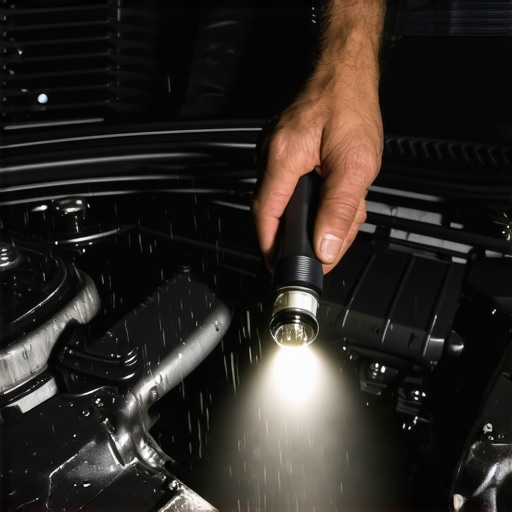
When heavy rain hits your engine bay, it creates a high-moisture environment that acts like an electrical highway for all the wrong reasons. If your ignition coils or spark plug wires have even a hairline fracture—something you might not even see in broad daylight—moisture provides a bridge for electricity to jump to the engine block instead of reaching the spark plug. Think of it like a leaky garden hose; instead of the water reaching the nozzle with full pressure, it is spraying out of the holes in the middle, leaving the end weak and sputtering. This electrical leak is what causes the misfire that triggers that terrifying flashing light.
I remember helping a neighbor whose SUV would die every time he drove through a significant puddle. We popped the hood in his driveway, and his ignition wire insulation was so brittle it practically crumbled in my hand. I grabbed a simple spray bottle filled with water and misted the wires while the engine was idling. Instantly, we saw tiny blue arcs of electricity jumping to the frame. It was a classic case of how to spot a bad ground wire causing electrical issues or compromised insulation. We dried the area with a simple hair dryer, and the car started right up, proving it was a moisture-entry problem rather than a mechanical failure.
Inspect Your Spark Plugs and Coils for Hidden Tracks
To truly fix this, you need to get your hands a little dirty. Pull your ignition coils and look specifically for carbon tracking. These are tiny black lines that look like they were drawn with a sharp pencil. They are actually burnt paths where electricity has scorched the plastic while trying to escape. If you find these, the coil’s integrity is gone, and no amount of drying will save it. While you are in there, check the wells where the plugs sit. If there is standing water, you likely have a failing cowl seal at the base of your windshield. It is also a good time to verify how to tell if your spark plugs are fouled by oil or just wet. If you decide to pull the plugs for a closer look, remember the trick to replacing a spark plug without stripping threads: always start them by hand with a piece of vacuum hose to ensure they are seated perfectly before using a wrench.
Don’t Let a False Sensor Reading Drain Your Wallet
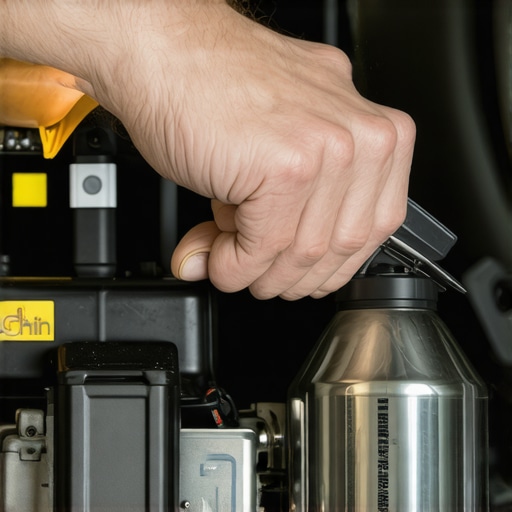
Sometimes the flashing light isn’t a misfire at all, but a sensor drowning in the deluge. Connectors for your oxygen sensors or the crankshaft position sensor live in the splash zone under the car. If a connector seal is old, water gets in and shorts the signal, sending garbage data to the ECU. Before you panic and replace an expensive catalytic converter, grab a can of electrical contact cleaner. Disconnect the sensor, spray it out, and let it dry. Knowing how to tell if your computer is giving you a false error code can prevent you from chasing ghosts and spending hundreds on parts you do not need.
Stop the Shudder Before the Next Storm Hits
The best way to handle a flashing check engine light is to make sure your ignition system is robust enough to handle the humidity. Following essential maintenance tips like replacing your wires or coils every 60,000 to 100,000 miles is non-negotiable if you live in a wet climate. A fresh set of components will have supple rubber boots that seal out moisture effectively. By troubleshooting common auto repair issues early, you turn a potential roadside emergency into a simple Saturday afternoon project. If you have been putting off that 100k-mile service, consider that the cost of a set of plugs is pennies compared to a tow truck and a new catalytic converter.
Stop treating your modern car like a 1965 Mustang
A common misconception that persists in the automotive world is that a ‘tune-up’ is a specific kit of parts you buy at the local store. Many drivers still believe that if the engine stumbles, you simply throw in new plugs and wires and call it a day. While it is true that how regular tune-ups improve fuel efficiency and safety is well-documented, the nuance lies in the fact that modern cars are rolling computers. The ‘parts cannon’—the habit of replacing components until the problem goes away—is the most expensive way to fix a car. In my years under the hood, I have seen owners spend hundreds on ignition coils when the real culprit was a simple sensor film. For instance, the hidden benefit of cleaning your mass air flow sensor is often the difference between a car that purrs and one that gasps for air. A dirty sensor sends skewed data to the ECU, mimicking a misfire so perfectly that you would swear your brand-new plugs were defective.
The dangerous trap of the ‘warped’ rotor myth
When it comes to stopping power, there is a specific ‘oops’ factor that catches almost everyone. You spend a Saturday afternoon installing high-quality rotors, only to have the car start pulsing a week later. Most people immediately blame ‘warped’ rotors and try to return them. However, as noted by the experts at Consumer Reports, it is extremely rare to actually warp a modern ventilated rotor under normal driving conditions. What you are likely feeling is uneven pad deposition. If you skip the ‘bedding-in’ process, you are setting yourself up for failure. Navigating brake service myths what you need to know before your next stop is essential for any DIYer. You must follow the simple way to bed in new brake pads to ensure a uniform layer of friction material is transferred to the rotor. Without this, that first hard stop at a traffic light can ‘stamp’ the rotor with excess material, creating a high spot that feels exactly like a warped disc.
Why do your brand new brakes feel shaky after only a week?
If you have already bedded your pads and the shake persists, the nuance might be hiding behind the rotor itself. A common mistake is failing to clean the wheel hub surface with a wire brush before installation. Even a microscopic amount of rust or grit trapped between the hub and the rotor can cause lateral runout. This means the rotor isn’t sitting perfectly flat, and as it spins, it wobbles just enough to hit the pads prematurely. This is why essential maintenance tips always emphasize cleanliness over speed. Precision diagnostics will always beat the parts cannon. Have you ever fallen into this trap and replaced parts that weren’t actually broken? Let me know in the comments below—I would love to hear your ‘ghost in the machine’ stories.
Get a scanner that speaks more than just basic OBD2
If you really want to stop being at the mercy of a flashing light, you need to stop using those generic five-dollar code readers that only tell you ‘Misfire Cylinder 3.’ I personally swear by bidirectional scan tools or manufacturer-specific software like VCDS for Volkswagens or FORScan for Fords. These allow you to see ‘Mode $06’ data, which tracks misfires before they are even severe enough to trip the check engine light. It is the ultimate way to maximize your cars lifespan with expert tune-up strategies because you are catching the failure in the ‘incipient’ stage. The industry standard service documentation from Mitchell 1 suggests that over 70% of intermittent electrical faults are due to poor terminal tension or corrosion rather than component failure. This means a $10 can of contact cleaner and a diagnostic tool often save you a $500 shop bill.
How do I maintain my ignition and brake systems over time?
The secret is consistency, not intensity. I recommend a ‘pre-storm’ checkup twice a year. This isn’t just about looking at the oil; it involves a physical inspection of the rubber components. I use a silicone-based spray on my spark plug boots and weather stripping to keep them supple and hydrophobic. This simple habit is one of the most effective car service checklist items I can give you. For the brakes, it is about more than just pad thickness. Once a year, I pull the slide pins, clean off the old, crusty grease, and apply high-temp ceramic lubricant. This prevents the uneven wear that people mistake for warped rotors. Following the ultimate car service guide ensures that these small mechanical pieces don’t seize up when you need them most.

The future of DIY is more software than hardware
As we look toward the next few years, the way we maintain our vehicles is shifting rapidly. We are entering an era where ‘telematics’ will tell you your battery is dying three weeks before it actually fails. I predict that auto repair trends to watch in 2025 will focus heavily on remote diagnostics and over-the-air updates. Even for older cars, we can now buy affordable plug-in modules that monitor engine health in real-time. This level of data makes how regular tune-ups improve fuel efficiency and safety much easier to quantify. You won’t have to guess if your air filter is dirty; your phone will tell you the pressure drop is exceeding the norm. Even basic tasks, like learning how to check your tie rod ends with minimal tools, will be supplemented by sensors that detect vibration patterns long before you feel them in the steering wheel.
Stop guessing and start logging your data
The most important thing you can do today is to stop being afraid of the computer under your dash. It is your best friend, not your enemy. By troubleshooting common auto repair issues using live data, you take the power back from the dealership. If you are dealing with a mystery shudder or a light that only pops up when it’s humid, don’t just throw parts at it. Grab a basic OBD2 dongle, set up a mobile app to log your ‘Short Term Fuel Trims,’ and go for a drive. If those numbers spike when you hit a puddle, you’ve found your electrical leak. I challenge you to try this one advanced tip: the next time your car feels ‘off,’ don’t open the hood first—open your diagnostic app and see what the car is trying to tell you. It is the difference between a frustrated owner and a confident mechanic.
What I Learned the Hard Way Under a Wet Hood
After years of wrestling with intermittent issues, I realized that moisture is less of a villain and more of a truth-teller. If your car stutters in the rain, it is simply highlighting an electrical weakness that was already present. I learned that applying a tiny bead of dielectric grease to the inside of spark plug boots is the single best way to ensure the secret to a shudder-free stop on rainy days remains within your reach. Another ‘lightbulb moment’ was discovering that why your brake rotors keep warping every few months often comes down to the uneven torque of lug nuts rather than the metal quality. I also stopped buying the bargain-bin ignition wires; the insulation quality on premium sets is visibly thicker and resists the thermal cycling that leads to those invisible cracks.
The Gear That Keeps Me Off the Shoulder
To truly maximize your cars lifespan with expert tune-up strategies, you need a few specialized items in your garage. First, I never travel without a Bluetooth OBD2 dongle; it turns your smartphone into a diagnostic powerhouse that can catch a misfire before it becomes a flashing light. Second, a can of high-quality electrical contact cleaner is essential for reviving those drowned sensors after a deep puddle encounter. For brake work, I rely on a dedicated pressure bleeder to ensure no air remains in the system, which is a core part of understanding brake system repairs a guide for vehicle owners. Finally, I always cross-reference my data with manufacturer-specific forums, where the collective wisdom of thousands of owners often identifies a ‘ghost’ issue long before a shop will find it.
Take the Wheel of Your Maintenance Future
The transition from a worried driver to a confident owner happens the moment you decide to stop fearing the sensors behind your dashboard. Whether it is a flashing check engine light or a vibrating pedal, these are just data points from a machine that wants to perform at its peak. By sticking to a proactive car service checklist and staying ahead of the rain, you are building mechanical resilience. Remember, a well-timed tune up is always more affordable than an emergency roadside call. You have the tools and the perspective now—it is time to go out there and keep your vehicle running smoothly, regardless of the forecast. Have you ever had a mystery misfire that only showed up during a summer storm? Let me know in the comments below!