
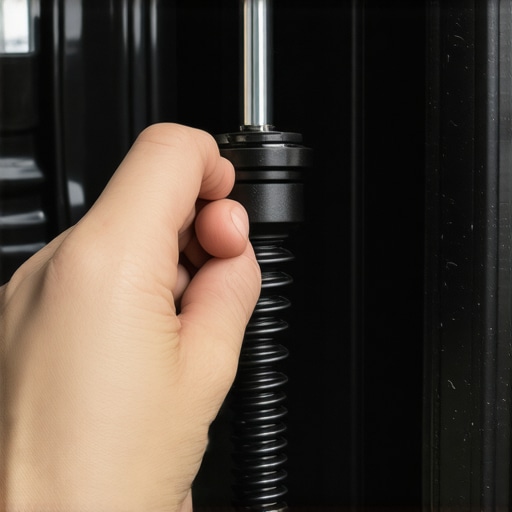
I remember driving my old ’98 sedan across a quiet neighborhood street, and every time I hit a tiny pebble, it sounded like someone was hitting the floorboard with a sledgehammer. Clunk. Thud. Bang. It was embarrassing, nerve-wracking, and frankly, I was terrified my wheel was about to fall off. I spent a whole weekend throwing parts at it—new struts I didn’t need and a set of sway bar links that were perfectly fine—all because I didn’t stop to actually listen. The first time I tried to fix a front-end noise, I was convinced it was a bad ball joint. I spent four hours and eighty bucks replacing a part that was perfectly tight, only to realize the clunk was just a loose bolt on my brake caliper. Talk about a blow to the ego. That’s the problem with troubleshooting common auto repair issues before visiting the shop—if you don’t have a plan, you’re just firing a parts cannon at a ghost. Today, I’m going to teach you how to stop guessing and start hearing. We’re going to turn your ears into precision diagnostic tools so you can figure out exactly what’s rattling under your car without spending a fortune on a maybe fix. [IMAGE_PLACEHOLDER]
What Your Car Is Trying to Tell You Before Something Snaps
Suspension noises are sneaky. Sound travels through steel frames in ways that can make a rear shock mount sound like it’s coming from the dashboard. But here’s the secret: every component has a distinct voice. A sway bar link doesn’t sound like a control arm bushing. Once you know the difference, you can walk into a shop—or crawl under your car—with total confidence. In fact, many professional technicians use the acoustic signature of a part to confirm what their eyes see. For example, a rattling heat shield produces a much higher-frequency tinny vibration than the deep, heavy thud of a failing engine mount. If you don’t catch these early, you’re looking at much bigger problems down the road, which is why a solid car service checklist is your best friend.
Can you actually trust your senses over a mechanic’s diagnostic computer?
You might think you need a five-thousand-dollar set of electronic ears or a PhD in mechanical engineering to get this right. I used to think so, too. But the truth is, your brain is already wired to detect patterns. According to the National Institute for Automotive Service Excellence (ASE), the diagnostic process always begins with verifying the concern, which heavily relies on the technician’s ability to hear and feel the symptom during a test drive. We’re going to cover everything from the rhythmic tap-tap of a dying CV axle to that gut-wrenching loud pop when you back out of your driveway. We will even touch on how these sounds might relate to your brake system repairs if the noise happens while slowing down. Have you ever replaced a part only to find out the noise was still there? It’s a frustrating rite of passage for many of us. Tell me, what’s the most annoying mystery noise you’ve dealt with lately? Identifying these sounds is the first step in a successful tune up that keeps your ride smooth and silent.
Make Your Car Talk Back with These Test Moves
To catch a noise, you have to recreate the exact environment where it lives. I once spent three days trying to find a chirp in a client’s SUV that only happened on left-hand turns at precisely 15 miles per hour. It turned out to be a slightly bent dust shield, but I only found it by “slaloming”—safely weaving the car back and forth in an empty parking lot to load and unload the wheel bearings. When you shift the weight of the car, you change the pressure on components like ball joints and tie rods. If the noise disappears when you veer left but screams when you go right, you’ve likely found a failing wheel bearing on the left side. It’s like a game of weight-transfer detective. While you’re out there, pay attention to the rhythm; a noise that speeds up with the tires usually points to the drivetrain, such as knowing how to spot a bad cv axle before it snaps. If the noise is tied to engine RPM regardless of vehicle speed, you’re looking at an accessory belt or an internal engine issue. 
Stop the Grinding Before Your Rotors Turn to Dust
Brakes have their own distinct vocabulary. A high-pitched squeal is often just the wear indicator telling you it’s time for brake system repairs. However, if you feel a pulsing in the pedal, your rotors might be warped from excessive heat. I remember a buddy of mine who ignored a slight “scritch-scritch” sound because his car still stopped fine. Two weeks later, he was grinding metal-on-metal because he didn’t realize his caliper pins were seized. Always check your fluid; if you see why your brake fluid looks like coffee creamer, you have moisture contamination that can rot your system from the inside out. When you finally swap parts, remember the proper way to break in new brake pads and rotors is essential to prevent glazing and ensure a silent stop.
Isolate the Engine from the Chassis
Sometimes the loudest “bang” isn’t a broken part, but a loose one. Grab a rubber mallet—it’s the most underrated tool in your diagnostic box. I use it to mimic road vibrations by tapping on the exhaust, heat shields, and suspension arms while the car is securely on jack stands. It’s exactly how to diagnose a bad fuel pump with a rubber mallet in some scenarios, too. If you hear a rattle while idling, it might not be the engine at all. Cheap components can cause phantom issues, which is why the truth about budget spark plugs and engine performance often includes weird vibrations or misfires that sound like mechanical thuds. If you suspect an air leak is causing a rough idle or a whistling sound, you can even learn how to identify a vacuum leak using a simple cigar—a trick old-school mechanics have used for decades to find tiny cracks in rubber hoses without expensive smoke machines.Most manufacturers today push the “lifetime fluid” narrative because it lowers the perceived cost of ownership during the first few years. But let’s be real: no fluid lasts forever. Transmission fluid shears down under heat, and coolant eventually becomes acidic, eating your gaskets from the inside out. If you actually want to maximize your car’s lifespan with expert tune up strategies, you have to ignore those 150,000-mile service intervals. According to the Car Care Council, nearly 80 percent of vehicles fail at least one component of a vehicle inspection, often because owners wait for a light to pop up on the dash instead of performing proactive checks. It’s a marketing trap designed to get you past the warranty period, not to the 300,000-mile club. I’ve seen more transmissions killed by “lifetime” oil than by actual mechanical failure.
Why Modern Tune-Ups Are Actually Software and Sensors
In the old days, a tune-up meant points, plugs, and a distributor cap. Today, the term is practically a misnomer. Your car is a rolling computer, and the most important “tune” you can perform involves the data stream. One major nuance most people miss is the health of the air-intake system. You can swap plugs all day, but if your computer is getting bad data, it will never run right. This is where the hidden benefit of cleaning your mass air flow sensor comes in. A tiny bit of dust on that wire can trick the ECU into a lean condition, causing a stumble that feels like a failing fuel pump. Similarly, how regular tune ups improve fuel efficiency and safety is less about the hardware and more about ensuring your sensors aren’t
If you really want to step up your game and stop being a ‘parts-changer,’ you need more than a twenty-dollar code reader from the grocery store. I personally won’t touch a modern vehicle without a bi-directional scan tool. The difference is night and day; while a cheap scanner just tells you ‘what’ is wrong, a bi-directional tool lets you tell the car to ‘do’ something. You can command the fuel pump to turn on or pulse the injectors individually. This is exactly how I perform the diy way to test a transmission solenoid at home without pulling the pan. By forcing the solenoid to click while you’re under the car, you eliminate the guesswork. This level of control is what separates the driveway hobbyist from someone who actually understands the machine.
Stop Guessing and Start Scanning
When you have the ability to see live data streams, you can catch a failing part before it leaves you stranded on the shoulder. For instance, if you suspect your braking issues aren’t just worn pads, you can look at the pressure sensor readings to see how to tell if your master cylinder is failing internally. If the pressure drops while you’re holding a steady pedal, the data doesn’t lie. According to the Bosch Automotive Handbook, a cornerstone text for engineers, signal-to-noise ratios in sensor circuits are the first thing to degrade as wiring harnesses age. This means your sensors might still be ‘working,’ but they are lying to the ECU. Reading those live voltage pips is the only way to stay ahead of a total breakdown.

How do I keep these complex systems healthy over time?
The secret isn’t just buying expensive parts; it’s about the precision of the installation. I’ve seen more suspension jobs ruined by an impact wrench than by actual road salt. Every single bolt on your car has a specific torque spec for a reason. If you over-tighten a lug nut, you stretch the stud; if you under-tighten, you risk the wheel vibrating off. Learning the proper way to torque wheel bolts without a manual involves understanding the physics of ‘clamping force.’ This applies to every nut and bolt, from your valve cover to your brake calipers. Consistency in these small details is the secret to getting 200000 miles out of your original engine without it sounding like a sewing machine full of marbles.
Prepare Your Garage for the 2025 Shift
Looking ahead, we are moving into an era where ‘wrenching’ is 40% mechanical and 60% software. We are already seeing auto repair trends to watch in 2025 that focus heavily on ADAS—Advanced Driver Assistance Systems. If you replace a windshield or a side mirror on a newer car, you can’t just bolt it on and go; the cameras need to be calibrated. You need to know how to tell if your local mechanic actually has the tools for a proper adas calibration, because an uncalibrated lane-keep sensor is a safety hazard. I predict that within five years, the most valuable tool in your box will be a specialized tablet for software reflashing. If you want to keep your vehicle in top-tier shape, follow the ultimate car service guide when and why to schedule maintenance and start investing in your diagnostic skills now. My advice? Get under the hood this weekend and perform a ‘wiggle test’ on your wiring while watching your fuel trim data on a scanner—you’ll be amazed at what you find before it ever triggers a Check Engine light.
The Hardest Lesson I Learned Chasing Phantom Noises
If there is one thing I’ve learned after two decades under the hood, it’s that your ego is your most expensive tool. I once spent an entire Saturday replacing an alternator because I was ‘sure’ that high-pitched whine was a bearing, only to find out it was a five-dollar vacuum hose. Here are a few lightbulb moments from my journey that will help you master your own auto repair strategy:
- Verify twice, buy once. Never order a part until you have physically seen the failure or confirmed it with two different diagnostic methods. Firing the ‘parts cannon’ is a losing game.
- Question the marketing. I spent years following dealer advice before I started questioning the truth about 10000 mile oil change intervals. Real-world conditions—like stop-and-go traffic—demand more frequent care than a brochure suggests.
- Everything is connected. Modern cars are ecosystems. For example, if you have ever noticed why your engine temp drops when you turn the heater on, you realize that your cooling system, interior comfort, and engine efficiency are all dancing together. One small glitch can have a massive ripple effect.
- Don’t fear the myths. There is so much misinformation out there; spending time debunking brake service myths before you start a job will save you from making dangerous (and noisy) mistakes.
The Gear That Separates Guesswork from Mastery
You don’t need a professional shop to get professional results, but you do need to stop using the wrong tools for the job. Here is what I personally keep in my ‘Golden Box’ for every tune up and diagnostic session:
- A Dedicated Torque Wrench: This is non-negotiable. Using ‘hand-tight’ logic on critical components is how you end up in a panic when you see the real reason your new brake pads are smoking after a test drive.
- A Bi-Directional Scanner: As we discussed, being able to command a car to perform a test is the ultimate shortcut. It turns hours of manual testing into seconds of data analysis.
- Factory Service Manuals: Forget the generic ‘one-size-fits-all’ books. Find the actual manual used by the technicians at the dealership for your specific year and model. The wiring diagrams alone are worth their weight in gold.
Take the Reins on Your Vehicle’s Health
I know that popping the hood can feel intimidating, especially with all the plastic covers and hidden sensors on modern engines. But remember: at its core, your car is still just a machine that needs air, fuel, and spark to live. By learning to listen to those subtle changes in sound and rhythm, you aren’t just saving money—you’re building a relationship with the machine that keeps your family safe. Whether you’re performing a routine car service or a deep-dive brake service, trust your senses and back them up with data. You’ve got the tools and the knowledge; now it’s time to get your hands a little dirty and maximize your car’s lifespan the right way. Have you ever discovered a ‘phantom’ noise that turned out to be something incredibly simple? Let me know in the comments below!