
I’ll never forget the rainy Tuesday my trusty old SUV decided to turn into a golf cart. I was merging onto the highway, foot pinned to the floor, but the engine just groaned like it was trying to breathe through a straw. It’s a terrifying feeling when your vehicle loses its ‘get up and go’ right when you need it most. If you’ve ever felt that sluggishness, you might be dealing with a restricted exhaust path. We often jump to conclusions when a car loses power. My first time dealing with this, I was convinced my fuel pump had given up the ghost. I spent a whole weekend and way too much money replacing parts that were perfectly fine, only to realize the issue was much further down the line. A clogged catalytic converter is essentially a bottleneck for your engine’s breath.
Why Your Engine Feels Like It Is Choking
When the internal honeycomb structure of your converter gets coated in soot or melts from overheating, your engine has to work twice as hard to push out exhaust gases. This doesn’t just kill your performance; it can lead to serious damage if you keep pushing it. Before you go out and buy a bunch of parts, you should probably troubleshoot common auto repair issues before visiting the shop to rule out the easy stuff. Trust me, I’ve been there, and throwing money at a mystery is never the answer. I once ignored a slight hesitation in my throttle, thinking it was just ‘old car personality,’ until I was stuck on the shoulder of the I-77 with a glowing red exhaust pipe. Don’t be like me. Keeping an eye on your vehicle’s health through a car service checklist can save you from these high-stress moments.
Is it really worth replacing such an expensive part?
I get it. Catalytic converters are notoriously pricey because they contain precious metals like platinum and palladium. You might be tempted to just ignore it, but a total blockage can actually stall your car out in traffic or cause your engine to overheat. According to the Environmental Protection Agency (EPA), a failing converter significantly increases harmful emissions, and in most regions, you won’t even pass a basic inspection without a functional one. If you’ve ever noticed why your car smells like rotten eggs when you hit the gas, that’s a massive red flag you can’t afford to ignore. It is often a sign that the sulfur in your fuel isn’t being processed correctly. Have you ever noticed your car struggling to climb a hill that used to be a breeze? It might be time to stop guessing and start diagnosing. If your car is also giving you other weird vibes, like why your car shakes only when you accelerate, it’s time to take a closer look at the whole system to ensure your safety on the road.
To stop the guessing game, you need to treat your engine like a patient in an ICU. You are looking for symptoms of a restricted airway. The first and most reliable method involves an infrared thermometer. Think of it as checking your car for a fever. A healthy catalytic converter is a chemical furnace; it should be significantly hotter at the outlet than at the inlet because the chemical reactions inside generate heat. If the temperatures are nearly the same, or if the inlet is hotter than the outlet, the internal catalyst has likely reached its end or is physically blocked. Before you assume the worst, check out how to tell if your catalytic converter is actually clogged to see the specific temperature ranges you should be looking for.
Point a Laser at the Pipes to Find the Heat
Warm up your car to operating temperature, then crawl safely underneath (use jack stands, please) and aim your laser at the front weld of the converter and then the rear weld. You want to see at least a 20 to 50-degree Fahrenheit increase at the rear. I remember doing this on my old sedan and finding the outlet was actually cooler than the inlet. It felt like I’d finally solved a mystery that had been bugging me for months. While you are down there, if you hear a metallic buzzing, you might actually be lucky. Sometimes a vibration isn’t the internal honeycomb failing, and you just need to know how to fix a rattling heat shield for zero dollars.

Watch the Needle on a Vacuum Gauge for Real Answers
If the temperature test is inconclusive, a vacuum gauge is your best friend. This tool is a window into your engine’s soul. Hook the gauge up to a large vacuum port on the intake manifold and start the engine. At idle, the needle should be steady. Now, hold the engine at a steady 2,500 RPM. If the needle starts high and then slowly begins to drop toward zero, you have a classic case of backpressure. The exhaust is like a crowd of people trying to exit a building through a single locked door; eventually, the hallway fills up and everything stops. This is often more effective than just checking the surface, much like how you would how to clean your throttle body to restore throttle response to rule out intake-side chokepoints.
Pull the Oxygen Sensor to Give the Engine a Breath
The most ‘brute force’ way to test this is to provide an alternative exit for the exhaust. I once spent four hours wrestling with a rusted-on upstream oxygen sensor on an old Jeep. My knuckles were bleeding, and I was nearly out of patience. The moment I finally unscrewed that sensor and left the hole open, I started the engine. It roared to life and revved freely for the first time in weeks. By removing the sensor, I gave the exhaust gases a way to escape before hitting the clogged converter. If the car suddenly regains its power with the sensor out, you’ve found your culprit. It’s a loud, messy test, but it is definitive. If you’re already doing this, it might be a good time to look into tune up your car for peak performance to ensure your spark plugs aren’t the ones causing the rich condition that killed the converter in the first place.
Finding the clog using the tests I mentioned is only half the battle. The most expensive mistake I see people make is assuming the converter just ‘wore out’ like a set of tires. In my years of turning wrenches, I’ve learned a hard truth: catalytic converters don’t just die; they are murdered. If you simply bolt on a new one without finding the ‘killer,’ you’re just setting fire to your hard-earned cash. This is where how regular tune-ups improve fuel efficiency and safety becomes your best defense. A converter is designed to last the life of the vehicle, provided the engine is running at peak efficiency. When you ignore a misfire or a rich-running condition, you are essentially sending a blowtorch down your exhaust pipe.
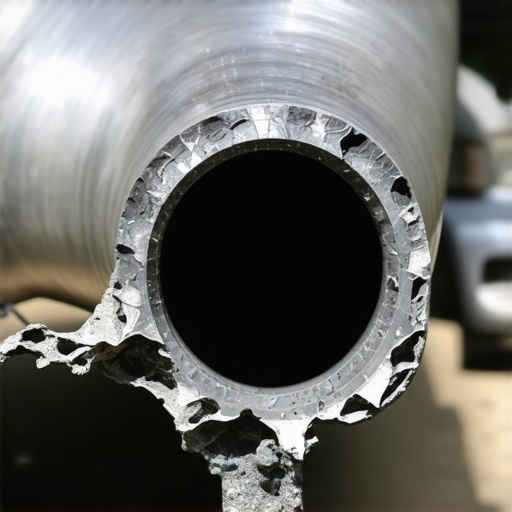
One major contrarian view I hold is that ‘budget’ repairs often cost triple in the long run. Many drivers try to save money with the truth about budget spark plugs and engine performance, but those cheap plugs can cause micro-misfires that don’t even trigger a dashboard light. These tiny bursts of unburned fuel eventually coat the precious metals in your converter with soot, ‘poisoning’ the catalyst. According to the Car Care Council, neglected engine maintenance is the leading cause of premature catalytic converter failure. If you aren’t using expert tune-up strategies, you’re likely shortening the life of every component from your O2 sensors to your muffler.
Why does the check engine light come back on after replacing the converter?
The ‘Oops’ factor that bites most DIYers is ignoring the vacuum system. I once spent days diagnosing a recurring ‘Efficiency Below Threshold’ code on a sedan that had just received a brand-new exhaust. It turned out the issue wasn’t the exhaust at all, but a failing brake booster. You see, understanding brake system repairs is crucial because a leaking brake booster is actually a massive vacuum leak. This leak makes the engine run ‘lean,’ causing the computer to dump excess fuel into the cylinders to compensate. That excess fuel is what eventually melts your new $800 part. Always check your fuel trims with a scanner before calling the job finished. Have you ever fallen into this trap where you fixed the part but missed the underlying cause? Let me know in the comments.
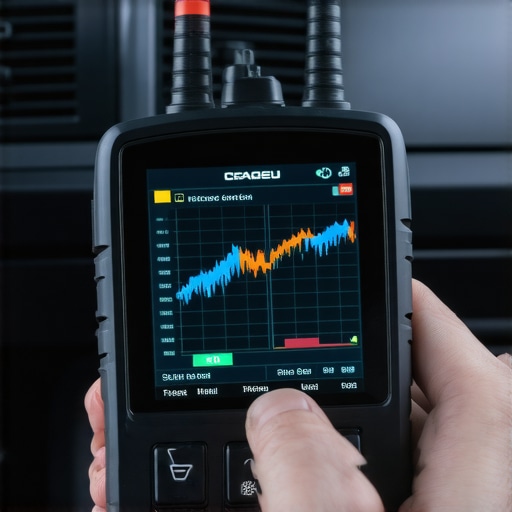
When you are deep in the trenches of a diagnosis, you quickly realize that the dashboard light is just a starting point, not the whole story. I never trust a single error code at face value anymore. To really get to the bottom of things, I’ve switched from cheap readers to a high-end bi-directional scanner like the ones used by professional techs. You need to see the ‘Live Data’ to understand the relationship between the air coming in and the gases going out. This is how I catch those annoying ‘ghost’ issues where the car feels off but doesn’t throw a code. If you’ve ever been frustrated by a light that won’t stay off, you should learn how to tell if your computer is giving you a false error code before you start swapping sensors. Using a tool that can graph your Short Term Fuel Trim (STFT) and Long Term Fuel Trim (LTFT) in real-time is a total game-changer for anyone serious about maintenance.
Stop Flying Blind and Use Live Data
The Automotive Service Excellence (ASE) T1 certification standards suggest that monitoring Long Term Fuel Trim is the most effective way to identify a ‘lazy’ oxygen sensor or a pinhole vacuum leak that hasn’t quite met the threshold for a Check Engine Light. Personally, I look for any LTFT value that exceeds +/- 10%. If I see +15%, I know the engine is working overtime to compensate for extra air, which is the fast track to overheating and melting that expensive catalytic converter. This isn’t just about repair; it’s about maximize your car’s lifespan with expert tune-up strategies. If you can catch a +12% fuel trim on a Saturday morning in your driveway, you can fix a $5 vacuum hose before it turns into a $1,200 exhaust job. I’ve saved myself thousands by simply paying attention to these numbers once a month.
How do I keep my engine and exhaust healthy for the long haul?
Consistency is your best friend. You can’t just fix a clog and assume you’re done for the next five years. To get the most out of your vehicle, you need to follow the ultimate car service guide when and why to schedule maintenance. This means checking your ignition system every 30,000 miles, even if the manual says the plugs last 100,000. Why? Because as plugs age, the gap grows, and the coil has to work harder, which can lead to incomplete combustion. That tiny bit of raw fuel ends up in the converter, slowly poisoning it. I’ve seen enough ‘100,000-mile’ plugs look like charred remains at the 60,000-mile mark to know better. This proactive approach is the secret to getting 200,000 miles out of your original engine without a major failure.
The Future of Your Exhaust System
Looking ahead, we are seeing a massive shift in how cars monitor their own health. We are moving toward ‘predictive maintenance’ where the car’s ECU uses AI to analyze sensor patterns and warn you of a failure before it even happens. According to auto repair trends to watch in 2025, upcoming vehicles will likely have sensors capable of detecting chemical changes in the exhaust with pinpoint accuracy, making the old-school vacuum gauge look like a stone tool. But for now, we still have to do the legwork. I want you to try this: the next time you have your hood up for an oil change, perform the 5-minute check to prevent transmission failure and then hook up a scanner to check your fuel trims. Catching a small deviation today is the only way to keep your car from becoming a permanent resident at the repair shop tomorrow.
Lessons I Learned While Wrestling with Rusty Bolts
The first major lesson I learned is that a converter doesn’t just die; it gets murdered by other engine issues. I used to think ‘premium’ parts were a scam until I saw what budget spark plugs did to my own exhaust manifold by causing constant micro-misfires. Another lightbulb moment was realizing that identifying a vacuum leak using a simple cigar might save you hundreds in parts you don’t actually need. Sometimes, the ‘clog’ is just your car gasping for air because of a dry-rotted rubber hose. Lastly, trust your gut; if the car feels like it is dragging an anchor during acceleration, it probably is.
The Essential Gear in My Diagnostic Toolkit
To truly stay ahead of the curve, you need a few non-negotiable tools. I personally trust a high-quality infrared thermometer to check for temperature ‘fevers’ across the exhaust system. A simple vacuum gauge remains my go-to for confirming if the engine can actually breathe under load without backpressure. For a broader view of your vehicle’s needs, I always refer back to the ultimate car service guide when and why to schedule maintenance to ensure I’m not missing a simpler car service or tune up task. Finally, a bi-directional OBD2 scanner is the only way to see the live data that tells the real story of your fuel trims before a light even hits the dash.
Empower Your Own Auto Repair Journey
Taking charge of your vehicle’s health doesn’t have to be a source of stress. By applying expert tune-up strategies, you can prevent the very conditions that lead to a choked engine in the first place. Your car is more than just a machine; it is an investment in your daily freedom and safety. Don’t be afraid to get your hands dirty and listen to what the exhaust is trying to tell you. Every successful auto repair starts with a single question and a patient diagnostic approach. Have you ever spent hours chasing a mystery performance issue only to find it was something incredibly simple? Let me know your best ‘garage win’ in the comments below!