

I’ll never forget that rainy Sunday afternoon on I-77. I was cruising along at 70 mph when I realized my hands were white-knuckled, desperately fighting the steering wheel as the car drifted toward the shoulder like it was looking for an exit it didn’t need. It felt like I was wrestling a ghost. Every time I hit a certain speed, my car started wandering across the lane, forcing me into constant, exhausting micro-adjustments just to stay safe. By the time I got home, my shoulders were actually sore. I felt like a rookie driver, but the reality was my vehicle was sending me a desperate SOS that I was completely ignoring.
Stop Fighting the Steering Wheel Every Time You Hit the Highway
Most people assume a car that drifts is just part of the “old car experience.” I fell into that trap early in my DIY journey. I spent a fortune on a fancy tune up for peak performance, thinking a smoother engine would somehow fix the handling. Spoilers: it didn’t. I made the classic mistake of throwing money at the wrong end of the vehicle because I didn’t know how to tell if your car needs an alignment or new tires. Today, I want to save you from that frustration and the potential danger of a steering failure. We are going to pin down exactly why your vehicle feels “flighty” at high speeds and how you can reclaim that rock-solid stability. High-speed wandering is usually a combination of worn suspension components and geometry issues. According to the National Highway Traffic Safety Administration (NHTSA), tire-related issues—which often stem from poor alignment and maintenance—are a factor in about 9% of all motor vehicle crashes. That is a sobering thought when you are doing 70 mph next to a semi-truck. If you have felt that terrifying “loose” sensation, you are not crazy; you probably just have a tie rod or a bushing that has given up the ghost.
Is This Just a Minor Quirk or a Major Safety Disaster?
I get it. You are busy, and a little drift does not seem like a big deal if you can still keep it in the lane. But here is the hard truth: that wandering is a symptom of parts that are literally failing. I once ignored a slight “flightiness” in my old pickup, only to have a ball joint nearly snap during a routine car service visit. If that had happened on the open road, the outcome would have been catastrophic. Have you ever felt your car “dart” when you hit a small bump, or does it feel like there is a dead spot in the middle of your steering? Drop a comment and let me know—I have probably been in your shoes. Before you head to a mechanic and get a massive bill, you can actually do a few checks yourself. You might want to try the simple test for worn out shocks using your own body weight to see if your struts are part of the problem. If your car keeps bouncing after you push down on the bumper, those shocks are not keeping your tires glued to the pavement. We are going to look at why your steering wheel feels loose after an alignment and how to track down the real culprit.
Perform a Physical Inspection Before Opening Your Wallet
To get to the bottom of why your car is darting across the lane, you have to stop guessing and start touching. The most effective way to begin is by conducting a ‘dry park test.’ I remember doing this on an old 4×4 I bought for a steal; the previous owner told me it just needed a ‘steering stabilizer,’ but I knew better. I had a buddy sit in the driver’s seat and wiggle the wheel back and forth rapidly while I crawled underneath with a flashlight. Within thirty seconds, I saw the passenger-side tie rod end jumping around like a loose tooth. That $30 part was the only thing standing between me and a stable ride. Before you commit to any car service, you need to see the movement for yourself.
The Dry Park Test Reveals Hidden Slop
With the vehicle on the ground and the engine off, have an assistant move the steering wheel from the 10 o’clock to 2 o’clock position repeatedly. You are looking for any part of the linkage—tie rods, drag links, or the pitman arm—that has ‘dead space’ before it moves the next component. If the steering shaft turns but the wheels don’t react immediately, you have found your culprit. This is the first step in troubleshooting common auto repair issues before visiting the shop because it requires zero tools and gives you instant visual proof. 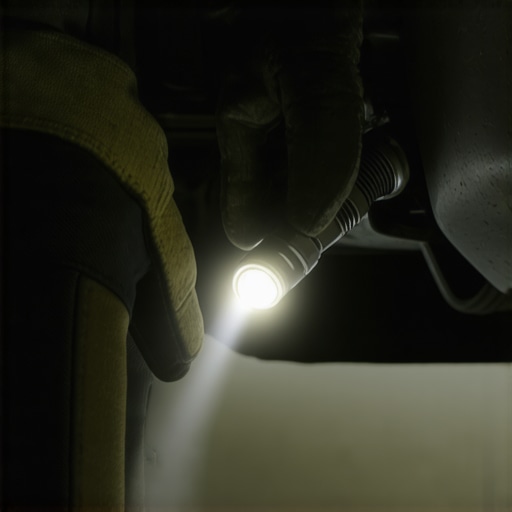
Look for the Warning Signs on Your Tire Treads
Your tires are like a diary of your car’s mechanical health. If your car is wandering, take a close look at the tread pattern. Is one side of the tire worn down while the other looks brand new? That is a classic sign of ‘toe’ or ‘camber’ issues. If the tread feels rough or ‘saw-toothed’ when you run your hand across it, you are likely dealing with a bad alignment that is fighting your steering input. Knowing how to tell if your car needs an alignment or new tires can save you from replacing expensive rubber prematurely. I once saw a set of brand-new tires get chewed to the cords in less than 3,000 miles because the owner ignored a slight drift to the right.
Don’t Ignore the Rubber That Holds Your Suspension Together
Think of your control arm bushings as the cartilage in your joints. When they dry out and crack, the entire wheel assembly can shift forward or backward during acceleration and braking. This creates a sensation where the car seems to have a mind of its own, especially over bumps. You can often how to use your ears to find a suspension clunk when these bushings fail, as they will pop or groan when you turn into a driveway. If you notice your car drifts to one side even on a flat road, check the control arms with a pry bar. Any movement beyond a slight rubbery flex means the bushing is shot and needs to be replaced immediately. Keeping a car service checklist handy during your oil changes will help you spot these cracked rubber pieces before they turn into a highway nightmare.Let’s dig deeper into the biggest lie in the automotive world: the idea that an alignment is a ‘fix-all’ for handling issues. In my years of turning wrenches, I’ve seen countless drivers drop $100 on a laser alignment only to drive off the lot with the exact same drift. Here’s the hidden nuance: a technician can get the computer screen to show all green ‘within spec’ numbers even if your car is mechanically falling apart. If you have a collapsed bushing or a sticking caliper, that alignment is a total waste of cash. I’ve even seen cases where brake service myths lead people to ignore a dragging pad that mimics an alignment pull. One major ‘trap’ I see is people ignoring ‘radial tire pull.’ You can have a perfectly straight suspension, but if the internal belts of your tire have shifted, the car will lead to one side regardless of what the alignment rack says. It’s frustrating because it feels mechanical, but it’s actually the rubber itself. Have you ever fallen into this trap? Let me know in the comments. I’ve spent hours chasing ghosts only to find out a simple tire rotation fixed the ‘alignment’ issue. 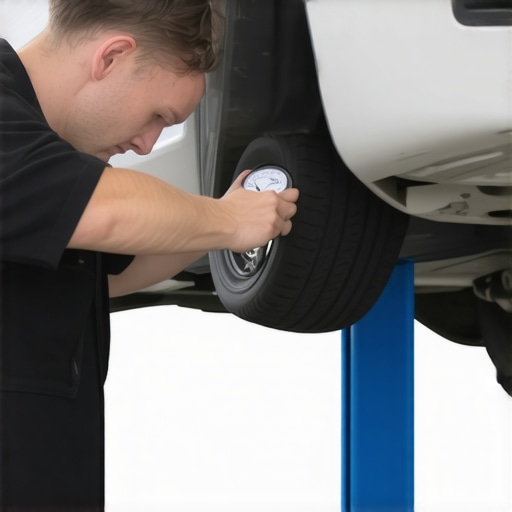
Stop Chasing Alignment Ghosts Without Checking Your Tires First
When you are looking for that tune up for peak performance, you need to look beyond the engine bay. A real ‘tune up’ includes the steering geometry. But here is where most DIYers get stuck: they assume new parts automatically fix the problem. I’ve seen people replace every tie rod and ball joint only to have the car feel worse. This usually happens because they didn’t account for ‘memory steer’—where a new, overly tight part prevents the steering from returning to center. It’s a nuance that separates a parts-changer from a technician. Most people also perform their checks with the wheels dangling in the air. That is a massive mistake. Suspension components behave differently when they are under the 3,000-pound load of the vehicle. A ball joint might feel tight as a drum when the car is on jack stands but reveal significant ‘slop’ once the weight of the engine is pressing down on it. If you’re not checking these parts under stress, you’re only getting half the story.
Why does my steering feel ‘numb’ even after replacing the hardware?
This is where we get into the high-level stuff. Modern cars often use Electronic Power Steering (EPS), which can mask mechanical feedback. According to research by SAE International, the software calibration in EPS systems can actually compensate for minor hardware wear, which sounds great until the wear becomes so significant that the system can no longer ‘code out’ the slack. This results in a sudden, darting sensation. If you have checked your car service checklist and everything looks tight, you might be dealing with an internal steering rack failure or a steering angle sensor that needs recalibration. Don’t forget the ‘brake-steering’ connection. If you’re understanding brake system repairs, you know that a failing master cylinder can affect how the car sits under load. I once had a client who swore their car needed a new steering box, but it was actually a collapsed brake hose that was keeping one caliper slightly applied. This caused the car to ‘hunt’ for a straight line every time the suspension loaded up at 65 mph. Mechanics often overlook the fix for a soft brake pedal when they are focused on steering, but in a linked system, every component talks to the others. Even things like the truth about using high-mileage oil additives can be a distraction when the real problem is a hardware-software mismatch in your power steering module.To really conquer the high-speed wander, you need tools that go beyond a basic wrench. One of my favorite ‘secret weapons’ is a simple infrared thermometer. After a highway run, I point it at each brake rotor; if one is significantly hotter than the others, I know I’ve found a dragging caliper that’s mimicking a steering pull—avoiding those common brake service myths that lead to unnecessary part swaps. This kind of data-driven approach is the only way to maximize your cars lifespan with expert tune-up strategies. It isn’t just about changing oil; it’s about monitoring the thermal health of your entire drivetrain. According to technical documentation from Hunter Engineering, even a half-degree of alignment variance can increase rolling resistance significantly, which is why precision matters. Looking ahead, auto repair trends to watch in 2025 suggest we’ll see more integrated diagnostic software that tracks suspension ‘slop’ in real-time using existing wheel speed sensors.
Invest in Tools That See What You Can’t
Aside from the thermometer, you should own a high-quality torque wrench. Many people skip this, but uneven lug nut pressure can warp rotors and cause a vibration that feels like a steering failure. Learning the proper way to torque wheel bolts without a manual ensures your hub assembly stays true. I also recommend a Bluetooth OBDII scanner that can read live data from your steering angle sensor. This allows you to see if your car’s computer ‘thinks’ you are turning when you are actually going straight.
How Can I Keep My Steering Sharp for Decades?
Consistency beats intensity every time. Instead of waiting for a vibration, make it a habit to how to read the date code on your tires every time you rotate them. Rubber degrades from the inside out, and an old tire with a ‘perfect’ tread can still cause a terrifying drift if the sidewall has lost its structural integrity. You should also be checking for vacuum leaks that affect power assistance; if you’re wondering how to tell if your brake booster is losing pressure, you might find that your steering issue is actually a vacuum-assisted power problem. 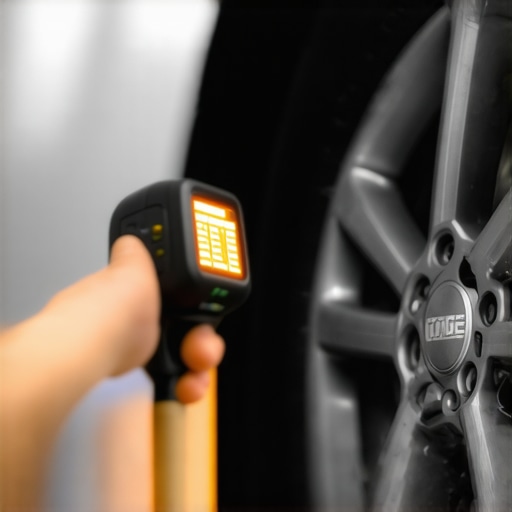 My challenge to you: This weekend, do a ‘temp check’ on your rotors after a 15-minute drive. It’s the easiest way to see if your brakes are fighting your steering without you even knowing it. Taking five minutes for a the 5 minute check to prevent transmission failure and checking your suspension bushings will keep your car feeling brand new long after the odometer hits 200,000 miles.
The Expensive Mistakes I Made So You Don’t Have To
Over years of wrestling with wandering front ends, I realized that the loudest part isn’t always the broken one. Here is the wisdom I gained through bruised knuckles and wasted diagnostic fees:
- Tires are your car’s black box. Before you touch a single bolt, look at the wear patterns; they tell you exactly how to tell if your wheel alignment is actually off without needing a laser rack.
- Heat is a diagnostic genius. A sticking brake caliper mimics a steering pull so perfectly that most drivers replace entire tie rod ends before they realize one wheel is significantly hotter than the rest.
- Tight is not always right. Over-torquing suspension bolts under no load is the fastest way to ruin a brand-new bushing. Always torque at ride height to maximize your cars lifespan with expert tune-up strategies.
#IMAGE_PLACE_HOLDER_D#
The Simple Gear That Saved My Sanity
You don’t need a professional shop to find the truth about your handling. I personally swear by a digital infrared thermometer to spot those dragging brakes I mentioned earlier. I also keep a high-quality torque wrench nearby to ensure I am following the proper way to torque wheel bolts without a manual, preventing warped rotors that cause steering shimmy. Finally, never underestimate a Bluetooth OBDII scanner to check your steering angle sensors—it is the digital equivalent of checking your pulse.
Trust Your Gut When the Road Feels Wrong
Driving should not be a constant physical workout or a source of anxiety. If you are fighting the wheel, your car is sending a signal that something is out of sync. By taking a proactive approach to your maintenance and learning the real reason your car vibrates at exactly 55 mph, you can stop the drift before it turns into a dangerous failure. Your safety is worth those twenty minutes of inspection this weekend. What was the weirdest part you ever had to replace to fix a steering drift? Let me know in the comments below!