
I remember the pit in my stomach last November. I was kneeling in my driveway with a penny, trying to measure the tread on my front tires, and realized I could see every bit of Lincoln’s head. My tires were toast. They were barely two years old, and I felt like I’d just set eight hundred dollars on fire. It was a visceral realization that I’d been treating my tires like a ‘set it and forget it’ part of my car, when in reality, they are the most neglected piece of the safety puzzle. I’d skipped rotations, ignored a slight tug in the steering wheel, and figured I’d get to it next month. Well, next month came, and so did a massive bill. Today, I want to help you avoid that same expensive mistake. We are going to dive into how you can practically double the lifespan of your rubber by changing just a few small habits.
Stop Ignoring Your Tire Pressure Before It Costs You
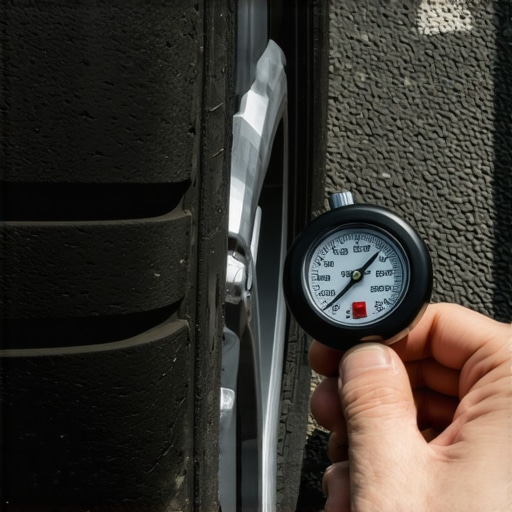
One of the biggest mistakes I made early on was trusting my dashboard’s low-pressure light to tell me when to add air. By the time that light flickers on, you’ve likely already been driving on under-inflated tires for weeks, causing the sidewalls to overheat and the edges to wear down prematurely. It is a slow, silent killer for your tread. According to the National Highway Traffic Safety Administration (NHTSA), only about 19% of consumers properly check their tire pressure, even though under-inflation is a primary cause of tire failure. I started keeping a digital gauge in my glovebox and checking them every other Sunday morning. It takes two minutes, but it keeps the wear even. You also need to make sure you aren’t driving on ‘zombie’ tires; you should learn how to read the date code on your tires to ensure the rubber hasn’t simply aged out and become brittle, regardless of how much tread is left.
Is it actually possible to double your mileage?
You might be skeptical, thinking that tires simply have a fixed expiration date based on the manufacturer’s rating. I used to think the same thing. But when I actually started paying attention to the hidden benefit of rotating tires every 5,000 miles, I saw the difference immediately. My current set is at the 40,000-mile mark and looks nearly new. If your car is pulling to one side, don’t wait—you need to know how to tell if your wheel alignment is actually off before it shreds your investment. Have you ever looked at your tires and realized they were wearing out way faster than they should? It’s a frustrating feeling, but it’s one we can fix together right now.
Fix the Steering Issues That Shred Your Rubber
If your car feels like it is constantly trying to steer itself into the ditch, you are not just fighting a steering issue; you are literally grinding your tires into the pavement at an angle they were never designed to handle. Think of it like walking in shoes that are tilted outward; eventually, your soles wear out in weird, jagged spots. I once let a slight steering vibration go for a full month, thinking it was just the rough pavement on my commute. When I finally pulled the wheel off, I was horrified to see the metal cords poking through on the inner edge of the tire. It was a death trap. Don’t let yourself get to that point. You should learn how to check your tie rod ends with minimal tools in your own driveway. If your steering feels loose or disconnected, it is likely why your car wanders across the lane at high speeds. Addressing these mechanical basics is as crucial as any tune up your car for peak performance routine.
Test Your Shocks Without Specialized Tools
Your tires are the only thing touching the road, but your shocks and struts are what keep them glued there. If your suspension is shot, your tires will ‘hop’ over bumps instead of rolling smoothly. This creates a specific type of wear called ‘cupping’—little dips in the tread that make your car sound like a helicopter when you hit forty miles per hour. I once bought a used sedan that shook so bad I thought the engine was failing, but it was just four cupped tires caused by dead struts. You can perform the simple test for worn out shocks using your own body weight by pushing down on the corners of your car. If the car bounces more than twice, your suspension is effectively punching your tires every time you hit a pebble. Keeping these components in check is a vital part of a complete car service checklist.
Don’t Let Your Brakes Drag Your Tires to an Early Grave
Most people do not realize that their brake system can be the secret enemy of their tire life. A sticking brake caliper is essentially like driving with one foot on the gas and the other on the brake pedal. It generates incredible heat that transfers directly through the wheel and into the tire rubber, causing it to harden and crack. If you smell something metallic or see smoke after a highway run, you should immediately learn how to spot a leaking brake caliper before it fails. I remember a weekend where I spent four hours scrubbing brake dust off my rims only to realize the heat had actually started to discolor the sidewall of my tire. It is a messy, frustrating realization, but catching it early saves both the brake pads and the expensive rubber. Regularly checking for drag or unusual heat is just as important as any ultimate car service guide recommendation for long-term vehicle health.
Let’s dig deeper into why we often fail at maintenance even when we think we’re doing everything right. Most of us grew up hearing that a car just needs an oil change every few thousand miles and you’re good to go. But modern cars are far more complex, and some of the advice printed in your owner’s manual is actually designed to make the car look cheaper to own during the warranty period, not to make it last 300,000 miles. I’ve learned the hard way that following the ‘official’ schedule to the letter can sometimes lead to an early grave for your vehicle.
The Dangerous Myth of Lifetime Fluids
The biggest contrarian view I hold—and many veteran mechanics agree—is that ‘lifetime’ fluid is a marketing lie. If you look at your manual and see that the transmission or differential fluid is rated for the life of the vehicle, you need to ask: ‘How long does the manufacturer define a life?’ Usually, it’s just 100,000 miles or the length of the powertrain warranty. If you want your car to last longer, you have to ignore that. According to experts at Aisin, a leading global transmission manufacturer, fluid should actually be serviced much more frequently, especially under ‘severe’ driving conditions like stop-and-go traffic. I’ve seen far too many people skip these services only to face a $5,000 repair bill at year seven. This is why I’ll never skip a transmission fluid change again, regardless of what the dealership’s glossy brochure says.
Can a simple tune-up actually fix a mysterious transmission shudder?
It sounds counterintuitive, but your transmission and your engine are in a constant, high-speed conversation. I once dealt with a car that felt like it was falling apart every time I hit 40 mph. I was convinced the gearbox was toast. It turned out to be a dirty Mass Air Flow (MAF) sensor and a single fouled spark plug. When the engine isn’t running perfectly, the computer struggles to calculate the right shift points, leading to a ‘shudder’ that feels mechanical. Before you drop thousands on a rebuild, you should see how a simple tune-up fixed my mystery hesitation. Often, restoring the air-fuel ratio through expert tune-up strategies is the cheapest ‘transmission repair’ you’ll ever buy. Also, don’t overlook the hidden benefit of cleaning your mass air flow sensor; it takes ten minutes and can save your catalytic converter from clogging.
The Lug Nut Trap That Warps Your Rotors
Here is the ‘oops’ factor that catches almost everyone: the way you (or a rushed shop) tighten your wheels. If you’ve ever wondered why your brake rotors keep warping every few months despite buying high-quality parts, the culprit is likely an impact wrench. When lug nuts are tightened unevenly, it puts ‘lateral runout’ on the rotor. As it heats up and cools down, that uneven pressure causes the metal to distort. Always insist on a torque wrench for the final tighten. This is one of those brake service myths that people ignore until they feel that rhythmic pulsing in the pedal. If you are doing your own work, make sure you know the simple way to bed in new brake pads to ensure the friction material transfers evenly. Have you ever fallen into this trap of trusting ‘lifetime’ parts only to have them fail? Let me know in the comments. We need to stop treating brake system repairs as a simple pad swap and start looking at the physics of the whole assembly.
Get a Digital Torque Wrench Instead of Trusting Your Elbow
I used to think my ‘calibrated elbow’ was enough until I realized I was overtightening my lug nuts by nearly 30 foot-pounds every time. That kind of uneven pressure is exactly why your brake rotors keep warping every few months. If you are moving beyond basic oil changes and into serious DIY work, a digital torque wrench is the first ‘real’ tool you should buy. It isn’t just for wheels; it is essential for every bolt on the engine during a tune up your car for peak performance session. When I’m working on the valve cover or intake manifold, precision prevents the vacuum leaks that lead to those frustrating, ghost-like idling issues. If you are serious about troubleshooting common auto repair issues before visiting the shop, you also need an OBD-II scanner that reads live data. I personally use an Autel unit because it allows me to watch fuel trims in real-time. According to technical documentation from Bosch, a ‘lazy’ oxygen sensor can degrade your fuel economy by up to 15% before it ever gets bad enough to trigger a Check Engine Light. By watching the live voltage swings on my scanner, I can catch a failing sensor months before the car’s computer even knows there is a problem.
How do I maintain peak performance as my odometer climbs past 150,000 miles?
The secret to high-mileage success isn’t a magic additive; it is the obsessive management of heat and friction. As your car ages, the rubber components in your engine bay become brittle. This is when you should start looking for the simple way to check for vacuum leaks with smoke to ensure your air-fuel ratio stays perfect. I make it a habit to check my power steering and brake fluids every single month, and I never ignore it why your brake fluid levels keep dropping without a visible leak. Usually, it’s a sign the pads are wearing down and the piston is extending further, but it could also be a failing master cylinder. To truly maximize your cars lifespan with expert tune-up strategies, you need to be proactive about the components that involve internal combustion. For example, when you are doing a plug swap, you should always use the trick to replacing a spark plug without stripping threads by hand-starting them with a piece of rubber hose. It’s a small, old-school method that prevents a $2,000 cylinder head repair.
The 2025 Shift Toward Software-Based Maintenance
As we look at auto repair trends to watch in 2025, it is clear that maintenance is becoming as much about software as it is about hardware. We are moving toward an era of ‘predictive diagnostics’ where your car will alert your phone that a fuel pump is drawing too much amperage before the pump actually fails. I’m already seeing this with modern battery management systems that can tell you how to tell if a battery is just discharged or truly dead based on internal resistance trends. This technology is going to make the traditional ultimate car service guide even more precise. I encourage you to try one advanced tip this weekend: grab a can of specialized cleaner and perform the hidden benefit of cleaning your mass air flow sensor. It is a five-minute job that can instantly restore the crisp throttle response you thought you’d lost years ago.
What a Decade of Grease Taught Me About Car Longevity
Reflecting on my years under the hood, the most painful lesson I’ve learned is that your car usually tries to talk to you long before it breaks down. That “rhythmic thumping” or “slight shimmy” isn’t just character; it’s a warning. I’ve realized that being proactive about brake system repairs is significantly cheaper than replacing an entire axle because a seized caliper overheated everything. Another lightbulb moment was discovering how much money I wasted by skipping simple maintenance; now I know how regular tune-ups improve fuel efficiency and safety and keep my wallet full at the pump. Finally, don’t fear the complexity of modern cars. Most issues start with simple physics—friction and heat—and if you manage those, the machine will reward you.
My Go-To Gear for Every Saturday in the Garage
If you’re ready to stop being a passive driver and start being a savvy owner, you need a few reliable tools. First, a high-quality OBD-II scanner like the ones from Autel is non-negotiable for the ultimate car service guide approach to DIY work. Second, never underestimate the power of a digital torque wrench to prevent warped rotors. Lastly, I always keep a specific “repair diary” in my glovebox to track every fluid change and part replacement. This log is the first thing I show a mechanic if I ever need to contact us for professional help or if I eventually sell the car, as it proves the vehicle’s pedigree.
#IMAGE_PLACEHOLDER_E#
Your Road to 300,000 Miles Starts Today
Maintenance isn’t just about avoiding a breakdown; it’s about the pride of driving a machine that feels as tight and responsive as the day it left the showroom. Whether you are performing your first oil change or tackling a complex auto repair, remember that every small effort compounds over the life of your vehicle. You don’t have to be a master mechanic to make a massive impact on your car’s lifespan—you just have to be observant and consistent. Have you ever ignored a weird noise only for it to turn into a massive repair bill later? Let me know in the comments below!