
I’ll never forget the morning my old sedan decided to wake up the entire neighborhood. It wasn’t just a rattle; it was a high-pitched, piercing shriek that sounded like a choir of banshees under my hood. I stood there in my driveway, coffee in hand, feeling that familiar pit in my stomach. Was my alternator dying? Was a pulley about to seize? I immediately started thinking about the high cost of a professional ultimate car service guide visit and whether I’d have to dip into my vacation savings. Early in my DIY days, I actually spent three hours replacing a perfectly good water pump because I assumed it was the source of a similar noise. Talk about an expensive, frustrating mistake that could have been avoided with a little patience and a simple household item. Today, I’m going to show you how to avoid that same trap by using nothing more than a spray bottle filled with tap water to pinpoint the culprit behind that embarrassing squeal. We are going to separate the ‘belt’ problems from the ‘bearing’ problems in under two minutes, saving you from unnecessary troubleshooting common auto repair issues before visiting the shop.
Stop Throwing Money at Noises You Can’t Identify
Getting your hands dirty with car service checklist items doesn’t mean you have to be a master mechanic with a five-figure tool chest. Most of us hear a noise and panic, but 90% of the battle is just knowing where to look. When your belt starts chirping or squealing, it’s usually telling you one of two things: either the belt itself is dried out and slipping, or a pulley bearing is on its way to the great junkyard in the sky. If you ignore it, you risk the hidden danger of a slipping serpentine belt, which can leave you stranded when your power steering or alternator suddenly quits. According to the Car Care Council, neglected belt maintenance is one of the leading causes of engine overheating and electrical failure on the highway. By performing this quick test, you ensure that how regular tune-ups improve fuel efficiency and safety actually stays a reality for your daily driver. Have you ever been that person at the stoplight with the engine that sounds like a whistle factory? It’s okay to admit it—we’ve all been there.
Is a simple spray bottle actually better than a pro diagnostic tool?
I know what you’re thinking: ‘There is no way a squirt of water can tell me more than a mechanic with a computer.’ It sounds like old-timer magic, but the physics are solid. Water acts as a temporary lubricant. If the noise disappears the moment the belt gets wet, you’ve found a friction issue with the rubber. If the noise gets louder or doesn’t change, you’re looking at a mechanical failure in a bearing. This distinction is the difference between a $20 belt and a $400 repair bill. In the next section, we’ll walk through the exact steps to perform this safely without losing a finger to a spinning fan.
Keep Your Fingers Clear of the Spinning Chaos
Before you even pop the hood with the engine running, you need to respect the mechanical meat-grinder that is your accessory drive system. Tie back any loose hair, tuck in your shirt, and keep your hands well away from the cooling fans. You’re going to be working near moving parts, so situational awareness is your best tool. If you’ve ever had to how to replace your own alternator and save hundreds, you know how cramped modern engine bays are. This isn’t the time for a car service checklist run-through; it’s a focused diagnostic mission. Grab a standard spray bottle—the kind you’d use for misting plants—and fill it with plain tap water. Don’t use soapy water or cleaners, as these can leave residues that actually cause more slipping later.
Aim for the Grooves Not the Pulley
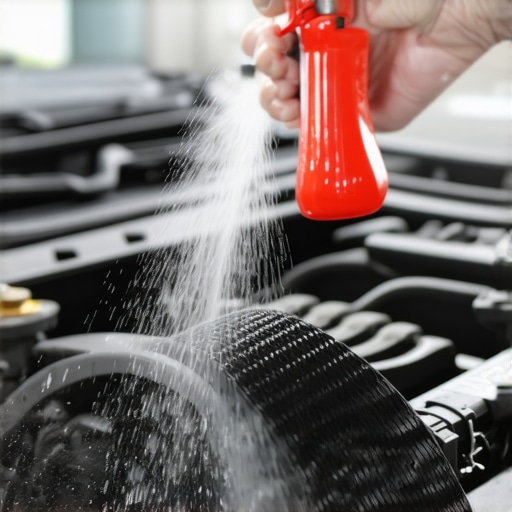
With the engine idling and that annoying chirp echoing off your garage walls, carefully direct a stream of water onto the ribbed (inner) side of the serpentine belt. You want to hit the belt just as it’s about to wrap around a pulley. The water acts as a temporary lubricant, filling in the microscopic cracks and smoothing out the friction between the rubber and the metal. #IMAGE_PLACE_HOLDER_B# If that piercing shriek instantly disappears or changes its tune to a dull hum, you’ve hit the jackpot. This confirms the hidden danger of a slipping serpentine belt is likely just a worn-out rubber component. I remember doing this on my cousin’s old SUV; he was convinced his power steering pump was failing because the steering felt heavy and sounded like a dying whale. One squirt of water and the noise vanished instantly. It turned out the belt was so glazed it couldn’t grip the pump pulley, which is a classic reason to tune up your car for peak performance-essential maintenance tips. We swapped the belt for $25 and he was back on the road in twenty minutes.
Read the Results Before You Buy Parts
If you drench the belt and that metallic grinding or high-pitched whistle doesn’t budge, the belt isn’t your problem. This is where the physics of the “bearing vs. rubber” debate gets settled. A bearing is a mechanical component with metal balls spinning in a race; water won’t lubricate the internal guts of a sealed bearing. If the noise persists, you need to how to check your power steering fluid the right way or look at the pulleys for the alternator, water pump, or idler. Unlike a simple belt swap, a failing bearing can seize entirely, causing the belt to snap and potentially leaving you stranded. This is similar to how you might use the secret to diagnosing a bad wheel bearing fast—it’s all about isolating the component. If the water makes the noise louder, that’s also a sign of a misalignment issue where the belt is being forced against the side of a pulley flange. Use these results to guide your next move in the ultimate car service guide journey, ensuring you only replace what’s actually broken.
The Windex Mistake I Made Once
Early on, I didn’t have a water bottle handy and reached for a bottle of window cleaner. Bad move. The ammonia and chemicals in the cleaner stripped the remaining oils from the belt rubber, making the squeal ten times worse the next morning. It taught me that while troubleshooting common auto repair issues before visiting the shop is great, using the right “tools”—even household ones—matters. Stick to plain water; it evaporates cleanly and gives you the most honest answer your engine can provide. By pinpointing the source now, you’re practicing the kind of maximize your cars lifespan with expert tune up strategies that keep high-mileage heroes on the road for decades.
Once you’ve mastered the spray bottle trick, you’re already ahead of most driveway mechanics. But let’s dig deeper into why so many people still get this wrong. The biggest mistake I see is the ‘parts cannon’ approach—throwing a new alternator or water pump at a noise just because the internet said it might be the problem. In the era of modern vehicles, the old-school definition of a tune-up has fundamentally changed. We aren’t just adjusting carburetors anymore; we are managing complex ecosystems of sensors and rubber.
Why You Should Stop Chasing Modern Ghosts With Old Tools
Everyone says that if you have a rough idle or a strange chirp, you should just swap the spark plugs and call it a day. In my experience, that’s often a waste of twenty bucks. Modern maximize your cars lifespan with expert tune up strategies involve looking at the bigger picture, like vacuum leaks or electrical grounds. I once spent an entire weekend diagnosing a ‘slipping belt’ that turned out to be a failing harmonic balancer—a rubber-damped pulley that was literally separating in half. If I had just kept tightening the belt, I would have eventually had a catastrophic engine failure. This is where how to tell if your computer is giving you a false error code becomes your most valuable skill. Sometimes the sensor is just reacting to a mechanical vibration it wasn’t programmed to understand.
Does Your Computer Actually Know What is Wrong?
It’s a common myth that a scanner tells you exactly which part to buy. According to technical data from SAE International, nearly 20% of drivability complaints are caused by secondary electrical issues, like a bad ground wire, rather than the component the error code actually names. This is why how to spot a bad ground wire causing electrical issues is a much more ‘expert’ move than simply reading a code at the local auto parts store. If your belt squeal is accompanied by flickering lights, don’t just look at the rubber; check the tensioner’s ability to dampen the alternator’s load.
The Brake Fluid Trap That Ruins New Pads
Another area where the nuance gets lost is in understanding brake system repairs a guide for vehicle owners. Most DIYers think a brake job is just ‘slap some pads on and go.’ But if you don’t understand brake service myths what you need to know before your next stop, you’ll likely overlook the fluid’s moisture content or the slide pins’ lubrication. This leads to the ‘warped rotor’ myth. Most ‘warped’ rotors are actually just uneven deposits of pad material caused by failing to follow the simple way to bed in new brake pads. You have to thermally season that metal, or you’ll be back under the car in three months wondering why the steering wheel shakes. #IMAGE_PLACE_HOLDER_C#
Ultimately, whether you are following the ultimate car service guide or just trying to survive a Tuesday commute, the ‘oops’ factor usually comes down to rushing the diagnostic. A squeal isn’t just a sound; it’s a data point. When you use water to isolate a belt, you aren’t just being cheap—you’re being surgical. You’re ensuring that how regular tune ups improve fuel efficiency and safety is a result of logic, not luck. Have you ever fallen into the trap of replacing a part only to find the noise stayed exactly the same? Let me know in the comments.
Building on that diagnostic mindset, let’s talk about the kit that actually lives in my trunk. I’m not talking about a generic 100-piece socket set from a big-box store. I’m talking about the ‘silver bullets’—the tools that solve the problems that a spray bottle can’t quite touch. If you really want to graduate from being a simple parts-swapper to a diagnostic pro, you need a Bluetooth OBDII scanner that supports live data graphing. I personally use units like the BlueDriver or an Autel because they let me see fuel trims and O2 sensor voltages in real-time. This is how you catch a failing component before the Check Engine light even blinks. For example, knowing how to tell if your catalytic converter is actually clogged often starts with monitoring downstream oxygen sensors on a graph, rather than just guessing when the car feels sluggish on a hill.
Stop Guessing and Start Measuring Your Car’s Vitals
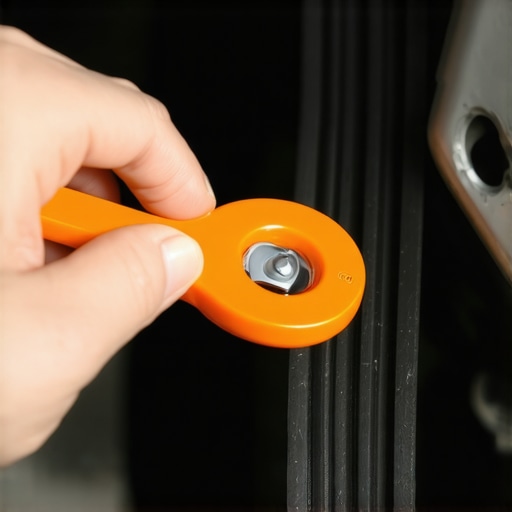
Maintenance isn’t just about what you fix; it’s about what you prevent. According to technical documentation from Gates Corporation, modern EPDM (Ethylene Propylene Diene Monomer) belts don’t crack like the old neoprene ones did. They just lose material, much like a tire tread, until they lose their ability to grip the pulley. This is why a simple visual check isn’t enough anymore. You need a plastic belt-wear gauge—a tiny tool that costs $5 but can save you from the hidden danger of a slipping serpentine belt. If the gauge drops deep into the grooves, your belt is ‘bald’ and ready to fail, regardless of how many miles you think you have left.
When I moved from basic repairs to long-term scaling of my vehicle’s life, I started focusing heavily on fluids. Most people forget about the transmission until it starts to slip or shift hard. Using the 5-minute check to prevent transmission failure is a non-negotiable part of my monthly routine. And if you’re driving a modern car, you’ve likely realized that how to check transmission fluid levels without a dipstick is the new standard. It requires a level surface and a scan tool to monitor transmission temperature—a far cry from the old days of pulling a stick while the engine idles in the driveway.
How do I maintain my accessory drive over time?
Consistency always beats intensity. I perform a ‘belt and pulley’ audit every time I change my oil. I don’t just look; I feel for vibrations in the tensioner arm while the engine is running (using a long screwdriver as a stethoscope, safely). If you notice why your car shudders whenever the AC compressor kicks in, it might not be the compressor itself—it could be a worn tensioner spring struggling to handle the sudden torque load. I also stay skeptical of chemical miracles. For instance, the truth about high-mileage oil additives is that they are often a temporary band-aid for a mechanical issue that eventually needs a wrench. Looking ahead at auto repair trends to watch in 2025, we are moving toward ‘smart’ accessories that will alert your phone when they wear down, but until your car is that smart, your own hands and a few cheap gauges are your best defense. My challenge to you: Before your next road trip, spend ten dollars on a belt-wear gauge and a pocket-sized tire tread depth tool. Use them both to find one thing that is ‘technically’ within spec but nearing its end—it’s the single most professional move a DIYer can make to stay ahead of the tow truck.
The Expensive Lessons That Taught Me to Trust Science Over Guesswork
If there is one thing a decade under the hood has taught me, it’s that the loudest noise isn’t always the most expensive fix. I’ve seen countless neighbors swap out perfectly good alternators because they didn’t realize how to tell if your computer is giving you a false error code—sometimes the computer just sees a voltage drop and blames the hardware, when the real culprit was a slipping belt. Another lightbulb moment for me was realizing that the hidden danger of a slipping serpentine belt isn’t just the noise; it’s the heat friction that can actually bake your pulley bearings. Don’t let a simple chirp wait until it becomes a catastrophic failure. Finally, remember that your ears are often better than a scan tool for mechanical issues; physics doesn’t lie, even when the dashboard does.
The Four Tools That Simplified My Diagnostic Life
To move beyond the spray bottle, you need a few high-value items that pay for themselves in one use. First, a plastic belt-wear gauge is essential because modern EPDM belts don’t crack—they just wear thin and lose grip. Second, a Bluetooth OBDII adapter is the only way to verify if your tune up your car for peak performance-essential maintenance tips actually worked by checking live fuel trim data. I also swear by a non-contact infrared thermometer to find which pulley is running hot, and a decent torque wrench to ensure that when you’re understanding brake system repairs a guide for vehicle owners, you aren’t over-tightening bolts and causing future failures. These tools turn guesswork into a reliable science.
#IMAGE_PLACEHOLDER_E#
Take Control of Your Engine’s Longevity Today
Becoming your own car’s advocate is one of the most empowering feelings a driver can have. You don’t need a degree in engineering to keep your vehicle reliable; you just need the patience to perform a 2-minute water test and the discipline to follow the ultimate car service guide for your specific model. Every time you identify a noise yourself, you aren’t just saving money—you’re building the confidence to handle whatever the road throws at you. Real car maintenance isn’t a chore; it’s the price of freedom and safety on the highway. Have you ever replaced a major part like an alternator only to realize the noise was just a twenty dollar belt? Tell me your ‘parts cannon’ story in the comments below!