
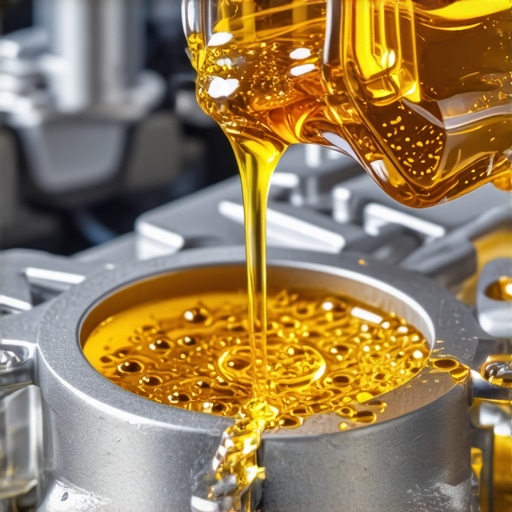
I was standing in the aisle of a massive auto parts store, staring at a wall of brightly colored bottles promising to ‘restore’ my engine to its factory glory. My old Chevy had just hit 185,000 miles, and every cold start sounded like a skeleton wrestling in a trash can. I was desperate. I grabbed the most expensive ‘engine honey’ I could find, dumped it in, and hoped for a miracle. Spoiler alert: I didn’t get one. In fact, I ended up making a classic rookie mistake—I ignored the actual health of my seals and ended up with a mess that required a professional car service sooner than I planned. Today, I want to cut through the marketing noise. We’re going to figure out if those thick, gooey additives are actually helping your high-mileage daily driver or if you’re just pouring money down the drain. If you’ve ever wondered why your tailpipes are puffing blue smoke every morning, you’re in the right place. [image]
Stop Buying Magic Bottles Until You Read This
I remember my first “high-mileage” panic like it was yesterday. I saw a small oil spot on the driveway and immediately assumed the worst. Instead of looking for a legitimate tune up or checking my gaskets, I fell for the “stop leak” trap. I poured a bottle of thick stabilizer into the crankcase, thinking I was being proactive. What I didn’t realize back then was that I was actually diluting the carefully engineered detergent package already in my oil. The result? A gummed-up valvetrain and a very expensive lesson. The real secret to getting 200,000 miles out of your original engine isn’t found in a $15 bottle of mystery fluid; it’s found in consistency and quality.
Is This Stuff Actually Worth the Hype?
You’ve probably seen the commercials with the sliding metal friction tests, but the reality is a bit more complicated. Most modern synthetic oils are already packed with seal conditioners and anti-wear agents. According to a technical study by the American Automobile Association (AAA), high-quality synthetic oils outperformed conventional oils by nearly 50 percent in protecting engines, often making additional additives redundant or even harmful to the oil’s chemistry. Have you ever dumped a ‘miracle’ additive into your tank and felt an immediate change, or did it just make your wallet lighter? I’ve been on both sides of that fence, and today I’m going to show you how to tell the difference before your next oil change.
Stop Guessing and Start Cleaning Your Engine Block
I once spent forty dollars on three different bottles of stop-leak because I saw a dark smear on the bottom of my transmission bell housing. I was convinced my rear main seal was toast. It turns out, a two-dollar valve cover gasket was weeping oil down the back of the block, making it look like a catastrophic failure. Before you pour anything into your engine, get a can of degreaser and a pressure washer. Clean the engine bay until it’s spotless. Drive it for twenty miles, then get under there with a flashlight. You need to see exactly where the wetness starts. Often, what looks like an internal disaster is just a simple auto repair you can handle in an afternoon with basic tools. If you’re chasing a rough idle rather than a leak, don’t reach for the ‘tune-up in a can.’ You might actually just need to identify a vacuum leak using a simple cigar. I’ve seen more engines fixed with a five-cent puff of smoke than a thirty-dollar bottle of ‘Restore.’ 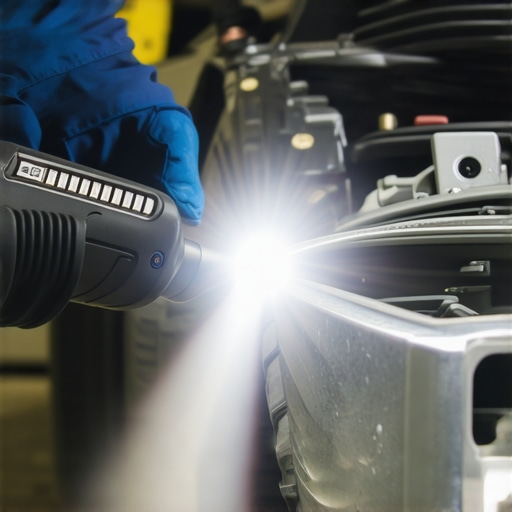
Why Your Sensors Are More Important Than the Oil Bottle
Your car’s computer relies on data, not magic. If your high-mileage beast is stumbling, it’s likely because the sensors are coated in a decade of carbon and road grime. Instead of adding thickeners to your oil, try focusing on the intake side. There is a massive hidden benefit of cleaning your mass air flow sensor that most people ignore. I remember my neighbor’s truck was blowing black smoke and surging at stoplights. He was ready to trade it in for parts. We spent ten minutes spraying a dedicated MAF cleaner on the sensor wire, and the truck smoothed out instantly. It wasn’t the oil’s fault; the computer just didn’t know how much air was entering the engine. This is why a proper tune up is about precision, not just pouring fluids into a hole.
Keep the Heat Under Control to Save Your Seals
High mileage means your gaskets have survived thousands of heat cycles. The moment your car runs slightly hot, those gaskets get brittle and start to fail. If you want to avoid a massive car service bill for a blown head gasket, you need to be proactive with your cooling system. Don’t wait for the needle to hit the red zone. You can actually test your own thermostat in a pot of boiling water on your kitchen stove to see if it’s opening at the right temperature. Keeping the engine at its designed operating temperature is the single best thing you can do for seal longevity.
Don’t Forget the Parts That Actually Stop the Car
While we’re focused on the engine, high-mileage cars often have neglected hydraulics. If your brake pedal feels a bit spongy, it’s not just ‘old car charm.’ You likely have air or moisture in the lines. Following a car service checklist helps you remember that fluids like brake and power steering need refreshing too. If you’ve recently done a brake service, make sure you know the proper way to break in new brake pads and rotors to prevent glazing and noise. Maintenance is a holistic game; an engine that lasts 300,000 miles is useless if the car can’t stop.
Lifetime Fluids Are a Marketing Lie
I’ve heard it a thousand times: “The manual says the transmission fluid is good for the life of the car.” But here is the contrarian truth that most dealerships won’t tell you—”lifetime” often just means the duration of the factory warranty. If you plan on keeping your vehicle until the odometer hits 200k, you need to ignore those the truth about 10,000 mile oil change intervals and apply that same skepticism to your gearbox. In my shop, I’ve seen “lifetime” fluid that looked like burnt molasses at only 60,000 miles. However, there’s a massive trap here: on a high-mileage car that has been neglected, a high-pressure flush can actually do more harm than good. When a machine forces fluid through the system, it can dislodge metallic debris that eventually clogs the delicate valve body. A gentle drain and fill is almost always the safer bet for an older daily driver.
Can a Simple Tire Swap Ruin Your Brake Feel?
It sounds crazy, but you go in for a rotation and suddenly your brake pedal feels different after a tire change. This is a nuance that catches even experienced DIYers off guard. If the technician doesn’t clean the hub surface or uses an impact wrench without a torque stick, they can actually distort the brake rotor. According to technical documentation from SAE International, even a microscopic amount of “run-out” caused by uneven lug nut pressure can lead to pedal pulsation and uneven pad wear over time. This is why learning the proper way to torque wheel bolts without a manual is a skill that saves your rotors from an early and expensive grave.

The “oops” factor in home maintenance often comes down to the fluids themselves. Many people assume all brake fluids are interchangeable, but pouring DOT 5 (silicone-based) into a system designed for DOT 3 or 4 (glycol-based) will turn your internal seals into jelly. If you’re already troubleshooting common auto repair issues like a sinking pedal, check the color of your reservoir first. If it looks like coffee creamer, it’s already heavily contaminated with moisture. There is a specific fix for a soft brake pedal that mechanics keep missing, which often involves bench bleeding the master cylinder to remove trapped air pockets that standard bleeding won’t touch. These are the details that separate a basic brake service from a professional job. Have you ever fallen into the “lifetime fluid” trap or had a simple repair turn into a headache? Let me know in the comments!
I used to think that a good set of sockets and a strong arm were all I needed to keep a car on the road forever. I was wrong. As my daily drivers crossed the 200,000-mile mark, I realized that the mechanical side of car service is only half the battle; the other half is data. If you really want to stop throwing parts at a problem, you need a bi-directional scan tool. I personally use one that allows me to command the ABS pump to cycle. Why? Because when you are performing a brake service on a modern car with a complex hydraulic control unit, a simple pump-and-hold bleed often leaves air trapped in the valves.
The One Tool That Stops Part-Hanging
Before you spend another dime on a ‘miracle’ sensor, invest in a multimeter and learn how to check for a bad ground wire. I’ve seen people replace alternators, batteries, and starters when the real culprit was just a corroded strap of copper. According to the Bosch Automotive Handbook (11th Edition), even a 0.5-volt drop across a ground circuit can cause modern ECUs to miscalculate fuel trims, leading you to think you need a massive tune up when you actually just need a wire brush and some dielectric grease. If you’re already troubleshooting common auto repair issues, start with the basics of electricity before you touch the fuel rail. 
How do I keep my high-mileage car reliable over time?
The secret is a rotating car service checklist that looks beyond the oil filter. Every spring, I inspect the rubber. I’m not just talking about tires; I’m talking about the serpentine belt and the coolant hoses. If you can replace your own serpentine belt in under 20 minutes, you’ve just saved yourself from a potential breakdown on the highway. I also make it a point to perform a chemical cleaning of the intake valves every 50k miles, especially on GDI engines. This is how you maximize your cars lifespan with expert tune up strategies that actually work, rather than just changing spark plugs and hoping for the best.
The Future of Your Garage is Digital
Looking ahead, the DIY world is changing. We are moving toward a reality where your car is a rolling computer network. By 2025, we’ll see even more integration of Advanced Driver Assistance Systems (ADAS). If you hit a curb or get a minor alignment, you might find that your lane-keep assist starts acting up. You need to know how to tell if your local mechanic actually has the tools for a proper ADAS calibration, because a standard alignment rack isn’t enough anymore. We’re staying on top of these auto repair trends to watch in 2025 to ensure our old-school wrenching skills don’t become obsolete. My advice? This weekend, don’t just wash your car. Grab a torque wrench and verify your lug nuts are at the factory spec; it’s the simplest way to prevent the rotor warping issues we talked about earlier.
Hard Lessons from the Bottom of a Grease Pit
After decades of turning wrenches, the biggest ‘lightbulb moment’ I ever had was realizing that most engine problems aren’t solved in the oil pan; they are solved by attention to detail. First, never trade a mechanical fix for a chemical one. I’ve seen countless owners try to save a few dollars by using additives, but you should never use stop-leak in your radiator because it’s a temporary patch that eventually restricts flow to the entire block. Second, the most powerful tool you own is your eyes. A simple visual car service checklist—checking for dampness, cracked belts, or frayed wires—prevents the ‘catastrophes’ that additives claim to fix. Finally, remember that electricity is the lifeblood of modern engines. If you’re chasing ghosts, learn how to tell if your electrical problem is a blown fuse or a bad ground wire before you start replacing expensive sensors.
The Gear That Keeps My High-Mileage Fleet Alive
If you want to move beyond being a ‘parts-changer’ and become a true diagnostic expert, you need a specific set of tools. I always recommend a bi-directional scan tool because it lets you talk to the car’s brain rather than just listening to it complain. For those focusing on safety, especially during a brake service, a quality pressure bleeder is a game-changer; it ensures every bubble of air is purged from the lines. I also swear by a high-quality infrared thermometer. It’s the easiest way to find hot spots in your cooling system or verify if a catalytic converter is actually clogged. These tools, combined with a solid car service routine, take the guesswork out of ownership and give you the confidence to drive anywhere.
Take the First Step Toward Your Own 300,000-Mile Journey
Your high-mileage vehicle isn’t a liability; it’s a testament to your care and consistency. Don’t let the marketing hype convince you that your engine is fragile or that it needs a ‘magic’ bottle to survive. By following a proactive tune up schedule and staying ahead of the small stuff, you are already doing more than 90% of drivers on the road. The satisfaction of hitting that next big odometer milestone is worth every hour spent in the garage. Keep your hands greasy and your data clean, and your car will reward you for years to come. Have you ever tried a ‘miracle’ additive that actually worked, or did it cause a bigger headache in the long run? Tell me your story in the comments!