
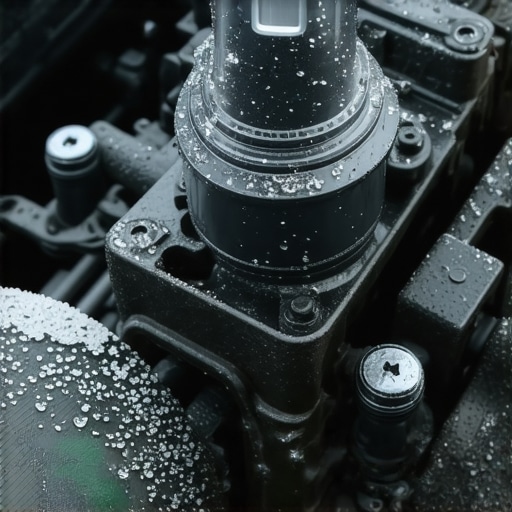
The sun wasn’t even up yet, and there I was, shivering in the driver’s seat of my old sedan while the engine did its best impression of a paint mixer. I turned the key, and instead of that confident, steady roar, I got a rhythmic, bone-shaking stutter that made my coffee splash right out of the mug. I used to tell myself it was just ‘old car charm’ or the engine ‘waking up,’ but deep down, I knew something was wrong. It felt visceral—a mechanical cough that rattled the dashboard and my nerves alike. If you have ever sat there with your hands on a vibrating steering wheel, wondering if your car is about to stall out in your own driveway, I know exactly how you feel. We are going to stop the guesswork today. I am going to show you why that morning stumble is happening and how you can fix it without throwing your entire paycheck at a mechanic.
Stop Ignoring Those Morning Shakes
It is tempting to think that a rough idle is just a side effect of a chilly morning, but your engine is actually struggling to find its balance. When your car is cold, the computer (PCM) has to dump a lot more fuel into the cylinders to keep things running—sort of like the choke on an old lawnmower. If just one sensor is slightly off or a tiny bit of air is leaking in where it shouldn’t, that delicate balance falls apart. I remember one winter where I was so convinced my fuel pump was dying that I spent three days and $400 replacing it, only to find the same shaking the very next morning. It was a humbling lesson in why troubleshooting issues before visiting the shop is the only way to keep your sanity. Today, we are going to look past the obvious and find the real culprits, like hidden vacuum leaks or gunked-up sensors that only act up when the mercury drops.
Is a rough idle just a normal sign of an aging engine?
Many people believe that once a car passes 100,000 miles, it is just ‘supposed’ to run a little rougher. That is a myth that will cost you money in the long run. Even a high-mileage engine should idle smoothly once the initial high-idle period settles down. In fact, a study by the Car Care Council suggests that nearly 70% of vehicles on the road have at least one unperformed maintenance task that directly impacts cold-weather performance. My biggest mistake early on was ignoring a small vacuum leak because the car ran fine once it warmed up. By the time I finally addressed it, that ‘small’ shake had fouled my spark plugs and killed my gas mileage. I don’t want you to make that same mistake. Have you ever felt like your car was about to fall apart specifically when it was cold, but it ran perfectly fine ten minutes later? If so, you are likely dealing with the exact ‘ghost’ issues I’ve spent years tracking down. Whether you need a comprehensive tune-up or just a can of sensor cleaner, the solution is usually much closer than you think. Let’s get into the nitty-gritty of what is actually happening under that hood.
Stop Your Engine from Choking on Dirty Air
The Mass Air Flow (MAF) sensor is your engine’s primary way of ‘smelling’ how much air is entering the intake. When this sensor gets coated in dust or oil, it sends garbage data to the computer. In freezing temperatures, that bad data is magnified because cold air is denser and requires a very specific fuel ratio to ignite. Think of it like trying to run a marathon while breathing through a wet wool sock; you are going to stumble. I once spent an entire Saturday afternoon tearing apart a fuel rail on my old truck because I was convinced I had a clogged injector. I was sweaty, covered in gasoline, and beyond frustrated. My neighbor eventually walked over, looked at my dirty air intake, and handed me a $10 can of MAF cleaner. Ten minutes of spraying and a quick wipe later, the engine purred like a kitten. It was a humbling lesson that a car service checklist should always begin with the easiest, cheapest components. Cleaning your sensor is a delicate job, but it is often the ‘magic bullet’ for a morning shudder.
Hunt Down the Invisible Air Leaks
Vacuum leaks are the true ghosts of the engine bay. Your engine is essentially a giant vacuum pump, and it relies on a perfectly sealed system to manage the air-fuel mixture. If air sneaks in through a cracked rubber hose after the sensor has already measured the intake, the mixture becomes too ‘lean.’ This means there is too much air and not enough gas, leading to that rhythmic stumbling you feel in the steering wheel. These cracks often hide on the underside of hoses where you can’t see them, and they tend to expand or contract based on the temperature. I have found that using the simple way to check for vacuum leaks with smoke is the only way to find these tiny culprits without losing your mind. I once used a cigar to blow smoke into the intake of an old Jeep, and watching a tiny gray puff get sucked into a microscopic crack in a PCV hose was one of the most satisfying ‘aha!’ moments of my life. If you suspect an air leak is ruining your morning, don’t just start replacing parts; find the leak first.
Refresh the Spark Before the Freeze
When the mercury drops, gasoline does not vaporize easily. It stays in larger droplets that are significantly harder to ignite than a fine mist. If your spark plugs are worn out, fouled with carbon, or have a gap that has grown too wide over the years, that weak little spark might not be enough to get the fire started in a cold cylinder. This leads to a misfire, which is the technical term for that violent ‘shudder’ you feel. If you notice your check engine light starts flashing during these rough idles, you need to understand what a P0300 code really means for your wallet. More often than not, it is a sign that your ignition system is waving a white flag. Performing a comprehensive tune-up before the dead of winter can prevent you from being stranded. I remember the first time I changed plugs on a V6 engine; I didn’t torque one of them down correctly and it sounded like a jackhammer the next morning. It taught me that while regular tune-ups improve fuel efficiency and safety, you have to be precise. Ensure your plugs are gapped to the manufacturer’s exact specifications to give that cold fuel the best chance of exploding.
Scrub the Gunk from Your Idle Control Valve
If your car starts fine but dies the moment you let off the gas, your Idle Air Control (IAC) valve is likely sticking. This little motor acts like a digital ‘idle screw,’ opening and closing a tiny passage to keep the engine running when the throttle is closed. Over time, oily carbon vapors from the engine build up inside this valve, turning into a thick, sticky glue. In the cold, this ‘glue’ hardens, and the valve can’t move fast enough to compensate for the engine’s needs. You can usually fix this with a can of throttle body cleaner and a stiff toothbrush. Just be careful not to soak the electrical components. This is one of those troubleshooting issues before visiting the shop that can save you a $300 diagnostic fee. I’ve seen hundreds of cars that were written off as ‘old and dying’ simply because a $10 valve was too dirty to move.Let’s dig deeper into the nuances that even experienced DIYers often overlook. One of the most persistent myths in the garage is that brake rotors ‘warp’ solely from heat. You’ve felt it—the pulsing pedal when you slow down from highway speeds. Most people just swap the rotors and call it a day, only to have the problem return 5,000 miles later. In reality, what we call warping is often ‘disc thickness variation’ (DTV) caused by improper installation rather than melted metal. If you don’t clean the rust off the wheel hub with a wire brush or if you fail to use the correct way to torque lug nuts to prevent rotor warping, the rotor sits at a microscopic angle. As you drive, the pads lightly graze the rotor’s surface once per revolution, slowly wearing it unevenly. According to a technical study by SAE International, lateral runout as small as 0.05mm can lead to significant DTV that ruins your braking experience over time. Understanding why your brake rotors keep warping every few months is less about the quality of the metal and more about the precision of the assembly.
Don’t Muscle Your Spark Plugs into Submission
Another common ‘oops’ factor involves the sheer force people use during a tune-up. There is a dangerous temptation to over-tighten components, thinking ‘tighter is better.’ I once stripped the threads on an aluminum cylinder head because I didn’t use a torque wrench on a new set of plugs. That $20 spark plug job turned into a $2,000 head replacement. But there’s a performance nuance here too: over-tightening can crack the ceramic insulator, leading to an invisible spark leak that causes the very misfire you were trying to fix. While how regular tune-ups improve fuel efficiency and safety is well-documented, the ‘how’ matters as much as the ‘what.’ Precision is the difference between a car that runs and a car that lasts.
Why does my car still vibrate after replacing every ignition component?
If you’ve replaced the plugs, wires, and coils and that morning stumble persists, you might be looking in the wrong place. High-level diagnostics often reveal that ‘mechanical’ issues are actually electrical ghosts. A corroded engine ground can cause the computer to miscalculate sensor data, leading to a phantom misfire that feels exactly like a bad plug. Learning how to spot a bad ground wire causing electrical issues can save you from the ‘parts cannon’—that expensive habit of throwing new components at a problem without a diagnosis. You might also find the hidden culprit behind a spongy brake pedal isn’t always air in the lines, but internal bypass in the master cylinder. Have you ever fallen into this ‘parts cannon’ trap? Let me know in the comments.
Get the Diagnostic Gear That Actually Saves You Money
I personally don’t step foot in my garage to troubleshoot a modern car without a bi-directional scan tool anymore. Why? Because being able to command a fuel pump to prime or a cooling fan to spin up directly from a tablet is the difference between an hour-long fix and a weekend-long nightmare. When I first started, I used a $20 Bluetooth dongle that gave me generic codes like P0300, which usually just results in people guessing and buying parts they don’t need. Today, I rely on live data streaming to see ‘Short Term Fuel Trim’ in real-time. If I see that number spiking to positive 15% at idle, I know I have a vacuum leak before I even lift the hood. This is precisely how professional diagnostics found my ghost electrical leak after I had spent months chasing a dead battery. If you are tired of the guesswork, invest in a mid-tier scanner that allows you to see what the computer sees. It is the single most important ‘wrench’ in my toolbox.
How do I maintain my engine health over 200,000 miles?
Hitting the quarter-million-mile mark isn’t about luck; it is about mechanical empathy. To reach that milestone, you have to look past the basic oil change. I have found that the real key is the health of your fluids and the seals they protect. For instance, according to technical service documentation from ZF Friedrichshafen AG, a major transmission manufacturer, even if your manual says you have ‘lifetime’ fluid, you should still consider a refresh every 60,000 miles to prevent microscopic debris from clogging the sensitive solenoids. I also swear by using high-quality lubricants; I’ve shared the truth about synthetic oil in high-mileage engines before, and it really comes down to the additive packages that keep your gaskets from becoming brittle. If you want to know how I did it, you can read the truth about why my car finally hit 200,000 miles without a major rebuild.
Why Software is the New Wrench
We are entering an era where you won’t just need a socket set; you’ll need a software login. In the next few years, auto repair trends to watch in 2025 suggest that ‘gateway’ modules will make it harder for DIYers to reset their own maintenance lights without authorized tools. This shift means that expert tune-up strategies are becoming more digital. I recently worked on a newer SUV where I couldn’t even retract the rear brake calipers to change the pads without putting the car into ‘Service Mode’ via a touchscreen menu. It’s a brave new world, but the fundamentals of friction and combustion haven’t changed. You still need to perform the 5-minute check to prevent transmission failure every time you check your oil level. Staying ahead of the curve means being as comfortable with a laptop as you are with a breaker bar. Follow the ultimate car service guide to ensure you aren’t missing the small digital prompts your car is giving you. Before your next long trip, I want you to try this: pull up your scanner’s live data and check your ‘Engine Coolant Temperature’ after 15 minutes of driving. If it isn’t between 195 and 220 degrees Fahrenheit, your thermostat is likely lazy, and you’re killing your fuel economy without even knowing it.
Lessons from a Decade of Chasing Mystery Shudders
Over years of working under hoods, I have realized that a car does not just ‘get old’; it gets neglected. One of the most expensive lessons I ever learned was that the ‘parts cannon’ is a losing game. I once spent weeks trying to fix a hesitation issue by replacing a perfectly good fuel pump, only to realize later how a simple tune-up fixed my mystery hesitation for a fraction of the cost. Another ‘lightbulb moment’ happened when I discovered that most rough idles are caused by air, not fuel. If you can master the art of finding vacuum leaks, you will solve 80% of your performance issues. Finally, never underestimate the power of a clean connection. Many times, what looks like a failing sensor is actually just a green, corroded plug that needs a quick spray of contact cleaner. Taking the time for troubleshooting common auto repair issues before visiting the shop is the difference between being a victim of the repair bill and being the master of your machine.
The Gear That Stops the Guesswork
If you are serious about keeping your vehicle on the road without breaking the bank, you need a few specific items in your corner. First, invest in a mid-range OBD-II scanner that provides live data streaming; being able to see fuel trims in real-time is like having X-ray vision for your intake manifold. Second, keep a dedicated can of Mass Air Flow sensor cleaner and a torque wrench in your kit. Using the right tools ensures you are following expert tune-up strategies rather than just winging it. I also highly recommend keeping a physical copy of your vehicle’s factory service manual, as YouTube cannot always provide the exact torque specs or wiring diagrams you need for your specific trim level. These resources, combined with the ultimate car service guide, will pay for themselves within the first two DIY repairs.
Take Control of Your Morning Commute
The morning shake is not a death sentence for your car; it is a conversation starter. Your engine is telling you exactly what it needs to breathe and fire correctly, and now you have the roadmap to answer it. Whether it is a quick sensor cleaning or a full ignition refresh, addressing these small stumbles today prevents the catastrophic failures of tomorrow. Don’t be afraid to get your hands dirty and look past the obvious. By staying proactive and understanding the digital and mechanical needs of your ride, you can confidently turn that key even on the coldest mornings. Regular car service is about more than just oil; it is about keeping the heartbeat of your vehicle steady. Have you ever replaced a major component only to find out a $10 sensor was the real culprit? Let me know your story in the comments below.