

It is 6:00 AM, the air is crisp, and you are already running five minutes late for work. You twist the key, and instead of the smooth, familiar purr of a well-oiled machine, you hear it: a sharp, rhythmic tick-tick-tick that echoes off your garage walls. It only lasts three seconds—maybe four—but for anyone who cares about their ride, those seconds feel like an eternity. I remember the first time I heard that sound on my old 2005 truck. I convinced myself it was just the cold weather, a personality quirk of an aging engine. I skipped a much-needed tune-up and just kept driving. Six months later, I was looking at a repair bill that cost more than the truck was worth because I had let a simple lubrication issue turn into a full-blown mechanical failure. That is why we are here today: to make sure you do not make the same expensive mistakes I did. [image_placeholder_1]
The Morning Rattle That Ruined My Coffee
That brief tapping sound is your engine’s way of screaming for help before it loses its voice entirely. In my years of turning wrenches in my own driveway, I have learned that most folks ignore this until the tapping turns into a permanent, heavy knock. If you want to maximize your cars lifespan with expert tune-up strategies, you have to start listening to these early morning warnings. Usually, this noise is a sign that oil isn’t reaching the top of the engine fast enough after sitting overnight, leaving your metal components to grind against each other without protection. We are going to figure out if your car is suffering from a simple fix like a dirty valve or something more sinister like a failing oil pump. Have you ever sat in your driveway, key in hand, just hoping the noise would not happen this time? Drop a comment below and let me know, because you are definitely not alone in that anxiety.
Is your engine actually about to explode?
The short answer is: not today, but maybe tomorrow. According to technical research from SAE International, nearly 75% of engine wear occurs during those first few seconds of a cold start when oil pressure is at its lowest point. When you hear that tap, you are literally hearing the sound of metal-on-metal contact. I once spent a whole weekend trying to quiet a noisy lifter without tearing down the engine because I had let a small problem fester. Sometimes, the issue is as minor as determining if your oil pressure sensor is lying to you, but more often than not, it is a mechanical plea for a professional car service. Let us dive into why this happens and how to stop the damage before it gets out of hand.To get that quiet start back, you first have to look at the lifeblood of your vehicle. If you are following the marketing hype, you might be falling for the truth about 10000 mile oil change intervals, which often leads to sludge buildup that starves your top-end lifters of oil. I once waited too long on a change, and the oil came out like molasses—thick, black, and full of regret. You want oil that flows like water when cold but protects like a shield when hot. A high-quality filter with a strong anti-drainback valve is your first line of defense; it keeps oil at the top of the engine so you aren’t starting ‘dry’ every morning.
Stop the Metal-on-Metal Grind Before It Starts
Next, verify the electronics aren’t the ones crying wolf. You need to know how to tell if your oil pressure sensor is lying to you. If the sensor is faulty, it might trigger a warning light or a ‘limp mode’ even if your mechanical pressure is fine. It is like a smoke detector with a low battery; it makes a lot of noise for no reason, but you still have to check for fire. Inspecting the wiring for heat damage or corrosion can save you from a needless engine teardown.
Check Your Spark Plugs Without Wrecking the Engine
While you have the hood up, pull a plug to check the combustion health. Learning the trick to replacing a spark plug without stripping threads saved me hundreds of dollars and a trip to the machine shop. I remember my first DIY attempt; I cross-threaded a plug into an aluminum head because I was in a rush. I had to learn the hard way that starting them by hand and using a piece of rubber hose for grip is the only way to go. 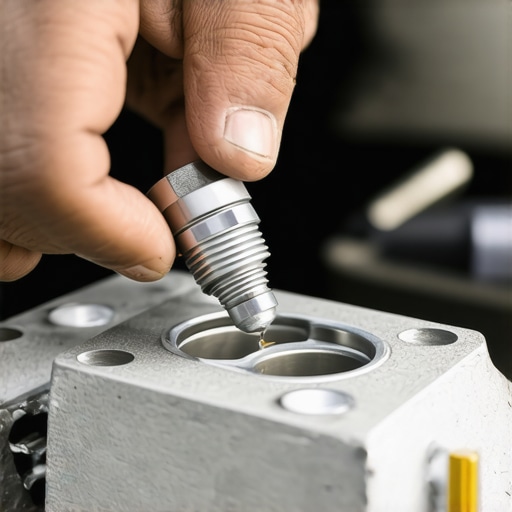 Inspect the tips carefully; if they look greasy or black, you should investigate how to tell if your spark plugs are fouled by oil. This often points to failing valve seals, which is a common culprit for that morning blue puff of smoke and the accompanying rattle.
Listen for the Clues Your Sensors Are Missing
A comprehensive car service checklist should always include a visual inspection of your vacuum lines and belts. A small vacuum leak can cause a lean condition that makes your engine stumble or ‘ping’ upon startup. If you hear a screeching along with the tap, check your serpentine belt for glazing. I once mistook a failing idler pulley for an internal engine knock; it was a twenty-dollar part that sounded like a thousand-dollar disaster. Finally, remember that engine health is tied to the rest of the car. While you are monitoring sounds, don’t neglect understanding brake system repairs. I once spent so much time chasing a rattle that I completely ignored a sticking caliper that was overheating my wheel hub. Taking a holistic approach to maintenance ensures that once you solve the noise, the rest of the ride is actually safe to drive.Most people think a ‘tune-up’ is just a relic of the carburetor era, but they are wrong—it has simply evolved into a sophisticated data game. Everyone says to just follow the dealership manual, but in my experience, the manual represents the bare minimum for survival, not for real-world longevity. If you truly want to learn the secret to getting 200000 miles out of your original engine, you have to look at the components that manufacturers label as ‘lifetime’ parts. For instance, many owners fall for the trap of ignoring their transmission fluid. There is no such thing as a truly permanent fluid. I have seen countless transmissions fail prematurely because owners never understood the real difference between a transmission flush and a drain and fill. While a high-pressure flush can sometimes dislodge sludge and jam sensitive valve bodies, a methodical drain-and-fill is often the veteran move that preserves your gears for the long haul. 
Stop Believing Your Brakes Only Need New Pads
The biggest mistake I see in my weekend driveway sessions is the ‘pad slap.’ You throw on a cheap set of pads and call it a day, but then you wonder why the car still pulls to one side or feels ‘off’ during a panic stop. You need to ignore common brake service myths that suggest your rotors can always last through multiple sets of pads without inspection. Often, the real culprit behind poor performance isn’t the friction material at all, but the hydraulic integrity of the system.
Why does the brake pedal still feel like a sponge after a bleed?
This is the advanced question that often stumps even seasoned DIYers. You have spent an hour bleeding the lines, yet the pedal still lacks that firm, confidence-inspiring bite. This is often the fix for a soft brake pedal that mechanics keep missing: a microscopic internal bypass in the master cylinder or a subtle failure in a rubber line. You must know how to spot a collapsed brake hose in seconds because these hoses can act as one-way valves, holding pressure and causing your brakes to drag or feel mushy. According to research from the Car Care Council, over 20% of vehicles on the road have contaminated brake fluid that has absorbed enough moisture to lower its boiling point significantly, leading to dangerous brake fade during heavy use.
Avoid the Universal Fluid Maintenance Trap
Here is a critical warning: never use ‘universal’ fluids unless you are prepared to replace your rack-and-pinion or transmission much sooner than expected. Modern automotive systems are engineered with incredibly specific friction modifiers and detergents. I once helped a neighbor who used a generic power steering fluid in a specialized European system; within weeks, every seal was weeping. It is a classic ‘oops’ factor that turns a ten-dollar savings into a thousand-dollar repair bill. Taking a shortcut on understanding brake system repairs or fluid specifications is not just a performance issue—it is a safety risk. Have you ever fallen into this trap or used the wrong part by mistake? Let me know in the comments because we have all been there at some point in our mechanical journey.If you want to move past basic driveway repairs and into the realm of professional-grade maintenance, you have to stop the ‘parts cannon’ approach. I have watched friends spend hundreds of dollars replacing O2 sensors because a code popped up, when the real issue was a simple vacuum leak or a $10 dirty sensor. You should always focus on troubleshooting common auto repair issues before visiting the shop by looking at live engine data. Personally, I do not turn a bolt until I have checked my fuel trims with a bidirectional scanner. This tool is my secret weapon; it lets me command the car to test its own components, like clicking the A/C clutch or cycling the fuel pump, without me having to crawl underneath while the engine is running. I specifically look for ‘Mode 06’ data, which shows me misfires that are not even severe enough to turn on the Check Engine light yet. For instance, I have found that the hidden benefit of cleaning your mass air flow sensor every two years is a smoother idle and more precise transmission shifts, yet almost no one does it. According to technical documentation from Bosch Automotive Aftermarket, a contaminated MAF sensor wire can lead to a 2% to 5% decrease in fuel economy and incorrect air-fuel ratios before the computer even realizes there is a fault. 
How do I maintain peak performance over 200,000 miles?
The answer isn’t a magic additive you pour in the tank; it is a religious adherence to a maintenance schedule that ignores the ‘standard’ intervals found in your glovebox. If you want the long-term win, you need to understand how regular tune ups improve fuel efficiency and safety by keeping the engine’s ‘breathing’ and ‘spark’ perfectly synchronized. I treat my 150,000-mile SUV like it is brand new, which means I am doing a tune up for peak performance every single spring, regardless of how many miles I have actually driven. This proactive approach prevents the carbon buildup on intake valves that eventually kills engine efficiency. I also make it a point to use a torque wrench on everything—even the small stuff. Knowing you haven’t over-stressed a bolt gives you a peace of mind that a ‘tight enough’ approach never will.
The Digital Shift in Your Garage
Looking ahead, the DIY world is changing faster than most people realize. As we look at auto repair trends to watch in 2025, we are seeing a shift where software-defined vehicles require us to be as comfortable with a laptop as we are with a socket set. We are entering an era where recalibrating a steering angle sensor after an alignment is becoming a standard home-garage task. Even if you drive an older gas-guzzler, the availability of high-end diagnostic apps is making it easier for us to spot a failing coil pack or a lazy fuel injector before it strands us on the highway. My challenge to you is this: This weekend, do not just pop the hood to check the oil levels. Buy a dedicated can of MAF cleaner and spend five minutes cleaning that sensor. It is perhaps the easiest way to feel an immediate, tactile difference in how your engine responds the moment you hit the gas pedal.
The Hardest Lessons from My Years in the Driveway
After years of getting my hands greasy, I have realized that the biggest mistake is waiting for a part to fail before giving it attention. First, never ignore the ‘vibe’ of your car; if it feels sluggish, it likely is. Second, I learned that a clean engine bay isn’t just for show—it makes spotting leaks and troubleshooting common auto repair issues before visiting the shop infinitely easier. Third, I discovered that the most expensive part you can buy is the one you didn’t actually need because you skipped the diagnostic phase. Finally, remember that your car is a symphony of systems; a problem in the spark plugs can eventually manifest as a transmission stutter if the engine isn’t producing the torque the computer expects.
[image_placeholder_E]
Tools That Saved My Sanity and My Wallet
If you are serious about maintaining your ride, you need more than just a basic socket set. I swear by my bi-directional OBDII scanner because it takes the guesswork out of complex electronics. I also never perform a car service without a high-quality torque wrench; ‘hand-tight’ is a recipe for stripped threads and vacuum leaks. Another essential is a dedicated mass air flow sensor cleaner; realizing the hidden benefit of cleaning your mass air flow sensor was a turning point in my fuel economy journey. I also highly recommend keeping a digital copy of your specific vehicle’s factory service manual—it is the holy grail of torque specs and wiring diagrams that generic YouTube videos often miss.
Step Into the Driver’s Seat of Your Car’s Health
Taking care of your vehicle is about more than just avoiding a breakdown; it is about the pride of knowing every nut and bolt is exactly where it should be. As we look toward auto repair trends to watch in 2025, the line between mechanic and software engineer is blurring, but the fundamentals of mechanical care remain the same. Don’t be intimidated by a rattle or a flashing light. Use a car service checklist, take your time, and remember that every expert was once a beginner with a noisy lifter and a dream of a quiet engine. You have the power to maximize your cars lifespan with expert tune-up strategies starting right now. Have you ever found a massive mechanical problem just by listening to a tiny, unusual noise? Tell me your ‘lucky catch’ story in the comments below!