
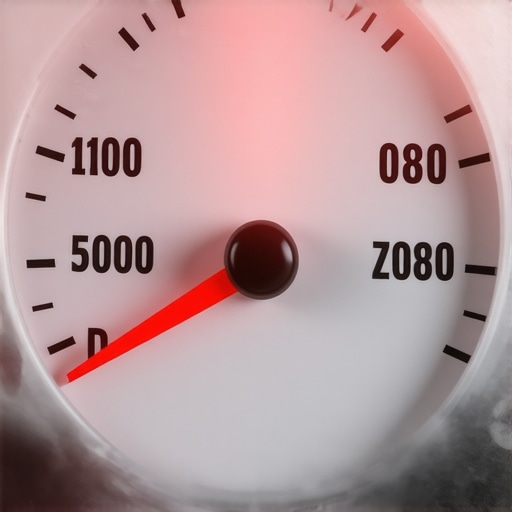
I’ll never forget the cold Tuesday morning when I realized my trusty sedan had officially betrayed me. I was staring at the fuel gauge, which had somehow plummeted to half-empty after just two short commutes to work. I felt that familiar pit in my stomach—the one that says, ‘This is going to be expensive.’ For weeks, I’d been making excuses. I told myself it was just the winter blend gasoline or maybe the heavy traffic on the I-77. But deep down, I knew something was wrong. I’d made the classic rookie mistake of thinking a car just ‘gets old’ and thirsty, but the sudden thirst is usually much more specific—and fixable.
Stop Letting Your Car Bleed You Dry at the Pump
The sudden drop in fuel economy isn’t just an annoyance; it’s your car’s way of screaming for help. When I first started working on my own vehicles, I once spent three hundred dollars on fancy fuel additives trying to ‘clean’ the system, only to realize later that my tire pressure light was trying to tell me my rolling resistance was through the roof. It was a dumb mistake, but it taught me a valuable lesson: efficiency is a delicate balance of air, fuel, and friction. Today, I’m going to help you walk through a car service checklist that actually targets the culprits behind your disappearing gas. We are going to find that ghost in the machine and get your MPGs back where they belong before you waste another dime.
Does an Old Spark Plug Really Matter That Much?
You might be skeptical. Can a tiny piece of metal and porcelain really cause you to visit the gas station twice as often? The answer is a resounding yes. According to the U.S. Department of Energy, a severely out-of-tune engine or a failed oxygen sensor can reduce your gas mileage by as much as 40 percent. That is a massive hit to your wallet. Most of us just keep driving, thinking we’ll deal with it at the next oil change, but you are essentially throwing a twenty-dollar bill out the window every time you fill up. Have you noticed your car hesitating during high-speed merging lately, or maybe experiencing a rough idle after a cold start? These aren’t just quirks; they are the breadcrumbs leading us to the solution. I want to hear from you—have you seen your needle move faster than usual this month?
Check the Basics Before You Panic
Before you start worrying about a blown head gasket or a failing transmission, we need to look at the ‘silent’ mileage killers. Sometimes the fix is as simple as a tune-up for peak performance. In my experience, we often overlook the simplest things because we expect the worst-case scenario. For instance, did you know that poor wheel alignment ruins your gas mileage because your tires are essentially fighting each other instead of rolling straight? It’s like trying to run a marathon while wearing one flipper. It’s exhausting for you, and it’s even more exhausting for your engine. We’re going to dive into the specific sensors and mechanical bits that usually fail first.
Stop Choking Your Engine with a Dirty Filter
Think of your engine’s air filter like a pair of lungs. If you were trying to run a marathon while breathing through a thick wool sock, you’d be exhausted in minutes. Your engine is the same. When that filter gets clogged with dust, pollen, and debris, the computer tries to compensate by dumping more fuel into the mix to keep the car running. I remember a neighbor once came to me ready to sell his SUV because it was ‘dying’ on gas mileage. We pulled the filter and found it so packed with leaves and dirt it looked like a compost bin. A simple swap, which is a staple of any car service checklist, instantly brought his mileage back to life. You don’t need a degree in engineering to check this; just pop the clips on the airbox and hold the filter up to the sun. If you can’t see light through it, you’re throwing money away every time you accelerate.
Replace Fouled Plugs Before They Cost You a Fortune
Those tiny sparks in your engine need to be perfectly timed and powerful. If your plugs are worn down, you’ll get incomplete combustion. This means unburnt fuel is literally being pushed out of your exhaust pipe. If you’ve noticed a rough idle after a cold start, it’s a massive red flag. Learning how 5 signs your spark plugs are actually fouled can save you from a catastrophic bill later on. I once ignored a slight stumble in my own truck for three months, only to find out that the raw fuel hitting my catalytic converter had nearly melted it. That’s a two-thousand-dollar mistake for a ten-dollar part. A proper tune-up for peak performance is essentially an investment that pays for itself in fuel savings within the first few months.
Watch Out for These Sticky Brake Calipers
This is one that catches everyone off guard. Sometimes your car is heavy on gas because it is literally fighting itself to move. A sticking brake caliper is like driving with your foot slightly on the brake pedal all day long. If you notice one wheel is significantly hotter than the others after a drive, or if you find yourself wondering why your new brakes are still squealing, you might have a mechanical drag issue. You can read up on brake service myths, but the reality is that friction is the enemy of efficiency. I’ve seen cars gain 3-4 MPGs just by servicing a slide pin that had seized up.
Get Your Alignment Right to Stop Fighting the Road
If your tires are pointing even slightly away from each other, your engine has to work harder to push them forward. It’s a constant tug-of-war. Many people don’t realize how to tell if your wheel alignment is ruining your gas mileage until they see their tires wearing unevenly. If you have to keep your steering wheel at an angle just to go straight, you aren’t just wearing out your rubber—you’re burning through your gas budget. Consistent maintenance and knowing how regular tune-ups improve fuel efficiency ensures that every component is working in harmony rather than against each other. It’s about making the car move as effortlessly as possible.Most people think they’ve mastered vehicle maintenance once they know how to check their oil, but there is a layer of technical nuance that often escapes even seasoned DIYers. We are often told that the ‘Check Engine’ light is our first line of defense. In my experience, that light is more of a ‘last resort’ notification. By the time your dashboard glows amber, your fuel efficiency has likely been suffering for months. According to a study by the Car Care Council, nearly 80 percent of vehicles on the road fail at least one component of a basic inspection, yet a vast majority of those drivers have no active warning lights. This ‘silent failure’ phase is where most of your fuel money is lost.
Stop Blindly Following Your Dashboard Lights
The real experts know that modern Engine Control Units (ECUs) are incredibly good at masking problems. They will adjust fuel trim levels to compensate for vacuum leaks or failing sensors until they simply can’t anymore. You might think your car is fine because it’s running smoothly, but it’s actually working overtime behind the scenes. If you want to how to avoid major transmission repairs later or keep your engine at peak performance, you have to look at the data before the light tells you to. I’ve seen dozens of cars with ‘pending codes’ that haven’t tripped a light yet but are already dumping extra fuel into the cylinders.
Why Does Gas Mileage Sometimes Drop After You Fix the Problem?
This is the ultimate ‘hidden nuance’ that drives people crazy. You replace the fouled plugs and the dirty filter, but the next week, your mileage actually looks worse. Don’t panic—this is often due to ‘adaptive learning.’ Your car’s computer has ‘learned’ to run on bad parts. When you put in new, efficient parts, the computer is still using the old, ‘dirty’ fuel maps. It can take a hundred miles or a manual ECU reset for the car to realize it doesn’t need to compensate for a clog anymore. This is why troubleshooting common auto repair issues before visiting the shop requires a bit of patience.
The Counterintuitive Reason Your Rear Brakes Are Gone Already
One of the biggest myths in the garage is that front brakes do all the work and should wear out first. While that was true in the 90s, modern Electronic Brake Distribution (EBD) often engages the rear brakes more aggressively to prevent ‘nose-dive’ and provide a smoother ride. If you find the real reason your rear brakes wear faster than fronts, you’ll realize it’s by design. However, this also means your rear calipers are more prone to seizing from lack of use in older models, creating that invisible drag I mentioned earlier.
Don’t Let the Parts Cannon Drain Your Bank Account
The most expensive mistake you can make is what we call the ‘parts cannon’—firing new parts at a problem without a diagnosis. Just because you have a misfire doesn’t mean you need new coils; it could be a three-dollar vacuum hose. Before you buy into the truth about cheap brake pads and noise or replace an entire exhaust system, verify the source.
Torque Those Lug Nuts or Prepare for Shaking
Here is a specific ‘trap’ to avoid: never let a shop (or yourself) zip your lug nuts on with an impact wrench without a final check. The correct way to torque lug nuts to prevent rotor warping is a manual click-type torque wrench. Uneven pressure on the wheel hub can warp your rotors in a matter of weeks, leading to a vibrating pedal and ruined efficiency. Understanding brake system repairs means knowing that precision matters just as much as the parts themselves. Have you ever fallen into the trap of replacing parts before testing them? Let me know in the comments.If you’re serious about keeping your car out of the scrap yard, you need to stop guessing. I used to rely on a cheap code reader from the bargain bin, but it only told me part of the story. Now, I use a bi-directional scan tool because it allows me to command the car to perform tests, like turning on a fuel pump or cycling an ABS solenoid. This is how professional diagnostics found my ghost electrical leak that three other shops missed. If you want to move beyond basic troubleshooting common auto repair issues before visiting the shop, you need a tool that can read ‘Live Data’ streams in real-time. According to the SAE J1979 standard, which defines the communication protocols for diagnostic data, your car’s computer monitors specific PID (Parameter ID) values that can tell you the exact millisecond an injector is firing. If those numbers are off, your fuel economy is toast long before the check engine light blinks.
How do I keep my car running like new for 200,000 miles?
The honest answer is that you have to become a student of your own vehicle. Most people wait for a noise to start, but I’ve found that the truth about why my car finally hit 200,000 miles was consistent, preemptive fluid analysis. Don’t just look at the level; look at the color and smell. If your coolant looks murky, it’s already eating your gaskets from the inside out. Following the ultimate car service guide ensures you aren’t just reacting to failures but preventing them. I personally recommend using a vacuum-based coolant refiller rather than just pouring it in; it’s the only way to ensure zero air pockets that cause localized overheating.
Stop Treating Your Fluids Like Afterthoughts
We often obsess over the engine, but your transmission and brake system are just as sensitive. I’ve learned that expert tune-up strategies must include a look at the hygroscopic nature of brake fluid. It absorbs water from the air, which lowers its boiling point and rusts your lines. If you want to know how to save 500 on your next major service, do the small things like flushing your power steering fluid before the pump starts whining.
AI and the Future of Your Garage
Looking ahead, the era of the ‘grease monkey’ is shifting into the era of the ‘data analyst.’ By 2025, expect to see more vehicles with predictive maintenance algorithms that send a report directly to your phone. We’re moving toward a world where your car tells you a bearing is going to fail three weeks before it actually starts making noise. It’s an exciting time, but the mechanical basics will always matter. My advice for this week? Go grab a basic OBD2 scanner and look at your ‘Long Term Fuel Trim’—if it’s higher than 10 percent, you have a vacuum leak or a sensor issue that is currently stealing your gas money.
The Hardest Lessons I Learned Under the Hood
Over the years, I’ve realized that the most expensive repairs are the ones that were preventable. Here are a few lightbulb moments that changed how I approach maintenance:
- Diagnostics over guesswork: Every time I fired the parts cannon without testing, I lost money. Learning troubleshooting common auto repair issues before visiting the shop is the difference between a twenty-dollar fix and a four-hundred-dollar headache.
- The danger of good enough: I once thought generic parts were fine, but the truth about cheap brake pads and noise taught me that quality components pay for themselves in peace of mind and longevity.
- Small habits equal huge savings: Knowing how to save 500 on your next major service usually starts with simple checks like cleaning battery terminals or inspecting vacuum hoses before they snap and leave you stranded.
Gear That Actually Belongs in Your Trunk
If you want to move from being a victim of your car’s whims to being its master, you need a setup that goes beyond a spare tire. I personally swear by a manual click-style torque wrench—it’s the only way to avoid the uneven pressure that leads to warped rotors. I also recommend keeping a dedicated mass airflow sensor cleaner in your kit; it’s a five-minute job that can restore performance instantly. Finally, get comfortable with your car’s specific data by staying informed on auto repair trends to watch in 2025. Using expert tune-up strategies isn’t about having a professional garage; it’s about having the right data at the right time. #IMAGE_PLACEHOLDER_E#
Take Back Control of Your Commute
Don’t let the complexity of modern engines intimidate you. Whether you are chasing a ghost electrical leak or just trying to get through the winter without a breakdown, the power is in your hands to maintain your vehicle’s health. Start with one small task this weekend—check your long-term fuel trims or inspect your air filter for debris. Your car will thank you with better performance, a smoother ride, and a much healthier bank account. What was the most hidden issue that ever tanked your gas mileage? Let me know in the comments below!