
I will never forget the humid Tuesday afternoon I spent stranded in a Chick-fil-A drive-thru, blocking a line of thirty hungry people while my car refused to budge. My old sedan didn’t explode or make a cinematic bang; it just wheezed once and gave up the ghost right as I reached the window. Looking back, that car had been screaming for help for three weeks. I had noticed a slight hesitation when merging onto the highway and a weird humming sound coming from the back seat, but I brushed it off. I was busy, and I figured a tune-up for peak performance would eventually solve whatever gremlin was under the hood. Boy, was I wrong. That “eventually” cost me a three-hour wait for a flatbed and a repair bill that made my eyes water. Today, I am going to show you how to hear those whispers so you aren’t left stranded. We are going to dive into the subtle, often ignored signals your car sends when the fuel pump is on its last legs. My goal is to help you troubleshoot these common issues before you become the person blocking traffic. [image-placeholder]
Catch the Signs Before the Tow Truck Arrives
One of my biggest early mistakes as a DIYer was thinking a fuel pump was like a lightbulb—it is either on or it is off. In reality, it is more like a tired athlete; it starts underperforming long before it actually collapses. If you feel your car jerking at high speeds, do not just assume it is a spark plug issue. It could be the pump struggling to maintain consistent pressure. According to data from AAA, fuel system failures are a primary culprit for unexpected engine stalls, yet many drivers ignore the early symptoms because the car still technically “runs.” I made that exact mistake, thinking a simple 5-minute check was only for the transmission, when I should have been listening to my fuel tank.
Is it really worth worrying about if the car still starts?
You might think that as long as the engine turns over in the morning, you are in the clear. That is the trap I fell into. But a dying pump can lean out your fuel mixture, causing your engine to run hot and potentially damaging your cylinders over time. It is a nasty domino effect. While you might be tempted to drain your gas tank thinking you just got a bad batch of fuel, the truth is often mechanical. Have you ever felt that heart-sinking moment where the engine stumbles just as you need to accelerate into a busy intersection? It is terrifying, isn’t it? Have you faced a stall like that recently, or are you just starting to hear that suspicious hum from the rear?
Listen for the Tell-Tale Whine
Before you start pulling fuses, turn your key to the ‘on’ position without cranking the engine. In a quiet garage, you should hear a faint two-second hum coming from the back of the car. That is the pump priming the system. When mine was dying, that hum turned into a high-pitched shriek that sounded like a tea kettle. If you hear silence instead, you are likely looking at a dead pump or a blown relay. This is where troubleshooting common auto repair issues becomes a literal game of ‘follow the noise.’ If the pump is silent, check your fuses first. I once spent two hours prepping to drop a fuel tank only to realize a $2 fuse had popped because of a short in the wiring.
Get a Real Reading with a Pressure Gauge
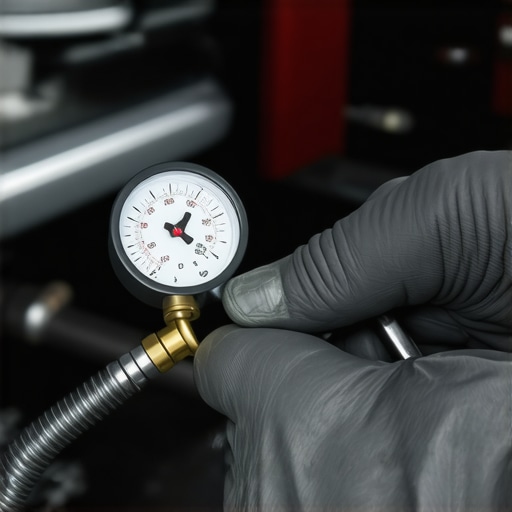
You cannot guess fuel pressure by looking at the engine. You need a fuel pressure gauge, which most auto parts stores will actually rent to you for free. Think of this like taking your car’s blood pressure; it tells you exactly how much ‘push’ the fuel has. Connect the gauge to the Schrader valve on your fuel rail—it looks just like the air valve on your tires. I learned the hard way that you must depressurize the system first. I once skipped that step, unscrewed the cap, and got a face full of pressurized gasoline that smelled like regret for three days. Once connected, start the engine and compare the PSI reading to your owner’s manual. If your car requires 45 PSI but the needle is dancing at 30, your pump is physically worn out and can’t keep up with the demand. This often explains why your car jerks when you lift off the gas or struggles during a tune-up for peak performance.
Rule Out the Electrical Gremlins
Sometimes the pump is fine, but the ‘brain’ isn’t sending it enough juice. If your pressure is low, use a multimeter to check the voltage at the pump connector. If you aren’t getting a full 12 volts, you might have a corroded wire or a bad ground. Knowing how to spot a bad ground wire can save you from buying a $300 pump you don’t actually need. I’ve seen people replace entire fuel systems only to find out a rusty bolt was preventing the circuit from completing. This is especially common if you find your car won’t start when it is hot, as heat increases electrical resistance in failing wires.
Swap the Filter Before the Pump
If your pressure is low but the pump sounds healthy, your fuel filter might be acting like a clogged artery. A clogged filter forces the pump to work twice as hard, leading to premature burnout. Integrating a filter swap into your car service checklist is the cheapest insurance policy you can buy. When I finally changed the filter on my old sedan, the ‘gas’ that poured out was the color of dark coffee. No wonder the poor pump was struggling to breathe.
One of the biggest lies in modern car service is the “lifetime” fluid promise. Whether it is your transmission or your differential, no oil lasts forever. I have seen too many owners skip their scheduled maintenance because the manual said it wasn’t necessary. In my experience, “lifetime” usually just means “until the warranty expires.” By the time you notice a shudder, the damage is already done. This is why expert tune-up strategies always prioritize fluid integrity over marketing labels. According to engineering insights from Car and Driver, specialized additives in these fluids oxidize and lose their lubricating properties regardless of what the manufacturer claims.
The same logic applies to sensors. Most people see a check engine light and immediately buy the most expensive part on the shelf. This is the classic “parts-changer” trap. For example, the hidden benefit of cleaning your mass air flow sensor is that it often clears lean-condition codes that people incorrectly blame on the fuel pump we discussed earlier. It takes ten minutes and a five-dollar can of cleaner, yet I’ve seen people spend hundreds on pumps they didn’t need.
Stop Guessing and Start Testing Your Braking System
If you think your stoppers are fine just because the pads have meat on them, you are missing half the story. Most people assume brake service myths only involve the hardware you can see. But have you checked the chemistry? If your brake fluid looks like coffee creamer, you are inviting disaster. Brake fluid is hygroscopic. Experts at the Society of Automotive Engineers (SAE) have shown that even a small amount of moisture can drastically lower the boiling point of your fluid, causing “brake fade” during panic stops.
How do you spot an internal master cylinder failure?
This is a nuance that separates the pros from the amateurs. You might not see a single drop of oil on your driveway, yet your pedal slowly sinks when you are holding it at a red light. This is a classic sign of an internal bypass. The seals inside the cylinder are worn, allowing pressure to leak back into the reservoir. It is one of the most common fixes for a soft brake pedal that mechanics keep missing because they are too focused on the calipers. They will bleed the lines three times and replace the pads, never realizing the “brain” of the system is bleeding out internally. Knowing how to tell if your master cylinder is failing internally can save you hours of wasted labor.
The Simple Torque Mistake That Warps Your Rotors
Finally, let’s talk about the most common “oops” factor: the lug nuts. I cannot tell you how many rotors I have seen ruined by a well-meaning DIYer with a long breaker bar. If you aren’t using the proper way to torque wheel bolts, you are unevenly stressing the brake rotor hat. This leads to heat-warping, which causes that annoying pulsation in your pedal. It is a simple step, but skipping it during a routine car service checklist can lead to a very expensive vibration. Have you ever fallen into the “tighter is better” trap or trusted a “lifetime” fluid only to have it fail? Let me know in the comments—I’d love to hear your horror stories or how you caught a problem early.
Stop Trusting Your Dashboard Lights Alone
For years, I relied on the ‘idiot light’ on my dash to tell me when something was wrong. That was a massive mistake. By the time that light illuminates, the damage is often already done. If you really want to scale your car care from basic survival to true longevity, you need to start troubleshooting common auto repair issues using real-time data. I transitioned from a basic code reader to a bi-directional scan tool three years ago, and it changed everything. Unlike a cheap scanner that just spits out a code, a bi-directional tool lets you command the car’s computer to turn on a cooling fan or pulse a fuel injector. This is how you verify if a part is actually dead or if the signal just isn’t getting there. It is the difference between guessing and knowing, and it is a cornerstone of expert tune-up strategies that professional mechanics use every day.
The One Tool That Stopped My Guesswork
If you are tired of being lied to by sensors, get yourself a high-quality Digital Multimeter (DMM). I don’t mean the five-dollar one from the bargain bin; I mean a tool with high input impedance that won’t fry your car’s sensitive ECU. I use mine for everything from checking battery health to seeing how to tell if your computer is giving you a false error code. According to technical specifications from Bosch, modern automotive sensors operate within millivolt tolerances; even a tiny bit of corrosion on a connector can throw the whole system out of whack. By testing for voltage drops across a circuit, you can find the exact spot where a wire is failing before it leaves you stranded. This level of precision is exactly what separates a generic car service checklist from a high-performance maintenance plan.
How do I maintain my engine health over 200,000 miles?
The real secret isn’t a magic additive or a special brand of oil; it is consistency and documentation. I keep a physical logbook in my glovebox where I track every single scheduled maintenance event, but more importantly, I track the ‘feel’ of the car. When you start noticing a slight dip in MPGs, that is your cue to look at how regular tune-ups improve fuel efficiency. If you wait until the engine is stumbling, you’ve waited too long. I have found that sticking to the secret to getting 200,000 miles out of your original engine requires a proactive approach to cooling systems and lubrication that the factory manual sometimes glosses over.
Where Car Repair is Headed in 2025
As we look at auto repair trends to watch in 2025, it is clear that the ‘mechanical’ side of cars is becoming secondary to the ‘software’ side. We are moving toward a world where your car will predict its own failures and send a report to your phone. However, this doesn’t mean you can stop learning understanding brake system repairs. In fact, mechanical literacy will become even more valuable as software-based diagnostic locks become common. I predict that the DIYers who succeed in the next decade will be the ones who can bridge the gap between physical wrench-turning and digital data analysis. If you want to stay ahead, I strongly encourage you to try one advanced tip this weekend: use a vacuum gauge to test your engine’s health. It is an old-school tool that gives you a window into your valves and rings that no computer can replicate. If you have questions about specific tools or need help interpreting a weird reading, feel free to contact us directly.
Why I Stopped Ignoring the Small Noises
I learned the hard way that a small vibration today is a tow truck tomorrow. One of my biggest lightbulb moments was realizing that the real reason your engine pings when you use cheap gas isn’t just about octane—it is about how the engine’s computer compensates for poor combustion. Another lesson? If you drive a stick, knowing how to tell if your clutch is slipping or just needs adjustment can save you thousands compared to a full replacement. Finally, always look for the ‘weep hole’ leaks; discovering the hidden sign that your water pump is about to fail early prevents the kind of overheating that warps heads.
My Go-To Kit for Weekend Repairs
You don’t need a professional shop to do professional-grade work. [image-placeholder] I’ve found that three specific tools make the biggest difference. First, a digital multimeter is non-negotiable for finding bad ground wires. Second, a vacuum gauge provides a window into your engine’s internal health that no dashboard light can match. Finally, keep a physical logbook to track your the ultimate car service guide progress. I trust these because they remove the guesswork and keep me grounded in data rather than hope.
Become the Expert Your Car Needs
You don’t need to be a master mechanic to take control of your vehicle’s health. Start with the basics, like a tune-up for peak performance, and watch how your confidence grows. Every time you open the hood, you are making an investment in your safety and your wallet. By applying expert tune-up strategies today, you are ensuring your car stays on the road for years to come. Have you ever had a ‘small’ noise turn into a major repair bill? Let me know in the comments below!