

I was driving home from work last Tuesday when it happened again. Every time I relaxed my grip even slightly, my sedan started a slow, deliberate crawl toward the curb. It wasn’t a sudden jerk, but a persistent, annoying tug that felt like my car was magnetically attracted to the sidewalk. I used to think I could just “drive through it” or that maybe the road was just slanted. Man, was I wrong. I ignored that pull for nearly a month, thinking I was saving money, but I ended up paying double when I realized I had scrubbed the tread off my front tires. If you’re constantly fighting your steering wheel just to stay in your lane, you aren’t alone, and you definitely shouldn’t ignore it. Today, I’m going to help you figure out why your car is trying to ditch the pavement for the grass before you end up with a massive repair bill.
Stop Fighting the Steering Wheel Every Time You Drive
The first time I dealt with this, I made the classic rookie mistake: I assumed it was just a low tire. I hopped out, checked the pressure, and everything looked fine. But the pull stayed. It’s a specialized kind of stress, isn’t it? That constant tension in your forearms from correcting the drift. Usually, people jump straight to blaming the alignment—and while your mechanic insists on an alignment for good reason, it isn’t always the culprit. Sometimes it’s a brake caliper sticking, or even a worn-out suspension component. If the drifting happens specifically when you hit the gas, there is a distinct reason your car pulls when you accelerate that differs from a constant drift.
Is a little bit of pulling actually a safety risk?
You might think you can just live with it, but that drift is a symptom of a much larger fight happening under your chassis. According to the Car Care Council, neglecting basic steering and suspension maintenance is a leading cause of premature tire wear and decreased fuel efficiency. In fact, you might be surprised to learn how alignment issues ruin your gas mileage by creating unnecessary drag. Have you noticed your car pulling more to one side lately, or does it only happen when you’re braking? Let me know, because your specific “flavor” of pulling tells us exactly where to look. We’re about to dive into the nitty-gritty of tire pressure, brake drag, and those pesky control arms to get your car back on the straight and narrow.Before you spend a dime at the shop, you need to perform a systematic walk-around. I remember one Saturday morning I was convinced my steering rack was toast. I was already looking up prices for a replacement when I decided to actually look at my tires. I found a massive bulge on the inner sidewall of the driver’s side tire—totally invisible from the outside. That $800 repair turned into a simple tire swap because I took ten minutes to look closer.
Look for the Simple Tire Culprits First
Check your tire pressure first. It sounds too easy, but a 5-PSI difference between the left and right front tires is enough to make the car wander like a lost puppy. If the pressure is perfect, look for ‘conicity,’ which is just a fancy way of saying the tire was manufactured or worn into a slight cone shape. A quick way to test this is to swap the two front tires. If the car suddenly pulls in the opposite direction, you’ve found your culprit without turning a single wrench. While you’re down there, use the simple trick to finding a nail in your tire tread to ensure a slow leak isn’t sabotaging your drive, and learn how to get more life out of your current tires by catching wear patterns early.
Diagnose a Sticking Brake Caliper
If your tires are fine but the car still veers, it’s often a ‘lazy’ brake caliper. Think of it like walking with one shoe on a sticky floor; that side is always going to lag behind. After a drive, safely—without touching the metal!—feel the heat radiating off your wheels. If one side is significantly hotter than the other, that brake is dragging. This isn’t just annoying; it’s dangerous because it boils your brake fluid and ruins your fuel economy. Knowing how to spot a leaking brake caliper before it fails can save you from a complete loss of stopping power. I once ignored a slight pull and ended up with a glowing red rotor on the shoulder of the highway; don’t be that guy. 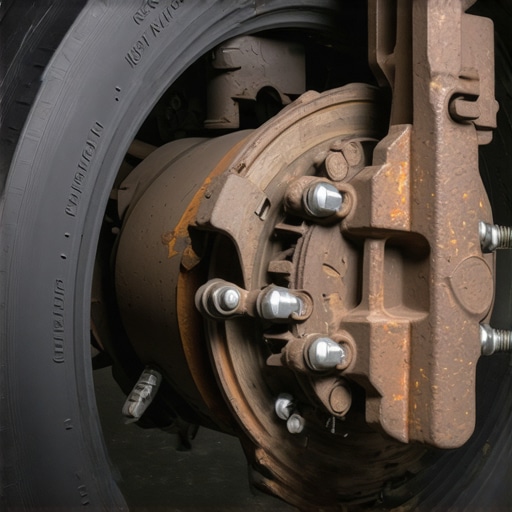
Perform the Manual Suspension Stress Test
If the pull happens specifically when you hit a bump or let off the gas, your suspension is likely the ‘loose link’ in the chain. You can actually check your tie rod ends with minimal tools by jacking up the car and grabbing the tire at the 3 o’clock and 9 o’clock positions. Give it a firm shake. Any ‘clunk’ or physical play means your steering linkage is worn. Similarly, the signs your struts are finally bottoming out often include a car that feels ‘floaty’ or pulls toward the side with the weaker shock absorber.
Check the Hidden Components Under the Boot
Don’t forget the CV axles. If a rubber boot is torn, grease leaks out and abrasive dirt gets in, eventually causing the joint to bind. Taking ten minutes to inspect your own cv boots for small cracks is the difference between a twenty-dollar boot repair and a four-hundred-dollar axle replacement. If you’re unsure about what you’re seeing, reading about how an honest brake inspection saved me hundreds can provide peace of mind before you start throwing parts at the problem. Proper troubleshooting common auto repair issues before visiting the shop is exactly how you stay in control of your car and your maintenance budget.I see it in enthusiast forums all the time: ‘I changed my pads, why does my car still pull?’ The truth is, modern brake systems are incredibly sensitive to heat and pressure distribution. A ‘pad slap’—the common practice of just swapping the friction material without servicing the rest of the system—is like putting a fresh bandage on a dirty wound. In my early days, I thought a quick swap was enough. I learned the hard way that if you don’t clean the slide pins and check the piston boots, you’re just waiting for the next pull to happen.
Why a Simple Pad Slap Often Fails to Fix the Problem
Most DIYers focus purely on the thickness of the pads, but they ignore the hardware. If your slide pins are bone-dry or covered in grime, one pad will stay pressed against the rotor while the other retracts. This creates that persistent drift we’ve been talking about. You need to look at brake service myths what you need to know before your next stop to realize that ‘new’ doesn’t always mean ‘functional.’ Deeply understanding brake system repairs means recognizing that the hydraulic side of the equation is just as important as the mechanical one.
Stop Killing Your Rotors with an Impact Wrench
Here is the ‘Oops’ factor that even some pros get wrong: the lug nuts. If you take your car to a shop that zips your wheels on with a high-powered impact wrench and no torque stick, they are warping your rotors right then and there. Uneven pressure on the wheel hub causes the rotor to develop high spots as it heats and cools. This is exactly why your brake rotors keep warping every few months despite you being a gentle driver. Learning the correct way to torque lug nuts to prevent rotor warping is the single best way to ensure your steering stays smooth at high speeds. 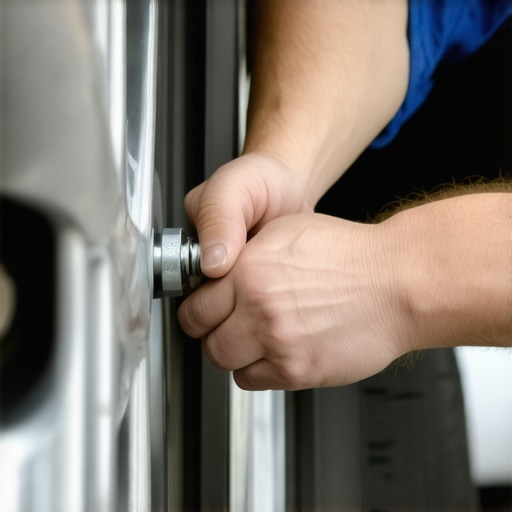
Could Your Old Brake Fluid Be the Secret Culprit Behind Your Spongy Pedal?
Most people think brake fluid lasts forever, but it is hygroscopic—it actively pulls moisture out of the air. According to research from the National Highway Traffic Safety Administration (NHTSA), brake fluid with even 3% water content can see its boiling point drop significantly, leading to internal corrosion that causes calipers to stick and the car to pull. This is a common nuance many skip during a basic car service checklist. If your pedal feels soft, the dangerous reason your brake pedal hits the floor could be air or water in the lines rather than just worn-out pads.
The Tune-Up Myth That Costs You at the Pump
Finally, let’s talk about the ‘tune-up.’ In the 70s, it meant points and carburetors. Today, it’s about sensor data and air-fuel ratios. People often swap spark plugs and think they’re done, but a dirty Mass Air Flow (MAF) sensor can cause a subtle hesitation that feels like a mechanical drag. Seeing how a simple tune-up fixed my mystery hesitation taught me to look at the whole engine health, not just the consumables. If you’re serious about your car’s longevity, how regular tune ups improve fuel efficiency and safety is a topic you can’t afford to ignore. Before you head to the shop, try troubleshooting common auto repair issues on your own to save a fortune. Have you ever fallen into this trap and replaced parts you didn’t need? Let me know in the comments.Grab a Scanner Before You Grab a Wrench. I used to be a ‘parts cannon’ mechanic, throwing new sensors at a problem until the light finally went off. That stopped the day I bought a real-time OBD2 scanner. Instead of guessing why the car feels sluggish, I now look at the long-term fuel trims. If the computer is adding 15% more fuel, I know I have a vacuum leak before I even pop the hood. This kind of data-driven troubleshooting common auto repair issues before visiting the shop saves me hours of frustration and hundreds of dollars. If you want to get serious, you should try to find an evap leak using a simple smoke machine; it is the only way to see the invisible cracks that a scanner can only hint at.  Ditch the Two-Person Brake Bleeding Routine. For years, I relied on a helper to pump the brakes while I opened the bleeder valves. It was slow and inconsistent. Now, I use a pressurized motive power bleeder. It forces fresh fluid through the lines from the reservoir down, ensuring zero air bubbles. This is critical because the dangerous reason your brake pedal hits the floor is often just a tiny pocket of air trapped in the ABS module. According to technical documentation from the Society of Automotive Engineers (SAE J2521), the interface between the brake shim and the caliper is a primary source of high-frequency vibration; a power bleeder alone won’t fix that, but it ensures your hydraulic pressure is perfect before you tackle the mechanical hardware in your next understanding brake system repairs session. How can I keep my car running like new for the next decade? The secret isn’t just oil changes; it’s a commitment to a holistic the ultimate car service guide. You need to maximize your cars lifespan with expert tune-up strategies by replacing fluids that most manufacturers claim are ‘lifetime,’ like transmission and differential oils. Looking at auto repair trends to watch in 2025, we are seeing a massive shift toward predictive maintenance software that tells you a part is failing before it actually breaks. For now, you are the software. I want you to try this: next time you have a weird idle, don’t buy spark plugs first—use a scanner to check your live data and see what the computer is actually seeing.
What I Finally Figured Out After Years of Fighting My Steering Wheel
Looking back at my first few attempts at auto repair, I realize I spent a lot of time treating symptoms rather than the root cause. One big lesson was that cleaning is just as important as replacing. I used to think a fresh set of pads was enough, but without scrubbing the rust off those caliper brackets and lubricating the pins, I was setting myself up for a sticking brake within weeks. Another lightbulb moment was realizing that ‘lifetime’ fluids are a myth designed for the first owner, not the person who wants to hit 200,000 miles. If you want to keep things smooth, follow a solid car service checklist and do not skip the small stuff.
I also learned that why your steering wheel shakes specifically at 60 mph is often a combination of tire balance and a worn tie rod, rather than just one isolated part. Don’t be afraid of the data; a cheap scanner is your best friend. Finally, remember that your car is a complete system; a pull in the front might actually be caused by a dragging brake in the rear, so always look at the big picture during your tune up your car for peak performance essential maintenance tips.
The Gear That Changed Everything for My Garage Projects
If you are tired of guessing, there are a few items I swear by that turned me from a ‘parts swapper’ into a true diagnostician. First, get a decent OBD2 Scanner like a BlueDriver or Autel unit; being able to see live data prevents you from buying sensors you do not need. Second, I cannot recommend a Motive Power Bleeder enough for a brake service—it makes the job a one-person task and ensures a rock-solid pedal every time. Third, a high-quality Torque Wrench is non-negotiable to prevent warping your rotors with uneven lug nut pressure. Lastly, I always keep a digital subscription to ALLDATA or a physical Haynes manual nearby to verify torque specs and wiring diagrams before I start turning bolts.
Take Back Control of Your Daily Commute Today
Driving should not be a workout, and it definitely should not be a source of constant anxiety every time you merge onto the highway. By taking these steps and following the ultimate car service guide, you are investing in the safety and longevity of your vehicle. As we look toward auto repair trends to watch in 2025, staying proactive with your own maintenance is the only way to avoid the sky-high labor rates of the future. You have the tools, the knowledge, and the systematic approach to fix that pull for good. Have you ever replaced a part only to realize the real problem was something much simpler? Let me know in the comments below!