

I remember the exact moment my stomach dropped. I was cruising down the interstate when a bright amber Check Engine light stared me down like a judgmental parent. It felt personal. I had just finished a full weekend of maintenance, and here I was, fearing the worst. Naturally, I did what most of us do: I drove straight to a big-box parts store, got a free scan, and was told I needed a brand-new catalytic converter. I spent my entire weekend under the car, sweat in my eyes and grease under my nails, replacing a part that was probably fine. The light came back on forty miles later. It turned out to be a tiny crack in a vacuum hose—a lesson that cost me six hundred dollars and a lot of pride.
Stop Chasing Ghosts in Your Dashboard
We have all been there. Modern cars are basically rolling laptops with wheels, and while that is great for performance, it can be a nightmare for DIY diagnosis. Sometimes the computer is flat-out wrong, or more accurately, it is reporting a symptom instead of the actual cause. Before you start ordering expensive parts or panicking about your bank account, you need to know how to troubleshoot common auto repair issues before visiting the shop. Most faulty sensors are actually just doing their jobs, reporting data that looks bad because of a simple electrical hiccup or a dirty connector.
Today, I am going to show you how to separate the hardware truth from the software lies. I want to save you the massive headache I had when I was convinced I was dealing with a clogged catalytic converter that was perfectly healthy. We are going to look at the specific signs that your car’s brain is just having a bad day and how a simple reboot or a five-dollar cleaning spray might be the only thing you really need to get back on the road.
Is your car actually broken or just confused?
I used to think that the codes on a scanner were absolute truth. They aren’t. They are just a clue. For instance, many people see a low pressure warning and panic, but often you are just dealing with an oil pressure sensor that is lying to you. According to data from the CarMD Vehicle Health Index, a significant percentage of check engine light triggers are caused by something as minor as a loose gas cap or a minor sensor malfunction rather than a catastrophic engine failure. This is why a little bit of healthy skepticism is your best tool in the garage.
Have you ever spent hard-earned money on a part only to have the exact same error code pop back up the next day? I would love to hear your ghost in the machine stories in the comments. It helps me realize I am not the only one who has been fooled by a grumpy sensor. Let’s get into the nitty-gritty of how to verify these codes before you ever crack open your toolbox.
Don’t let the OBD-II scanner dictate your repair bill
Your car’s computer is a lot like a smoke detector. It’s designed to be hypersensitive. If you burn a piece of toast, the alarm screams just as loud as if the kitchen were actually engulfed in flames. When that code pops up, your first move shouldn’t be to buy a new part; it should be to verify the sensor’s environment. I once spent three hours trying to figure out why your v6 engine shudders at idle, convinced I had a failing fuel injector. I’d already priced out the part and cleared my Saturday. Before I pulled the trigger, I wiggled the electrical connector on the injector. It clicked into place. The ‘failure’ was just a loose clip from a previous car service. Always check the physical connections first. A layer of corrosion on a plug can simulate a total component failure, leading you to spend hundreds on a tune up you don’t actually need.
Give your sensors a bath before you give them the boot
One of the most overlooked maintenance tasks is the hidden benefit of cleaning your mass air flow sensor. These sensors are delicate wires that measure incoming air. If a tiny speck of oil or dust hits them, they send garbage data to the brain. Instead of a $150 sensor, you often just need a $10 can of specialized cleaner. Spray it, let it dry, and more often than not, your ‘lean condition’ code vanishes. It’s a key part of any expert tune-up strategy that actually saves money. 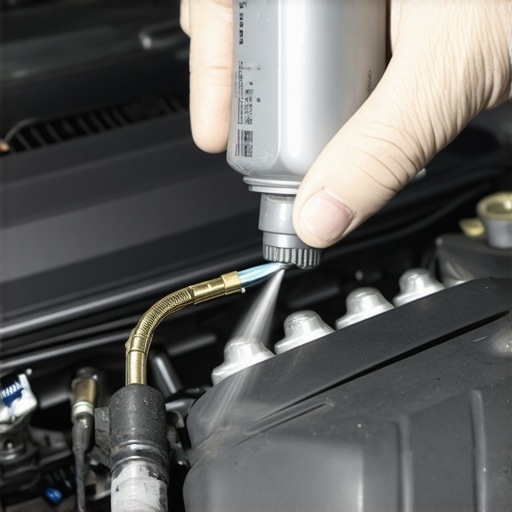 While you are in there, you should also learn how to clean your throttle body to restore throttle response. Gunk buildup around the butterfly valve causes the motor to struggle to maintain idle, which the computer often misinterprets as a vacuum leak or a failing idle air control valve.
Wiggle the wires before you pull the wallet out
If the cleaning doesn’t work, start hunting for air leaks. A vacuum leak is like a straw with a hole in it; no matter how hard the engine sucks, it isn’t getting the right amount of fluid—or in this case, the right air-to-fuel ratio. You don’t need an expensive shop-grade smoke machine to find these. You can actually learn how to identify a vacuum leak using a simple cigar or even a spray bottle of soapy water. When you find that hissing hose, a two-dollar clamp or a fresh piece of rubber is a much better fix than a new intake manifold. The same level of healthy skepticism should apply to your stopping power. Knowing the only way to fix grinding brakes without replacing rotors can save you a few hundred bucks on a standard brake service. Often, what sounds like terminal metal-on-metal grinding is just a small pebble caught in the dust shield or a dry slide pin that needs a dab of grease. I once helped a neighbor who was ready to trade in his car because of a ‘screeching’ brake. We pulled the wheel, popped out a tiny piece of gravel, and the car was silent. Take the wheel off and look before you commit to the heavy parts.
If you have ever installed brand-new parts only to have the car behave worse than before, you have likely hit the ‘new part nuance’ wall. Most people believe that once a component is bolted on, the job is done. This is a massive misconception, especially during a brake service. I have seen countless DIYers replace their rotors only to have them warp or squeal within a week because they skipped the simple way to bed in new brake pads. They panic when they see wisps of smoke, but the real reason your new brake pads are smoking is often just the manufacturing resins curing. If you do not perform that specific series of controlled stops, you are essentially leaving performance and safety on the table, ignoring the very brake service myths that pros know by heart.
The ‘tighter is better’ trap is the most common way enthusiasts accidentally kill their engines. I learned this when I thought an extra nudge on a spark plug would prevent a vacuum leak; instead, I felt that sickening ‘pop’ of stripped aluminum threads. Now, I never touch a cylinder head without knowing the trick to replacing a spark plug without stripping threads. 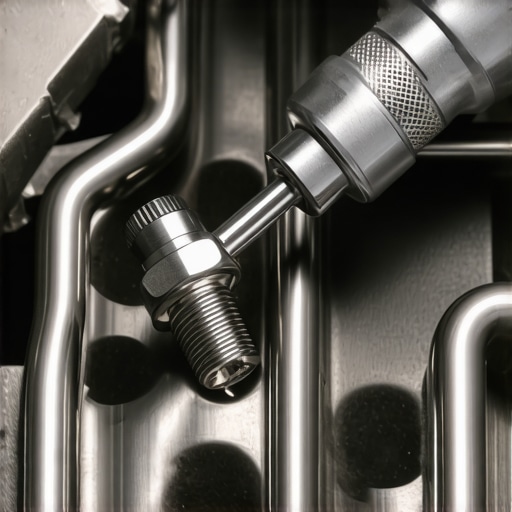 According to the National Institute for Automotive Service Excellence (ASE), fastener failure due to over-torque is a leading cause of secondary repairs. This is exactly why you need to master the proper way to torque wheel bolts without a manual. A lug nut that is too tight can warp a brake rotor just as fast as a cheap part can. It is about precision, not power.
Why does my engine still ping even after I switch to premium gas?
It is incredibly frustrating to pay for high-octane fuel only to hear that metallic rattling during acceleration. Many drivers assume the gas station is selling ‘watered-down’ fuel, but the nuance is usually inside your engine. Heavy carbon deposits can create ‘hot spots’ that ignite fuel prematurely, which is the real reason your engine pings when you use cheap gas or even the 93-octane stuff. Before you keep dumping money into the tank, check your ignition system; knowing how to tell if your spark plugs are fouled by oil can reveal if your engine is actually burning more than just fuel, which significantly lowers your effective octane rating.
Finally, we have to address the ‘lifetime fluid’ marketing gimmick. Car manufacturers are in the business of selling new cars, not making old ones last forever. Following the truth about 10,000-mile oil change intervals might satisfy your lease agreement, but it will not help you reach the 200,000-mile club. If your brake fluid looks like coffee creamer, it has already absorbed enough moisture to start corroding your internal lines from the inside out. True expert tune-up strategies prioritize chemical testing of fluids over the arbitrary numbers in a maintenance book. Have you ever fallen into this ‘lifetime’ trap or had a part fail right after you replaced it? Let me know in the comments below.
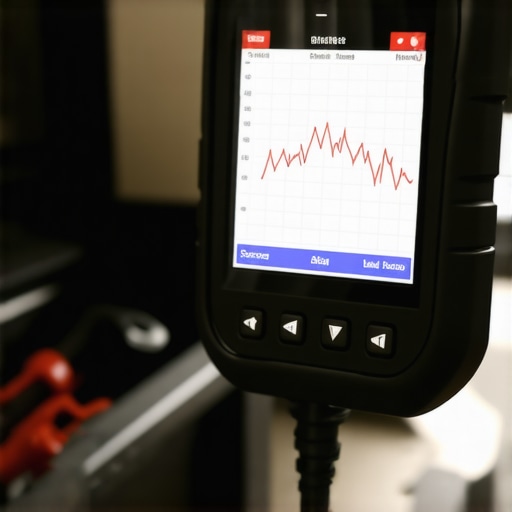
I don’t care about shiny, floor-to-ceiling red tool chests; I care about what works at 11 PM on a Tuesday when your car is on jacks and you’re out of options. To truly scale your DIY game from ‘part changer’ to ‘diagnostic pro,’ you need to upgrade your logic, not just your wrenches. The single most important tool in my kit isn’t a hammer—it is a bi-directional OBD-II scanner. Most people buy a cheap twenty-dollar reader that just clears codes, but that is like trying to read a complex novel through a keyhole. You need the ability to perform ‘Active Tests’ and command your car’s components. According to technical documentation from the Society of Automotive Engineers (SAE), specifically the J1979 standard, real-time data monitoring is the only way to catch intermittent sensor ‘dropouts’ that don’t trigger a permanent code. If I suspect a cooling issue, I don’t wait for an overheat; I use the scanner to manually toggle the high-speed fan. If it doesn’t spin, I’ve found my culprit without ever getting burned by steam.
The secret gear that lives in my glovebox
Beyond the high-tech electronics, some of the most effective tools are surprisingly low-tech. For example, I’ve found that the secret to finding an exhaust leak with a shop vac is more reliable than any expensive smoke machine. By blowing air into the tailpipe (with the engine off!) and spraying soapy water on the pipes, you’ll see bubbles exactly where the leak is hiding. This is the kind of practical wisdom that separates the weekend warriors from the masters. It’s also about being proactive with the wear items that most people ignore until it’s too late. I make it a habit of replacing your serpentine belt in record time every 60,000 miles, regardless of how it looks. Rubber degrades chemically, and by the time you’re spotting the subtle signs of a failing water pump, a brittle belt could snap and leave you stranded on a dark shoulder.
How do I maintain my engine health as the odometer hits six figures?
Maintenance at 100,000 miles is about more than just changing oil; it is about managing heat and chemistry. As components age, their tolerances loosen. This is why protecting your transmission from heat damage becomes your top priority. Heat is the number one killer of automatic gearboxes, and a simple auxiliary cooler can double the life of your clutches. I also recommend a more aggressive car service checklist that includes testing the acidity of your coolant and the moisture content of your brake fluid. If you stay ahead of the chemical breakdown, you prevent the ‘cascading failure’ where one bad part takes three neighbors with it. I have found that taking thirty minutes a month to go over expert tune-up strategies is much cheaper than a three-thousand-dollar engine rebuild.
Stay ahead of the software curve
Looking forward, the trend is moving away from mechanical failure and toward software calibration. As we look at auto repair trends to watch in 2025, we are seeing ‘Over-the-Air’ (OTA) updates becoming standard for even basic sedan models. This means your car’s performance might change while you’re sleeping. For the DIYer, this means you’ll eventually need to learn how to ‘reflash’ modules yourself to keep everything in sync. The future belong to the ‘hybrid mechanic’—someone who is as comfortable with a laptop as they are with a torque wrench. Before you spend eighty dollars at a muffler shop next weekend, I want you to try that shop vac exhaust leak trick I mentioned. It’s a low-cost, high-reward way to prove to yourself that you’re smarter than the machine.
What Experts Won’t Tell You About Your Car’s Brain
After years of turning wrenches, I have realized that the most expensive part of any auto repair isn’t the component itself—it is the lack of information. We often rush to replace things because we want the problem gone, but patience is your most valuable tool. I have learned that if a sensor is acting up, it is usually screaming for help because of a clogged filter or a corroded wire, not because the sensor itself has died. Never trust a code at face value; always look for the story behind the number. Keeping a detailed log of every car service you perform allows you to spot patterns before they become catastrophic failures. Most importantly, don’t let the complexity of modern engines intimidate you; under all those wires, it is still just metal and air.
The Reliable Gear in My Personal Toolbox
If you want to move beyond basic maintenance, you need to invest in gear that provides real feedback. I always recommend checking the secret to getting 200,000 miles out of your original engine, which starts with a high-quality bi-directional scanner that can actually talk back to your car. Beyond the electronics, keep a reliable set of chemical test strips in your glovebox. Knowing exactly when your fluids have lost their protective properties is much better than guessing based on mileage. For those tackling a brake service at home, a simple pressure bleeder kit is a game-changer; it ensures you won’t be searching for the fix for a soft brake pedal that mechanics keep missing later on. Finally, never underestimate the power of a long pry bar and a good flashlight for finding suspension clunks that no computer can detect. #IMAGE_PLACEHOLDER_E#
Stop Fearing the Dashboard Lights
You have the power to keep your vehicle on the road longer than the manufacturer ever expected. By learning how regular tune-ups improve fuel efficiency and safety, you are taking ownership of your safety and your wallet. Every time you open that hood, you are building a skill set that will save you thousands over your lifetime. Don’t be afraid to get your hands dirty or make a mistake; that is how the best mechanics were born. Whether you are learning how to check your power steering fluid the right way or performing a complex timing belt swap, remember that every master was once a beginner with a single wrench and a dream. You have got this. Have you ever had a car problem that seemed impossible to solve until you found one tiny, simple fix? Let me know in the comments below!