

It happened to me on a rainy Tuesday night. I was cruising down a dark stretch of road, minding my own business, when I flicked on my high beams. Suddenly, the speedometer glow dipped just enough to make me rub my eyes. I thought I was just tired, but then I hit the brakes and the whole center console went faint for a heartbeat. That sinking feeling in your gut—the one where you start hearing the ‘cha-ching’ of a mechanic’s cash register—is something I have lived through more times than I care to admit. Dealing with dimming dashboard lights feels like chasing a ghost through your wiring harness.
The Night My Dashboard Turned Into a Dimmer Switch
When your interior lights start pulsing or fading, it’s rarely just a ‘glitch.’ It’s your car’s way of screaming for help. I remember my first real run-in with this; I was so convinced my car was dying that I almost traded it in. Before you panic, you should start by troubleshooting common auto repair issues on your own. Most of the time, the culprit is hiding in plain sight, like a loose belt or a tired battery. [image] I once wasted nearly two hundred dollars on a top-of-the-line battery because I saw my lights flicker, only to find out later that my alternator was actually the one struggling to keep up. Learning how to tell if your alternator is overcharging or underperforming can save you a massive headache and an empty wallet.
Is this actually worth the repair bill?
You might be thinking, ‘Hey, as long as the car starts, who cares if the lights are a bit dim?’ Well, your car’s electrical system is a delicate balance. According to the Car Care Council, electrical failures are a primary contributor to vehicle stall-outs and roadside emergencies, and those dimming lights are often the final warning before the system collapses entirely. If you ignore it, you’re basically waiting for the day your car refuses to crank in a grocery store parking lot. I’ve learned the hard way that a proactive car service checklist is the only way to stay ahead of these electrical gremlins. Whether it’s a weird interaction where your headlights dim when you use your turn signal or a total dash blackout, the fix is usually simpler than you fear. Have you ever noticed your gauges flickering when you’re just sitting at a red light? Let me know in the comments—I’m curious how many of us have been haunted by the same flickering ghost.
No More Guesswork in the Garage
We are going to dive into the nitty-gritty of why this happens, from the alternator to the ground wires. You don’t need an engineering degree to figure this out, just a little patience and the right steps.
Stop Guessing and Start Testing Your Battery
Your car battery is essentially a storage tank, and when that tank runs low, your dashboard is the first thing to show the ‘low pressure.’ You do not need to be a professional mechanic to perform the simple way to test battery strength at home. If your voltage drops below 12.6 volts while the engine is off, your dashboard lights will start to fade simply because there is not enough ‘push’ to keep them bright. Think of it like trying to run a power tool on a dying AA battery; it might turn, but it is going to struggle.
Look for the Hidden Corrosion Killing Your Connection
I once spent an entire Saturday afternoon pulling my hair out because my dash was flickering like a strobe light. I had just bought a new battery, so I assumed it was fine. It turns out, the terminal was covered in a thin, almost invisible layer of oxidation. Learning how to clean battery terminals for better starts is a five-minute job that fixes 40% of these ‘ghost’ electrical issues. If you see that chalky blue or white fuzz, your alternator cannot push power back into the battery properly. 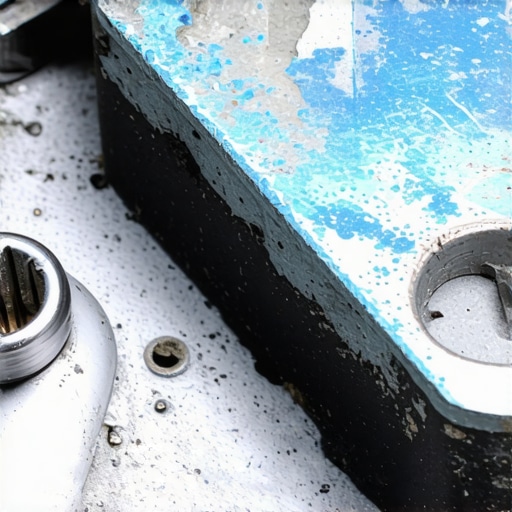
Test Your Alternator Without the Fancy Tools
If your battery is healthy, the alternator is the prime suspect. It acts as the car’s power plant, generating electricity as you drive. If you want to know if it is failing, start the car and turn on your headlights against a garage wall. If the beam brightens when you rev the engine and dims when you let off, your alternator is struggling to maintain a consistent output. You should also check how to tell if your alternator is overcharging, as too much voltage can be just as damaging as too little, often frying delicate LED bulbs in your console.
Check Your Ground Wires Before They Check You
Every electrical component in your car needs a path back to the battery, which we call a ‘ground.’ If the wire connecting your engine block or dashboard to the car’s frame is loose or rusted, the electricity gets backed up like a clogged drain. This ‘back pressure’ is what causes your headlights to dim when you use your turn signal. I remember wrestling with an old sedan that would dim every time I hit the brakes. I was certain I needed a full brake service because I thought the pump was shorting the system. It turned out to be a ground wire so rusted it looked like a piece of beef jerky. A quick scrub with a wire brush and a new bolt, and the lights were brighter than ever.
Scan for Blown Fuses and Faulty Relays
Sometimes the problem is localized. If only one part of your dash is dim, you are likely looking at a single failing bulb or a resistor. However, if the whole thing is acting up, you need to know how to test for a blown fuse the right way using a test light. A fuse that is partially melted but not fully broken can create high resistance, starving your lights of the current they need. Incorporating these checks into your regular tune up for peak performance ensures you aren’t left in the dark during a midnight drive.I’ve seen it a thousand times: a driver spends a fortune on high-end spark plugs expecting their car to run like new, only to find the idle is still rough and the dashboard still flickers. The truth is, the ‘tune-up’ of the 1970s is effectively dead. Modern engines are controlled by a computer that compensates for mechanical wear until it physically cannot anymore. If you really want to maximize your car’s lifespan with expert tune-up strategies, you have to look at the diagnostic data and sensor health, not just swap out hardware. Everyone says a tune-up is about parts; in my experience, it’s actually about the software-to-hardware handshake. Ignoring the digital side while throwing parts at the problem is a recipe for a lighter wallet and the same old headache. Then there’s the brake situation. Most drivers wait for that high-pitched squeal before they even think about a shop visit. But did you know your rear brakes might be doing more work than you think? I’ve explored the real reason your rear brakes wear faster than fronts, and it’s usually due to modern electronic brake-force distribution. If you ignore the signs and just slap on the cheapest pads available, you’re in for a world of hurt. I’ve personally fallen into the trap of buying ‘budget’ ceramics only to have them vibrate my teeth out within a month. You need to understand the truth about cheap brake pads and noise before you try to save fifty bucks on a DIY job.
Why does your brake pedal feel like a sponge even after a service?
This is the ultimate advanced frustration. You just paid for a brake service, but the pedal still feels ‘mushy.’ Most mechanics will tell you it’s ‘just air in the lines,’ but the nuance is often the fluid itself. Brake fluid is hygroscopic, meaning it literally sucks moisture out of the air like a sponge. According to the National Institute for Automotive Service Excellence (ASE), even a small percentage of water content can drastically lower the boiling point of your fluid, leading to vapor lock and that terrifying ‘spongy’ feel. If you see that your brake fluid looks like coffee, no amount of new pads will fix your stopping power. Another massive ‘oops’ factor I see is the failure to properly torque lug nuts after a wheel-off service. It sounds trivial, but the correct way to torque lug nuts to prevent rotor warping is the difference between a smooth ride and a steering wheel that shakes like a leaf under braking. Don’t let a ‘simple’ service turn into a $600 rotor replacement. Have you ever fallen into this trap of replacing the ‘obvious’ part only to find the problem was something much deeper? Let me know in the comments—I’m curious if I’m the only one who’s over-engineered a simple fix.
The Digital Toolbox That Actually Saves You Money
I used to think that a massive set of chrome wrenches was the mark of a true mechanic. I was wrong. These days, my most valuable tool is a bidirectional OBD2 scanner. While a cheap twenty-dollar code reader can tell you why a light is on, a real diagnostic tool lets you talk back to the car. I’ve used mine to trigger individual light circuits to see if a dimming dash was a software glitch or a physical wire failure. Relying on how professional diagnostics found my ghost electrical leak taught me that the computer usually knows exactly what is wrong; you just need the right translator to hear it. Looking at auto repair trends to watch in 2025, it is clear that we are moving toward a world where your car will predict its own failures before you even see a flicker.
How do I maintain my car’s performance over many years?
Consistency is the boring secret to high mileage. I don’t just mean changing the oil when the little sticker tells you to. Real longevity comes from a holistic approach to a car service guide that treats every fluid as a lifeblood. I personally track my transmission’s health with obsessive detail because why I will never skip a transmission fluid change again is a lesson I learned after a four-thousand-dollar rebuild. You also have to realize that how regular tune-ups improve fuel efficiency and safety is not just marketing fluff. It is about keeping the air-to-fuel ratios perfect so the engine does not have to work twice as hard to move half as fast.
Tools That Separated Me From the Amateurs
If you want to stop being a ‘part-swapper’ and start being a technician, get a smoke machine. I spent years chasing vacuum leaks with a can of brake cleaner, which is dangerous and ineffective. Now, I use a simple setup to find cracks in intake boots and EVAP lines in minutes. Learning how to find an evap leak using a simple smoke machine changed everything for me. It is the same mindset you need for your brakes; don’t just guess which rotor is warped. Use a dial indicator to measure the run-out. According to technical standards from the Society of Automotive Engineers (SAE), even a thousandth of an inch of deviation can cause that annoying pedal pulse. Understanding how to save 500 on your next major service starts with knowing exactly which part is broken so you don’t pay for what you don’t need.
Why AI Diagnostics Are the Future of Your Garage
The next decade of car repair is going to look a lot more like IT work than greasy metalwork. We are already seeing AI-integrated platforms that can analyze a recording of your engine sound and pinpoint a failing bearing with 90% accuracy. This transition means your truth about why my car finally hit 200000 miles will soon depend more on your ability to manage software updates and sensor cleaning than just changing spark plugs. I predict that the ‘shade tree mechanic’ will soon be replaced by the ‘server room mechanic.’ I want you to try one specific thing this weekend: pick up a digital multimeter and check your charging system voltage at the battery terminals while the high beams and AC are on. If it’s below 13.5 volts, you’ve found your ghost.
The Hardest Lesson I Learned About Chasing Electrical Ghosts
If there is one thing a decade under the hood has taught me, it is that your car rarely just breaks; it sends out invitations for you to fix it weeks in advance. My biggest lightbulb moment came when I realized that most dimming dashboard issues aren’t caused by a dead component, but by starved power. A loose ground or a layer of oxidation acts like a resistor, stealing the energy meant for your gauges. I have also learned that you should never fall for brake service myths what you need to know before your next stop; the same logic applies to electronics—do not just throw parts at the problem. Sometimes, seeing how an honest brake inspection saved me hundreds is the exact same mindset you need for your electrical system: check the foundations first. Cleaning a terminal is often more effective than replacing an alternator.
My Essential Toolkit for DIY Diagnostics
You do not need a professional garage to beat these electrical gremlins, but you do need a few truth-tellers in your toolbox. First, a digital multimeter is non-negotiable; it is essentially a blood pressure monitor for your battery. Second, I always keep a can of electrical contact cleaner nearby—it is a miracle worker for flickering interior lights. If your car is making physical noises alongside those dimming lights, you might need to know how to quiet a squeaky brake pedal inside your cabin to differentiate between electrical interference and mechanical wear. Finally, stay updated on auto repair trends to watch in 2025 to see how diagnostic apps are making these checks even easier for the average driver. [image]
Taking the Power Back Into Your Own Hands
Repairing your own vehicle is about more than just saving money—it is about the confidence that comes from knowing you will not be stranded on a dark road. Whether you are performing a complex auto repair or just scrubbing a battery terminal, you are extending the life of your investment and ensuring your safety. Don’t let a flickering dashboard intimidate you; it is just a puzzle waiting for the right solution. If you ever feel like you are in over your head or need a professional second opinion, you can always contact us for specialized guidance. Have you ever tried to track down a flickering light only to find something completely unrelated, like a loose fuse or a rusted bolt, was the real culprit? Let me know in the comments below!