
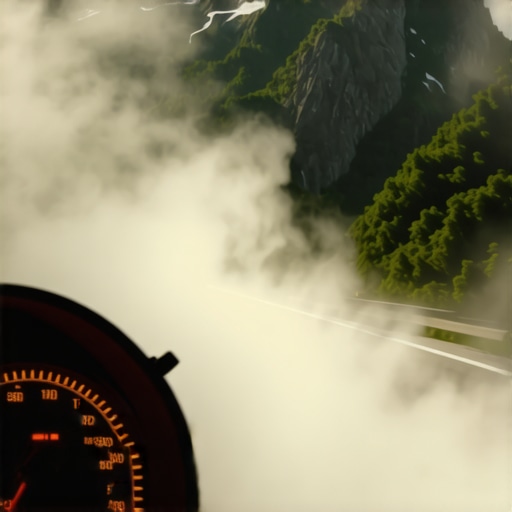
I will never forget the first time I felt that sinking sensation in my gut while driving through the Appalachians. My old sedan was humming along perfectly on the flat stretches, but the moment the road tilted upward, the temperature needle started its slow, agonizing crawl toward the red zone. I did what most panicked drivers do: I cranked the heat to full blast, sweating in the cabin while praying I wouldn’t see steam pouring from the hood. It is a specific kind of stress that only happens when your vehicle decides it cannot handle the heavy lifting. If you have ever been stuck behind a slow-moving truck on an incline, watching your dashboard lights with bated breath, you know exactly what I am talking about. Today, we are going to dive into why your cooling system acts like a champion on level ground but throws a tantrum the second gravity gets involved.
That Panic When the Temp Gauge Hits the Red
When you are driving on a flat highway, your engine is under relatively low load. It is essentially cruising. But when you hit a grade, you are asking that hunk of metal to work significantly harder to move the same amount of weight. According to data from the Society of Automotive Engineers (SAE), an engine’s thermal load can increase by over 300% when transitioning from level cruising to a steep incline. This is when any tiny weakness in your cooling system gets magnified. Early in my DIY days, I made the classic mistake of thinking a slightly low coolant level was ‘fine for now.’ I paid for it with a warped cylinder head. I learned the hard way that scheduling maintenance isn’t just a suggestion; it’s a survival tactic for your powertrain. We are going to pinpoint whether your issue is a tired radiator, a failing pump, or something as simple as a bad cap.
Will this mistake cost me a whole new engine?
This is the fear that keeps us up at night. You might think that an overheat on a hill means the car is destined for the scrap heap, but that is rarely the case if you catch it early. Most of the time, the culprit is a component that just can’t keep up with the extra heat generated by high-RPM climbing. For instance, if your flow is restricted, you might notice the hidden sign that your water pump is about to fail, which often manifests only when the engine demands maximum circulation. It could also be as simple as a thermostat that isn’t opening all the way. You can actually perform the easy way to check if your thermostat is stuck open or closed before you spend a dime at a shop. Have you ever had your car fail you right when the road got tough? Let me know in the comments below, because I bet we’ve shared that same mountain-side frustration.
[image_placeholder]
Why Gravity is Your Cooling System’s Worst Enemy
When you go up a hill, your engine burns more fuel to maintain speed. More fuel equals more heat. If your radiator fins are clogged with dirt or if you have a fan that isn’t pulling its weight, the system simply cannot dissipate that extra energy fast enough. I once tried to fix a small drip with a bottle of chemical sealer, but I quickly realized why you should never use stop leak in your radiator—it clogged the very passages meant to keep my engine cool during climbs. Instead of shortcuts, we need to look at the actual mechanics of heat transfer and why your car’s ‘sweating’ mechanism is failing when the heart rate goes up.
When your car starts to run hot during a climb, the first thing you should do is stop guessing and start inspecting the radiator’s exterior. Think of your radiator as the lungs of your vehicle; if the fins are packed with road grime, bugs, or dried mud, the air can’t pass through to pull the heat away from the coolant. I recommend grabbing a garden hose—not a pressure washer, which can bend the delicate fins—and spraying from the engine side outward. This simple act of troubleshooting common auto repair issues before visiting the shop can often drop your operating temperatures by ten degrees or more. If your engine can’t breathe, it can’t stay cool, and no amount of fresh fluid will fix a physical blockage on the grill.
Flush Out the Gunk Before Your Engine Cooks
Internal blockages are just as dangerous as external ones. Over time, coolant breaks down and creates a sludge that coats the inside of your radiator passages, acting like a thermal blanket that keeps heat trapped in the engine. This is why following a comprehensive car service checklist is vital for long-distance reliability. If you haven’t done it in the last two years, you need to determine the best time of year to flush your cooling system to ensure maximum flow. When you are pushing up a 6% grade, you need every single channel in that radiator flowing at 100% capacity to move the BTU load being generated by your cylinders.
Test Your Thermostat Without Special Tools
A thermostat that is ‘lazy’ might open enough for flat-road driving but fail to open fully when the heat builds up. I once spent three days chasing a mystery overheat on an old pickup, replacing hoses and sensors, only to find the thermostat was sticking just shy of its full-open position. You can actually pull yours out and perform how to test your own thermostat in a pot of boiling water on your kitchen stove. If it doesn’t snap open wide before the water reaches a rolling boil, it is garbage. Replacing it is a standard part of any attempt to tune up your car for peak performance, especially before a mountain road trip. 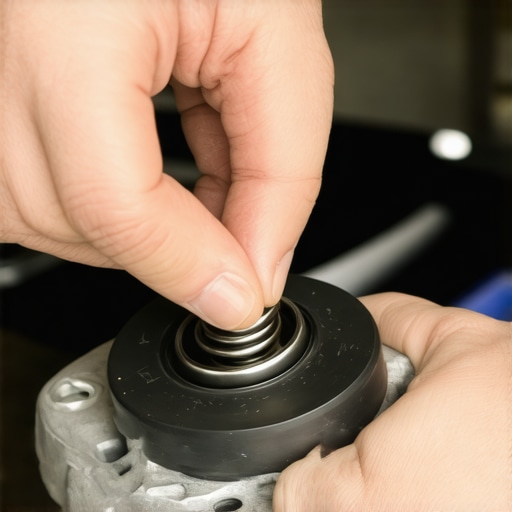
Check the Smallest Part First
Never underestimate the radiator cap. It is designed to keep the cooling system under pressure, which raises the boiling point of your coolant. If the seal is cracked or the spring has weakened, the coolant will boil off into the overflow tank at a much lower temperature, leading to air pockets and immediate overheating. I learned this lesson the hard way during a summer trip through the desert; a $12 cap was the only thing standing between me and a $1,500 repair bill. While you are diagnosing the issue, you might notice why your engine temp drops when you turn the heater on—this is a classic sign that your radiator is struggling but your heater core is still capable of shedding some of that excess load. If turning the heater on saves you from the red zone, your main radiator or its airflow is definitely the prime suspect.
Is your fan actually spinning fast enough?
Finally, check your cooling fans. If you have an electric fan, it should kick into high gear the moment the needle climbs past the halfway mark. On older vehicles with a mechanical fan clutch, you can test it by trying to spin the fan while the engine is off. If it spins freely like a pinwheel, the clutch is shot and won’t provide enough torque to pull air through at low speeds. Ensuring your fans are operational is just as important as a regular brake service or oil change when it comes to overall vehicle safety. A car that can’t stay cool is a car that will eventually leave you stranded on the shoulder of a very steep hill.
The truth is, most drivers treat maintenance like a checklist of chores rather than a holistic health check. You might think that swapping parts is enough, but there is a massive difference between a parts-changer and a technician who understands system synergy. Take the ‘tune-up,’ for example. Most people believe it’s just about fresh plugs and a filter. However, in my experience, the secret to longevity isn’t just new hardware; it’s the software and sensor calibration. You can throw all the new parts you want at a car, but if your fuel trim is off due to a tiny vacuum leak, you will still struggle on those inclines. This is why I always recommend looking at maximize your car’s lifespan with expert tune-up strategies rather than just waiting for a warning light to scream for attention.
The Brake Fluid Trap Most Drivers Fall Into
Now, let’s talk about stopping power. There is a common myth that if the car stops without squealing, the brakes are perfectly fine. But when you are descending that hill you just climbed, heat soak becomes your biggest enemy. Many shops skip the fluid test, yet a high moisture content in your brake fluid can lead to a pedal that goes to the floor exactly when you need it most. If you have ever felt that ‘spongy’ sensation after a long descent, you need to look past the surface-level brake service myths what you need to know before your next stop. According to a study by the Car Care Council, nearly 80% of vehicles on the road have at least one unperformed maintenance task, with brake fluid contamination being one of the most overlooked safety risks.
Don’t Trust the 10,000 Mile Promise Blindly
One of the biggest ‘oops’ factors in modern car care is the extended oil change interval. While manufacturers claim 10,000 miles is fine, they often define ‘normal driving’ in ways that don’t include climbing mountains or stop-and-go traffic. Under heavy load, oil shears down much faster, losing its ability to carry heat away from the cylinder heads. Falling for the truth about 10,000 mile oil change intervals might save you sixty dollars today but cost you a six-thousand-dollar engine in three years. If your route involves frequent elevation changes, your ‘normal’ is actually ‘severe service’ in the eyes of engineers.
Why do my new brakes smell like they are burning on a downhill?
This is a classic nuance that separates the pros from the amateurs: the bedding procedure. If you don’t transfer a layer of pad material onto the rotor surface through specific, controlled stops after a replacement, you will get uneven wear and localized hot spots. Always ensure you follow the proper way to break in new brake pads and rotors to avoid glazing the pads during your first mountain excursion. Skipping this step is the fastest way to ruin a high-quality brake service.
Your Car Needs a Strategy Not Just a Repair
Advanced engine management systems can mask symptoms of failure until it is too late. For instance, a slightly clogged fuel injector might not cause a misfire on flat ground, but it will cause a lean condition and extreme heat when you are flooring it up a grade. This is why a comprehensive car service checklist is your best defense. Have you ever had a ‘freshly repaired’ car fail you just a week later because a secondary issue was ignored? Let me know in the comments below, because usually, it is one of these hidden nuances that got skipped by a technician in a hurry.
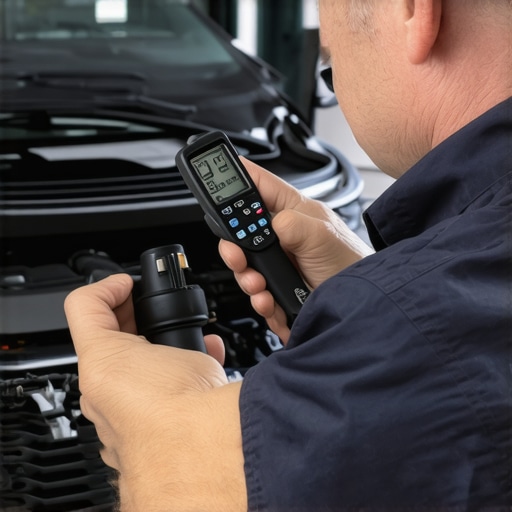
To truly stay ahead of the game, you need to stop reacting to problems and start predicting them. For years, I relied on my ears and the basic dashboard gauges, but that is a dangerous way to treat a modern vehicle. If you want to avoid being the person stuck on the side of the road with a cloud of steam, you need a high-quality OBD-II scanner. I don’t mean a cheap code-reader that just clears the light; I use a Bluetooth-enabled unit that allows for live data logging of ‘Mode $06’ data. This is where you can see misfire counts that haven’t triggered a code yet or observe the exact temperature at which your thermostat opens. It is the ultimate way of troubleshooting common auto repair issues before visiting the shop because it removes all the guesswork from the equation.
The Pro Tip for Finding Clogs Without Taking Anything Apart
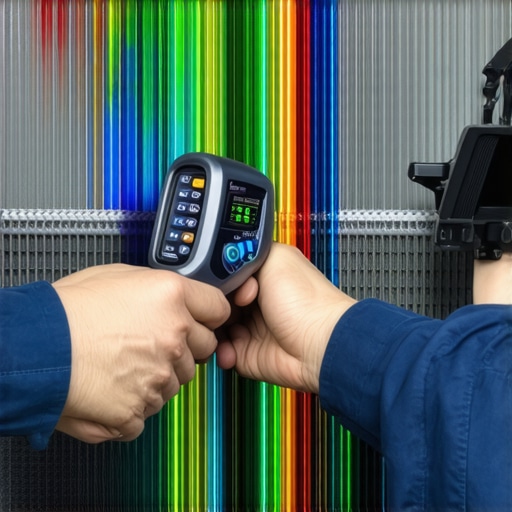
One of my favorite advanced diagnostics involves an infrared thermometer. While the car is warming up, I point the laser at different sections of the radiator. If you see a twenty-degree difference between two areas that should be hot, you have found a localized clog. This is the exact moment people usually realize why you should never use stop leak in your radiator—those chemical sealers love to settle in the bottom corners of the core, effectively killing your cooling capacity during steep climbs. By identifying these cold spots early, you can plan a radiator replacement on your own schedule instead of being forced into an emergency repair during a road trip.
How can I maintain a reliable car for the next 100,000 miles?
Consistency is more important than intensity when it comes to vehicle longevity. You can’t ignore your car for two years and then expect a single ‘super-service’ to fix everything. I follow a strict car service checklist how to keep your vehicle in top shape that includes testing the boiling point of my brake fluid and the pH level of my coolant every six months. As documented in the SAE J1979 standard for on-board diagnostics, your car’s computer is constantly monitoring ‘fuel trims’ to compensate for wear. If you notice your long-term fuel trims creeping above 10%, you have a vacuum leak or a failing sensor that is forcing the engine to run hotter than it should. Catching these digital breadcrumbs is the real secret to how regular tune-ups improve fuel efficiency and safety over the long haul.
Stop Guessing and Start Torquing Everything
Precision is the hallmark of a great home mechanic. I used to think ‘hand-tight’ was good enough for wheel bolts and brake calipers until I saw a rotor warp because of uneven pressure. Now, I never touch a lug nut without a calibrated torque wrench. Learning the proper way to torque wheel bolts without a manual—by looking up the specific dry-torque specs for your chassis—prevents hub distortion and vibration. This level of detail is what separates a basic pad swap from a professional-grade brake service. If you ignore the small specs, you end up falling for brake service myths what you need to know before your next stop, like the idea that all vibrations are caused by ‘warped’ rotors when they are often just poorly seated parts.
Predicting the Future of Your Garage
The days of the ‘grease monkey’ are rapidly fading as we move toward highly integrated systems. I predict that within the next five years, we will see consumer-grade telematics that can analyze fluid viscosity in real-time and send a notification to your phone the moment a bearing starts to hum. Staying informed about auto repair trends to watch in 2025 staying ahead of the curve will be essential as vehicles become more like rolling computers. If you want to keep your current ride for the next decade, you must embrace these digital tools. My challenge to you: grab an infrared thermometer today and map out the heat signature of your radiator after a twenty-minute drive. You might be surprised at what your cooling system is hiding from you.
Lessons Bought with Burned Hands and Empty Wallets
Reflecting on years spent under the hood, I have realized that the cooling system is the most honest part of your vehicle; it will never lie to you when the road tilts upward. One major lightbulb moment for me was discovering that a tiny, pinhole leak in a radiator hose might never leave a puddle on your driveway, but it will absolutely suck in air as the engine cools, creating a massive air pocket that causes a temperature spike on the next mountain pass. I also learned that scheduling maintenance proactively is infinitely cheaper than paying for an emergency tow from a remote overlook. Most importantly, I have seen firsthand how regular tune-ups improve fuel efficiency and safety by ensuring the engine is not fighting its own internal friction while simultaneously battling gravity.
The DIY Arsenal for Keeping Your Cool on Steep Grades
You do not need a professional garage to be prepared for elevation changes, but you do need the right data to make informed decisions. I personally swear by a mid-range Bluetooth OBD-II scanner that pairs with your smartphone—it allows you to see the real-time digital coolant temperature, which is often far more accurate than the heavily buffered needle on your dashboard. This is a total game-changer for troubleshooting common auto repair issues before visiting the shop. I also recommend keeping an infrared thermometer in your glovebox; it is the most effective tool to maximize your car’s lifespan with expert tune-up strategies because it helps you identify radiator cold spots long before they lead to a total system failure.
[image_placeholder]
Give Your Engine a Fighting Chance on the Next Peak
Driving through the mountains should be a scenic adventure, not a source of intense mechanical anxiety. By taking the time to verify your radiator’s airflow and diligently checking off items on your car service checklist, you are investing in your own peace of mind. Do not wait for a plume of steam to tell you there is a problem; your vehicle is a complex machine that rewards owners who pay attention to the small details before they become big bills. Have you ever seen your temp gauge spike out of nowhere on a climb? What was the specific fix that finally worked for you? Let me know in the comments below!