
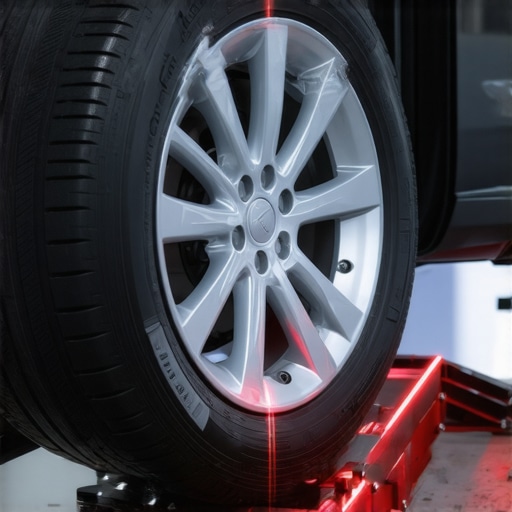
I still remember the smell of fresh rubber in my driveway about five years ago. I had just dropped a small fortune on a set of high-performance tires for my daily driver, feeling like I’d finally treated my car to the best. But when the service advisor at the shop suggested adding a wheel alignment to the bill, I did what a lot of us do. I politely declined, thinking I was dodging a classic upsell. I figured the car drove straight enough, so why fix what wasn’t broken? That was my first big mistake. Within three months, I noticed the inner edge of my front-left tire was scrubbed almost bald while the rest of the tread looked brand new. I had essentially set a hundred-dollar bill on fire. It was a visceral lesson in how those fresh treads can vanish if your car’s geometry is even slightly out of whack. Today, I want to help you avoid that same heartbreak and show you why this step is the only way to actually protect your investment. Have you ever looked at your tires and realized one side was wearing down way faster than the rest?
Your New Rubber is an Investment, Not a Gift
Look, tires aren’t cheap. Whether you’re buying budget commuters or top-tier sport tires, you want them to last as long as humanly possible. When you put new tires on a car without checking the alignment, you’re basically asking the road to sandpaper your money away. Alignment isn’t about the tires themselves; it’s about how your car’s suspension system interacts with the pavement. Over time, hitting potholes or even just standard wear and tear on your bushings can knock things out of place. If you’ve been trying to get more life out of your current tires, you already know that maintenance is king. But new tires provide a clean slate. Because the new tread is deeper and the rubber is softer, it is actually more susceptible to being chewed up by a bad alignment than your old, hardened tires were. It is the most critical item on any car service checklist after a tire swap.
Is a wheel alignment actually worth the extra cash?
This is the question I get asked the most by my neighbors. The short answer is a resounding yes. It’s not just about tread wear, either. A car that is out of alignment is fighting itself every inch of the way down the road. This struggle creates rolling resistance, which forces your engine to work harder. According to the Car Care Council, a non-profit organization dedicated to vehicle maintenance education, a vehicle with poor alignment can suffer a fuel economy drop of up to 10 percent. That is a massive hit to your wallet over the life of a tire. I’ve learned that how your wheel alignment affects your wallet goes far beyond the initial shop fee. By skipping that $80 to $100 service, you aren’t saving money; you’re just deferring a much larger expense later when you have to replace those tires prematurely. We’re going to dive into the mechanics of why things shift and what you should look for before you leave the shop.Imagine your car is a world-class sprinter. If their shoes aren’t pointed exactly where they’re running, they’re going to trip or, at the very least, waste an incredible amount of energy. That’s exactly what happens to your vehicle when the geometry is off. When you pull onto a laser-guided alignment rack, the technician is focusing on three primary angles: camber, caster, and toe. Think of camber as the vertical tilt of the tire when viewed from the front. If the top of the tire leans too far inward, it creates a heavy load on the inner shoulder, which is the primary reason why your new tires are wearing fast on the inside edge.
The Three Angles That Control Your Tread Life
Toe is perhaps the most critical setting for tire longevity. It refers to whether the fronts of the tires are closer together (toe-in) or farther apart (toe-out) than the rears. It’s like being pigeon-toed; if the angle is aggressive, the tire doesn’t roll—it scrubs. It’s essentially being dragged sideways across the pavement at 60 miles per hour. Finally, caster affects your steering balance and stability. While it doesn’t wear tires as directly as toe or camber, a bad caster setting makes the car feel ‘darty’ or heavy, forcing you to constantly correct the steering. 
Why a Bent Component Ruins the Best Alignment
I learned this the hard way a few years back after clipping a hidden curb during a heavy rainstorm. I didn’t think much of it until I noticed the car started to feel ‘nervous’ at highway speeds. When I finally brought it in for a check, the technician couldn’t get the machine to stay in the ‘green’ zone. After some digging, we found a slightly bent tie rod. I had spent an afternoon previously learning how to check your tie rod ends with minimal tools, but I had missed the subtle bend that only the laser could see. If I had just forced the alignment without replacing that $40 part, I would have ruined a brand-new set of tires in less than a month. This is why knowing how to identify a blown shock absorber by looking at your tires is so important; a failing strut or a bent arm can make the most precise alignment useless.
Look for the Green on Your Service Report
Before you pay the bill, always ask for the before-and-after printout. Any reputable shop using modern sensors will provide a color-coded sheet. If you see red blocks on the ‘final’ column, the job isn’t done. Some shops perform what we call a ‘toe-and-go,’ where they only adjust the easiest setting and ignore the camber. Don’t let them. This process should be a standard part of any ultimate car service guide you follow. Integrating a professional alignment into your routine is as essential as a tune up for your car for peak performance because it ensures all that new rubber is actually making flat contact with the road. If the tires aren’t flat, you aren’t just losing money—you’re losing grip and safety.While we’ve covered the basics of alignment, I see a lot of folks making a massive mistake when they move on to the rest of their car service checklist. Most people still think a tune-up is just swapping out spark plugs and an air filter. That’s a 1980s mindset. In modern vehicles, a real tune up for your car for peak performance involves checking fuel trims and oxygen sensor response times. If your mechanic isn’t looking at the data stream, they’re just guessing. I’ve seen cases where how a simple tune-up fixed my mystery hesitation wasn’t about the plugs at all, but a tiny vacuum leak that only showed up as a fuel-lean condition on a high-end scanner.
Stop Thinking of Tune-Ups as Just Spark Plugs
This brings me to the ‘Oops’ factor I see constantly in DIY circles and even at some chain shops: the ‘part-swapping’ trap. Instead of troubleshooting common auto repair issues before visiting the shop, people throw money at sensors. Have you ever replaced an O2 sensor only for the light to come back on two days later? That’s because the sensor was doing its job—reporting a problem elsewhere, such as how to spot a bad head gasket using your coolant reservoir as a primary indicator.
Why does my car still feel sluggish even after a full service?
The nuance often lies in what we can’t see with the naked eye. For instance, many drivers believe that brake service myths dictate that if the pedal is firm, the system is fine. However, research by SAE International indicates that brake fluid is highly hygroscopic, meaning it absorbs moisture from the atmosphere over time. Even if your pads are thick, old fluid can boil during heavy braking, leading to a terrifying loss of stopping power. This fluid degradation is also the real reason your rear brakes wear faster than fronts in some modern electronic stability control systems—they’re constantly performing micro-adjustments in the background using that fluid. 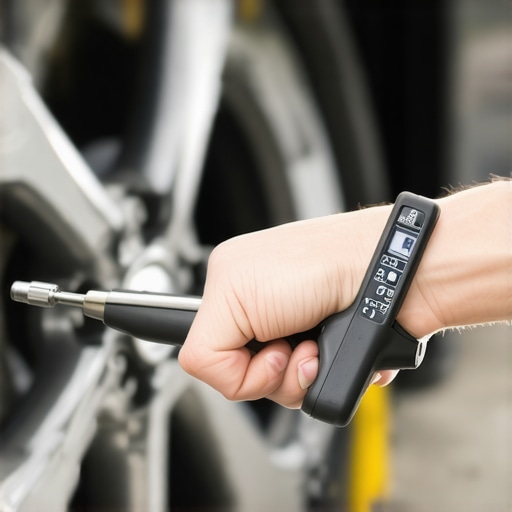
The Secret to Rotors That Don’t Warp
If you find that why your brake rotors keep warping every few months is a recurring entry in your maintenance log, the culprit probably isn’t the quality of the parts—it’s the installation technique. Most shops use an impact wrench to zip on your wheels, but the correct way to torque lug nuts to prevent rotor warping requires a manual, calibrated torque wrench. Uneven pressure across the rotor face leads to ‘disc thickness variation’ as the metal heats and cools. It’s these tiny details that separate a long-lasting repair from a temporary fix. Maximize your car’s lifespan with expert tune up strategies by demanding a data-driven approach rather than just a parts-on-paper service. Have you ever fallen into the ‘it looks fine’ trap only to have a component fail a week later? Let me know in the comments below.
I used to think that a set of sockets and a good jack were all I needed to manage my own auto repair. That changed the moment I hit a ‘ghost’ electrical issue that wouldn’t throw a code but kept draining my battery overnight. I spent three days pulling every fuse in the block before I realized that professional-grade diagnostics are the only way to stay ahead of modern vehicle complexity. If you want to move beyond basic oil changes, you need to invest in a bidirectional scan tool. Unlike the cheap readers that just clear codes, these allow you to command the car to perform specific tasks, like cycling an ABS pump or testing an injector. I’ve found that how professional diagnostics found my ghost electrical leak was less about luck and more about having the right data stream in front of me.
Stop Guessing and Buy a Scanner That Actually Talks Back
Technical documentation from Mitchell 1, a leader in repair information for over a century, emphasizes that as vehicles transition to more integrated electronic control modules, the ‘test, don’t guess’ philosophy is non-negotiable. This is especially true when you are trying to how to test for a blown fuse the right way without shorting out an expensive ECU. When you can see the real-time voltage drop across a circuit, you aren’t just a parts swapper anymore; you’re a technician. 
How do I keep my car running like new for 200,000 miles?
The secret isn’t a magic additive or a special brand of fuel. It is the uncompromising consistency of your fluid intervals and the health of your vacuum system. Over time, rubber hoses degrade and create tiny cracks that cause lean conditions and rough idles. Instead of tearing your intake manifold apart, I highly recommend using a smoke machine. Learning how to find an evap leak using a simple smoke machine can save you hours of frustration. It’s a tool that pays for itself the very first time it locates a leak tucked behind the engine block where your eyes can’t reach. This level of detail is exactly the truth about why my car finally hit 200,000 miles without needing a major overhaul.
Prepare Your Garage for 2025 and Beyond
As we look at auto repair trends to watch in 2025, the DIY landscape is shifting toward telematics and software-defined vehicles. We’re going to see more cars that can self-diagnose and alert your phone before a component actually fails. However, the mechanical foundations—brakes, suspension, and internal combustion health—will still require a hands-on approach. Maintaining that longevity means you can’t ignore the basics while chasing the high-tech. This weekend, I challenge you to go beyond the visual check. Use a multimeter to try the simple way to test battery strength at home. If your resting voltage is dipping below 12.4V, you’re looking at a pending failure that a simple visual inspection would never reveal. Take that one small step today to ensure your car stays as reliable as the day you bought it.
The Hardest Lessons I Learned the Expensive Way
After years of working on my own vehicles and talking to master techs, I’ve realized that the ‘cheap’ fix is almost always the one that haunts you. For example, I used to ignore minor symptoms until they became catastrophes. I learned that the sign your master cylinder is giving out slowly is often just a slightly ‘mushy’ feeling that most people ignore until their brakes fail completely. Another big one? I used to think fluid changes were optional. Now, why I’ll never skip a transmission fluid change again is a mantra I live by because it’s the difference between a $200 service and a $4,000 rebuild. Finally, remember that your car is a system; a problem in the rear can manifest in the front, like the real reason your car pulls under heavy braking which often points to a seized caliper or worn bushings rather than just alignment.
A Peek Inside My Personal Tool Cabinet
If you’re serious about moving beyond basic oil changes, you need a few items that the ‘parts stores’ won’t usually tell you about. First, get a decent OBD-II scanner that handles live data; it’s how I finally figured out how to check transmission fluid levels without a dipstick on modern sealed units. Second, don’t underestimate the power of a diagnostic smoke machine. It is far superior to the old ‘spray soapy water’ method when you’re trying to figure out the simple way to check for vacuum leaks with smoke. Lastly, I always keep a bottle of high-quality brake cleaner and a wire brush handy—sometimes an ‘expensive’ repair is just a matter of cleaning off road salt and grime to stop your brakes from grinding after it rains.
Stop Reacting and Start Preserving Your Ride
Owning a car shouldn’t feel like a series of expensive surprises. When you take the time to understand the nuances of how regular tune ups improve fuel efficiency and safety, you’re not just fixing a machine; you’re protecting your freedom and your wallet. Whether it’s a precise wheel alignment or a deep-dive diagnostic session, every bit of effort you put in today pays dividends in reliability for years to come. Don’t be afraid to get your hands dirty—your car will thank you for it at the pump and on the highway. Have you ever skipped a professional alignment only to regret it when you saw your tire treads a month later? Let me know your stories in the comments below.